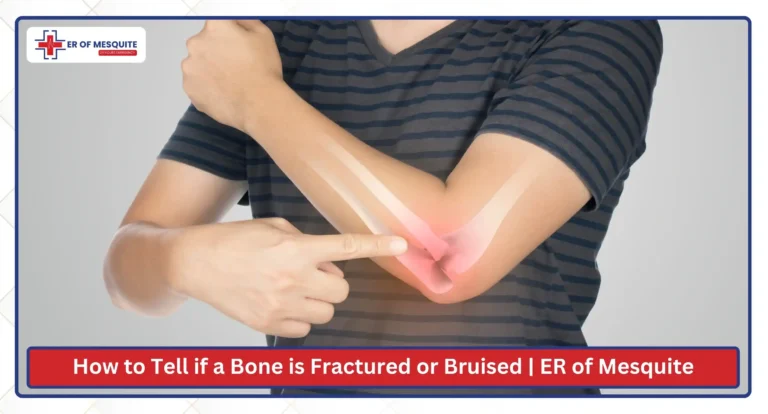
Injuries happen suddenly, whether from a fall, sports activity, or accident, and it’s often hard to determine the severity at first glance. Bruising and swelling is very common, but these symptoms alone cannot reveal whether the bone is fractured, bruised, or if the injury involves soft tissue.
Recognizing the difference is crucial, as delayed diagnosis can lead to prolonged pain, improper healing, or further complications.
A fracture is a break in the bone that often causes intense, sharp pain localized at the injury area. In contrast, a bone bruise is a micro-injury inside the bone, resulting in deep pain and tenderness. Sprains and soft tissue injuries can also mimic fractures, making professional evaluation essential.
At the ER of Mesquite, our 24/7 emergency service provides rapid digital X-ray imaging, accurate diagnosis, and safe referral to orthopedic or specialty care.
This guide explains how to tell if a bone is fractured or bruised, highlights key symptoms, recovery timelines, and emphasizes the importance of professional evaluation at the ER of Mesquite for fast, safe treatment.
Fractures vs. Bone Bruises: How to Recognize the Difference
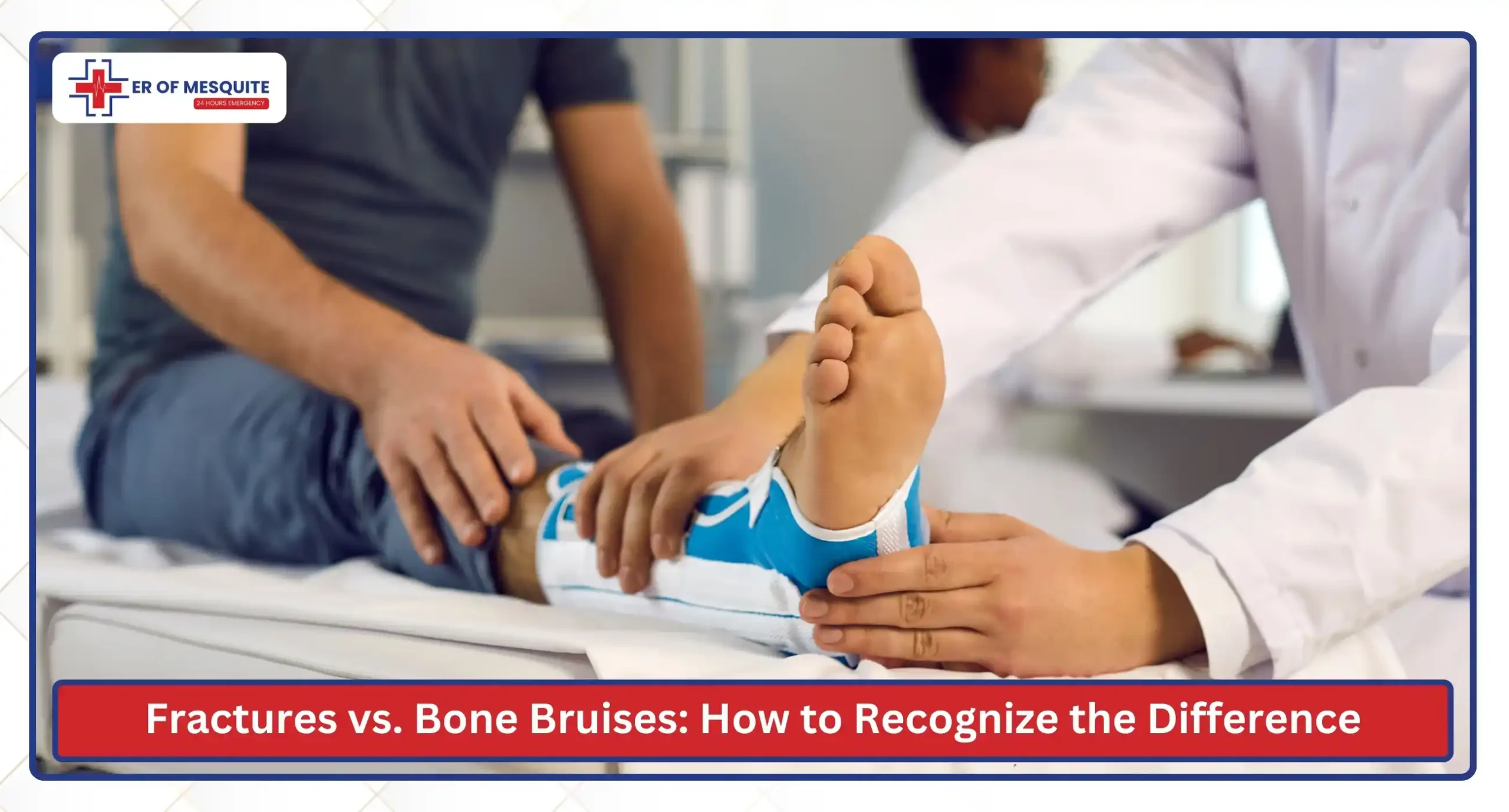
Understanding the differences between a fracture and a bone bruise is crucial for seeking the right care. Both can be painful and cause swelling, but their severity, symptoms, and recovery timelines differ significantly.
Common Signs of a Fractured Bone
A fracture is a break in the bone and often comes with distinct symptoms:
- Intense, sharp pain localized at the injury site
- Swelling and tenderness immediately after trauma
- Difficulty moving the affected limb
- Deformity, such as a bone appearing out of place
- Delayed bruising after a fracture may appear hours or days later
For example, if you are wondering how to tell if a bone is fractured or bruised hand, a visible deformity or inability to move your fingers normally may indicate a fracture. Immediate evaluation at the ER of Mesquite ensures proper stabilization and imaging with digital X-ray.
Signs of a Bone Bruise
Bone bruises are micro-fractures inside the bone. Symptoms can be milder but still significant:
- Pain that worsens with pressure or movement
- Shin bone bruise is common after impact sports
- Swelling and tenderness at the injury site
- Limited mobility but no visible deformity
Bone bruise recovery time can vary from a few weeks to several months, depending on severity. Learning how to heal a bone bruise fast involves rest, ice, compression, and following a proper care plan recommended by medical professionals.
Why is Professional Evaluation Crucial for Bone Injuries?
Not all injuries are as simple as they appear. Even minor trauma can lead to hidden fractures, bone bruises, or soft tissue injuries. Without proper assessment, an injury may worsen, prolonging recovery and increasing the risk of complications.
Some common situations where professional evaluation is essential include:
- Intense, sharp pain localized at the injury site that doesn’t improve with rest
- Delayed bruising after a fracture, which may not be immediately visible
- Injuries to the hand, shin, or foot, where it’s difficult to tell how to tell whether a bone is fractured or bruised
- Chest or rib injuries that mimic fractures, like a pulled chest muscle, a dislocated rib, or slipping rib syndrome
Visiting the emergency service at the ER of Mesquite promptly ensures both adults and children get safe, expert care, minimizing the risk of long-term complications from bone injuries.
How to Tell If a Bone is Fractured, Sprained, or Bruised?
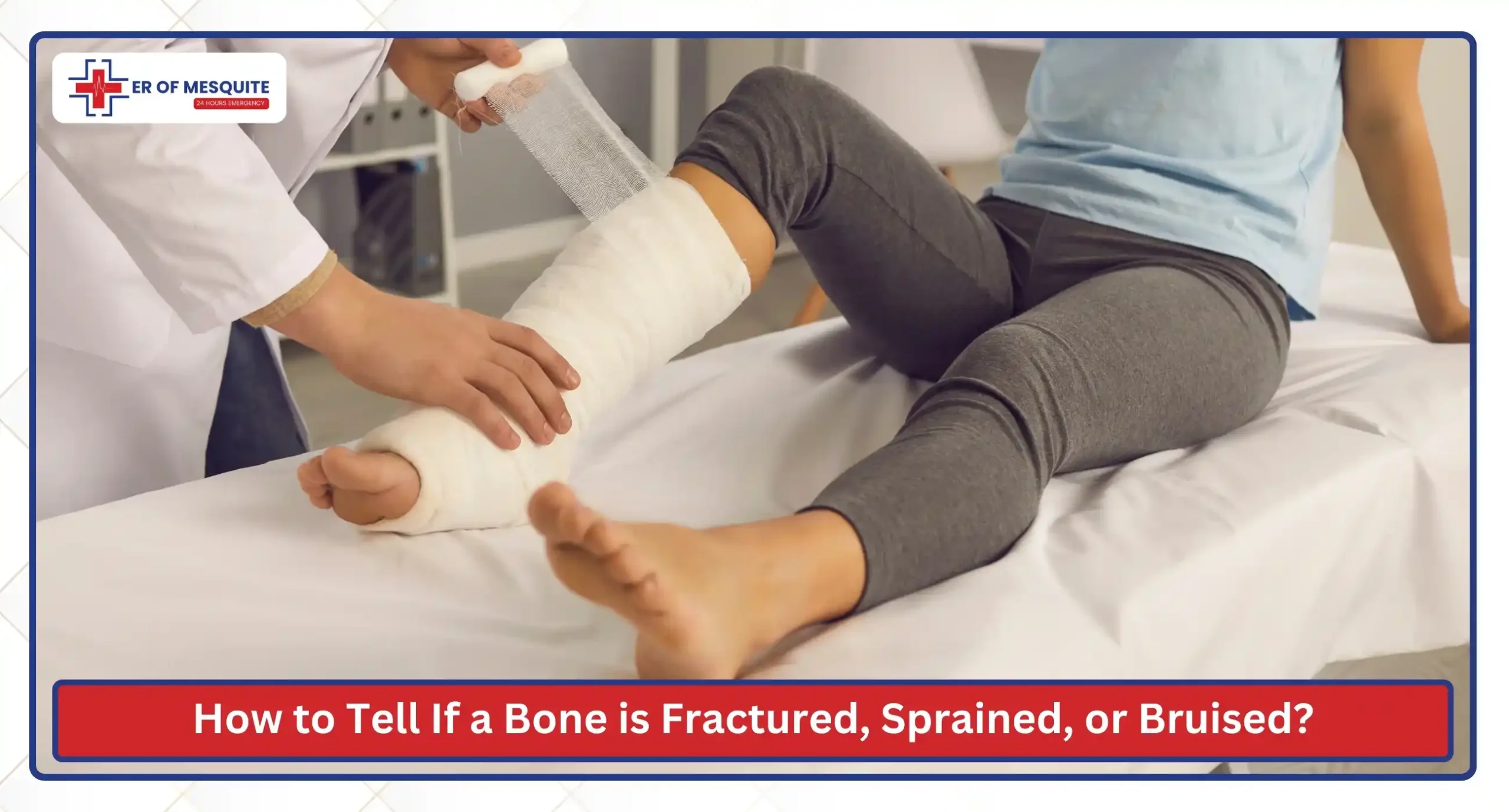
Injuries happen suddenly, whether from a fall, sports activity, or accident, and it’s often difficult to tell the severity at first glance. Bruising and swelling are very common, but these symptoms alone cannot determine whether the bone is broken, bruised, or if the injury involves soft tissue.
Knowing the difference is crucial because a delayed diagnosis can lead to prolonged pain, improper healing, or complications.
| Injury Type | Key Signs | Typical Recovery |
| Fracture | Intense, sharp pain localized at the injury site, deformity, and delayed bruising after fracture | 6–12 weeks, depending on severity |
| Bone Bruise | Pain with pressure, swelling, no deformity, shin bone bruise common | 2–8 weeks; can heal faster with proper care |
| Sprain | Mild pain, swelling, limited motion, no bone involvement | 1–6 weeks; how to speed up muscle strain recovery includes rest and gentle stretching |
Can a Bone Bruise Turn Into a Fracture if Left Untreated?
Yes, if a bone bruise is ignored and you continue to put weight or strain on the injured area, it can worsen, potentially leading to a small fracture or delayed healing. Activities like running, jumping, or heavy lifting can increase the risk.
Early assessment with professional care and digital X-ray can reveal fractures or severe sprains. Visiting our Sprains and Fractures service at the ER of Mesquite ensures that every injury is properly evaluated.
Tips for Faster Recovery from Bone Injuries
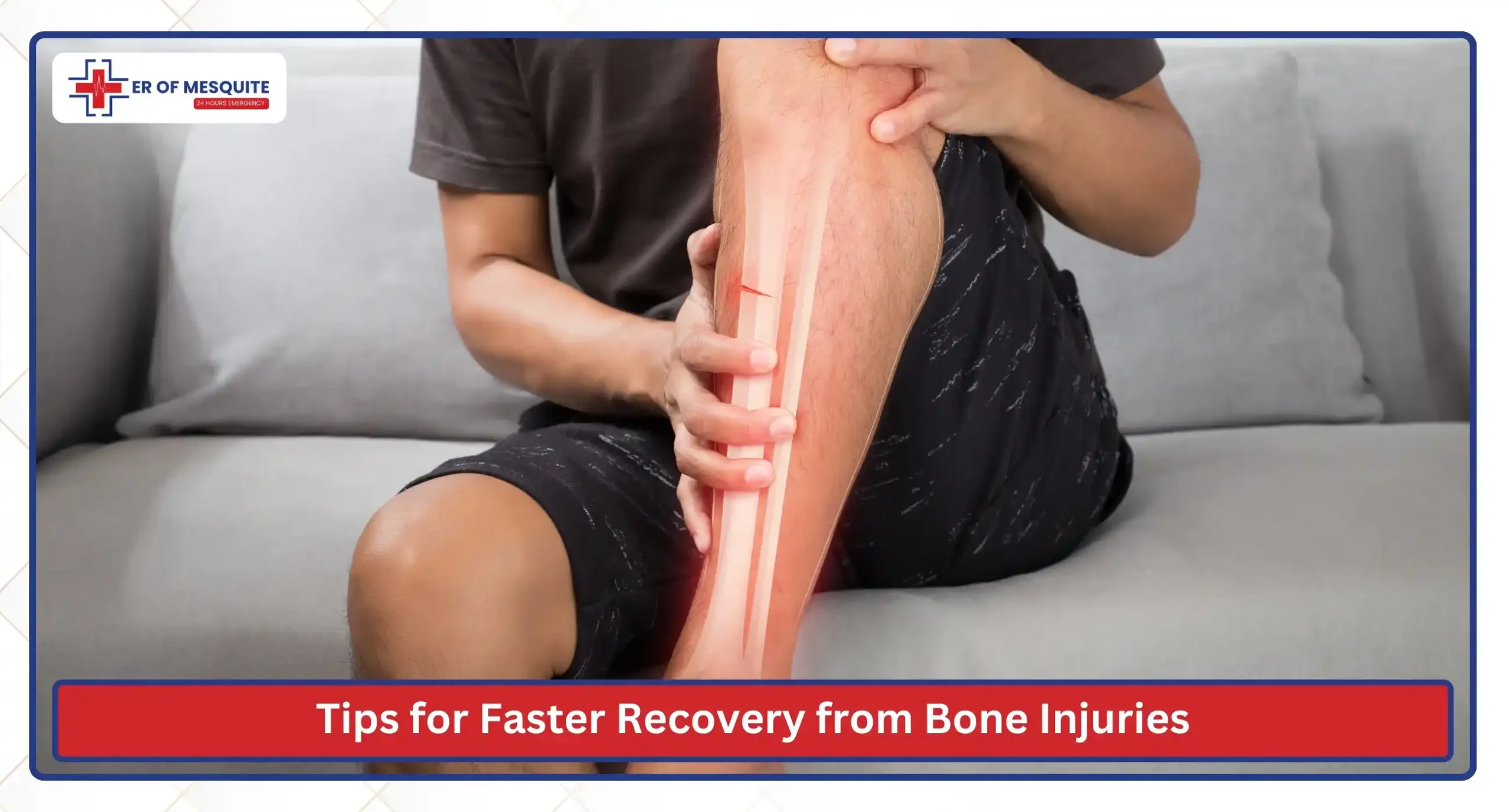
Recovering from a bone injury, whether a fracture, bone bruise, or sprain, requires more than just rest. Simple steps can make a big difference:
- Rest and protect the injured area
- Apply ice or compression
- Follow medical guidance
- Stay active safely
- Attend follow-up appointments
Even minor injuries can benefit from these practices, ensuring a smoother recovery and less downtime.
At ER of Mesquite, our 24/7 team ensures accurate diagnosis, rapid treatment, and safe referral when needed. Visit our About Us page to learn more about our services and commitment to your health.
Final Thoughts on Bone Injuries and Recovery
Bone injuries, whether a fracture, bone bruise, or sprain, can be difficult to identify on your own. Symptoms like bruising and swelling are very common, but pain intensity, location, and delayed bruising are key clues to determine the severity. Understanding how to tell if a bone is fractured or bruised, knowing the recovery time, and learning how to heal a bone bruise fast are essential for safe and effective recovery.
At the ER of Mesquite, our expert team provides 24/7 emergency service, accurate digital X-ray imaging, and specialized care for conditions like sprains and fractures, pulled chest muscle, dislocated ribs, and more. Early evaluation not only speeds up recovery but also prevents complications, ensuring you return to your normal activities safely.
Frequently Asked Questions (FAQs)
How can I tell if a bone is fractured or bruised?
Fractures cause sharp pain, swelling, or deformity; bruises cause deep pain without visible deformity.
What is the recovery time for a bone bruise?
Recovery can take weeks to months, depending on severity.
Can minor injuries like sprains lead to fractures?
Yes, untreated injuries may worsen. Early evaluation helps prevent complications.
How soon should I visit the ER for bone injuries?
Visit immediately if there’s intense pain, swelling, deformity, or limited movement.
Can a pulled muscle mimic a fracture?
Yes, injuries like a pulled chest muscle or dislocated ribs can feel similar.