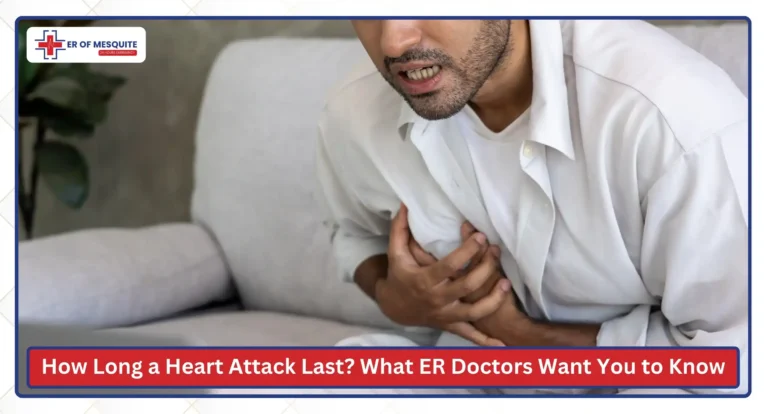
A heart attack is a true medical emergency that requires immediate attention. Patients frequently arrive at the 24/7 emergency ER of Mesquite in Texas asking the same critical question: how long can a heart attack last? The answer depends on how quickly blood flow is restored, the severity of the blockage, and a person’s overall health.
Some heart attacks resolve quickly with treatment, while others continue longer and cause serious, sometimes permanent, damage. Knowing the timeline and warning signs can help you decide when to seek urgent emergency care without delay.
How Long Can a Heart Attack Last?
In many cases, a heart attack lasts 15 to 20 minutes on average. However, this is not a fixed rule. Some people experience symptoms for a few minutes to several hours, while others feel discomfort that fades and then returns.
Chest pain or pressure caused by a heart attack does not improve with rest. Even if symptoms feel mild or temporary, the heart muscle may still be losing oxygen. This is why ER physicians stress early evaluation whenever someone wonders how long can a heart attack can last.
Silent Heart Attacks and Hidden Warning Signs
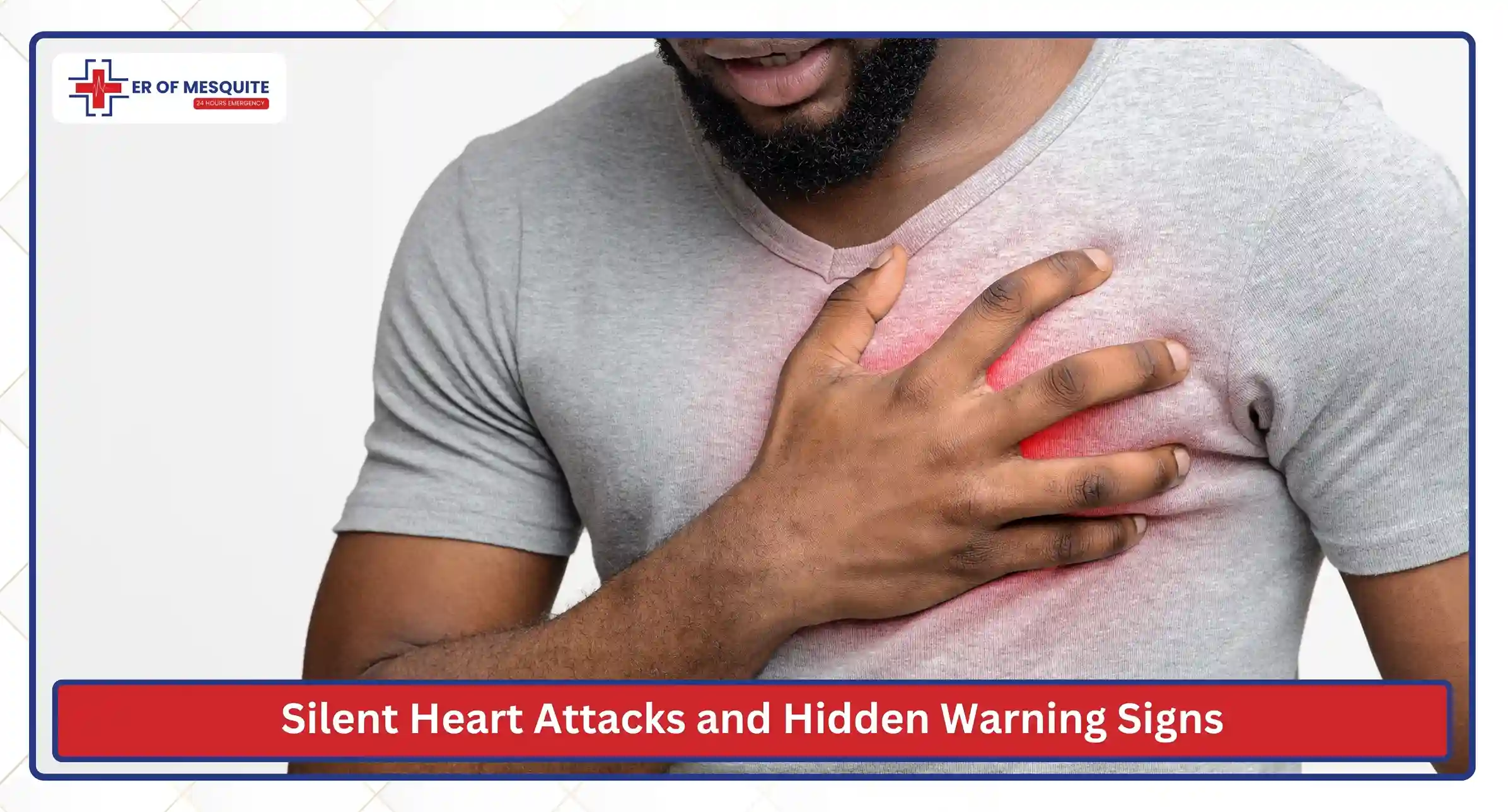
A silent heart attack causes the same internal damage as a typical heart attack, but symptoms are mild or easy to dismiss. Many people mistake them for common illnesses or muscle pain.
Possible symptoms include:
- Unusual or persistent fatigue
- Indigestion or nausea
- Flu-like symptoms
- Jaw, arm, or upper-back pain
- Mild chest or muscle soreness
Research estimates that 22% to 60% of heart attacks are silent, especially among women and people with diabetes. Because symptoms don’t feel urgent, many patients delay care and arrive later with more severe heart damage.
Symptoms That Require Urgent Emergency Care
Heart attack symptoms may appear suddenly or build gradually. Seek immediate emergency ER care if you experience:
- Chest pressure, heaviness, or tightness
- Pain lasting more than a few minutes
- Shortness of breath
- Dizziness or lightheadedness
- Cold sweats
- Nausea or vomiting
- Unexplained fatigue lasting several days
If symptoms last longer than 15 to 20 minutes on average, you should go to the ER right away.
How Heart Attacks Are Diagnosed at a State-of-the-Art ER Facility
At a state-of-art emergency facility in Mesquite, Texas, rapid diagnosis is essential. Emergency physicians use advanced tools to confirm or rule out a heart attack and begin treatment immediately.
| Diagnostic Test | Purpose |
| Urgent Emergency EKG | Detects abnormal heart rhythms |
| Cardiac Enzyme Test | Identifies heart muscle damage |
| Blood tests | Measures oxygen and enzyme levels |
| Imaging studies | Evaluates heart function |
To learn more about our emergency capabilities and team, visit our About us page.
Can a Heart Attack Last for Days?
Yes, while the main cardiac event usually happens over minutes or hours, lingering symptoms may continue for days afterward. Ongoing fatigue, chest discomfort, or shortness of breath can occur when heart tissue has already been injured.
In some cases, people experience a heart attack without realizing it at all. These are called silent heart attacks, and they can delay treatment and increase the risk of long-term complications.
What to Do If You Think You’re Having a Heart Attack

If you suspect a heart attack, do not wait to see if symptoms improve. A heart attack is a medical emergency that requires immediate attention. Ask for assistance by calling the nearest urgent emergency ER right away, even if the pain feels mild or comes and goes.
While waiting for help:
- Stop all physical activity and rest
- Stay calm and avoid exertion
- Follow instructions from emergency responders
- Do not attempt to drive yourself if symptoms worsen
Quick action during a heart attack, emergency services can significantly reduce heart muscle damage and improve survival outcomes.
Heart Attack Prevention Tips You Should Know
While not all heart attacks can be prevented, lowering your risk is possible with healthy lifestyle choices and regular medical care.
Prevention tips include:
- Maintaining healthy blood pressure and cholesterol levels
- Eating a heart-healthy diet rich in fruits and vegetables
- Staying physically active
- Avoiding tobacco products
- Managing stress and chronic conditions like diabetes
Even with prevention, heart attacks can still occur. Recognizing symptoms early and seeking emergency care in Mesquite, Texas, can make a life-saving difference.
Final Verdict: Conclusion: Act Fast and Protect Your Heart at ER of Mesquite
Understanding how long can a heart attack last can make a life-saving difference. While some heart attacks last only minutes, others continue for hours and cause lasting damage. Recognizing symptoms early and treating chest discomfort as an emergency helps prevent complications and protects heart health before irreversible injury occurs.
Heart attacks don’t always appear dramatic. Silent heart attacks and mild symptoms often delay care, increasing risk. Rapid testing and treatment at the ER of Mesquite can help stop further damage and improve recovery outcomes.
If you or a loved one experiences warning signs, never wait for symptoms to pass. Seeking immediate care at the ER of Mesquite ensures access to heart attack emergency services when every minute matters. Fast action saves heart muscle, reduces long-term complications, and gives patients the best chance at survival and recovery.
Frequently Asked Questions (FAQs)
What is a heart attack?
A sudden blockage of blood flow to the heart, causing chest pain or discomfort.
What are the common symptoms?
Chest pressure, shortness of breath, dizziness, nausea, or fatigue.
Who is at risk?
People with high blood pressure, high cholesterol, diabetes, smokers, and those with a family history.
Can heart attacks be silent?
Yes, some heart attacks have mild or no noticeable symptoms.
What tests are done in the ER?
EKG, blood tests, imaging, and cardiac enzyme testing.