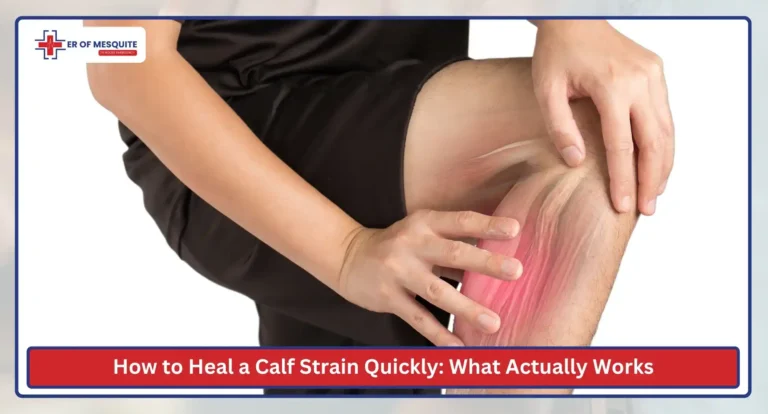
When you feel a sharp popping sensation or a sudden tightness in the back of the knee or heel, it might be due to a strain in the calf. Just like a muscle strain, this is also a stretch in the muscle fibres.
Although it is painful and might take time to heal, with proper care and following the right procedure, you can heal fast. If you notice any pain that resembles a strained calf, then it becomes important to get a comprehensive diagnosis done immediately to rule out the underlying issue.
In this guide, we will illustrate how to heal a sprained knee quickly, so that you know a few calf strain exercises that can help you feel better in a week.
Calf Strain vs Tear: Know What You’re Dealing With
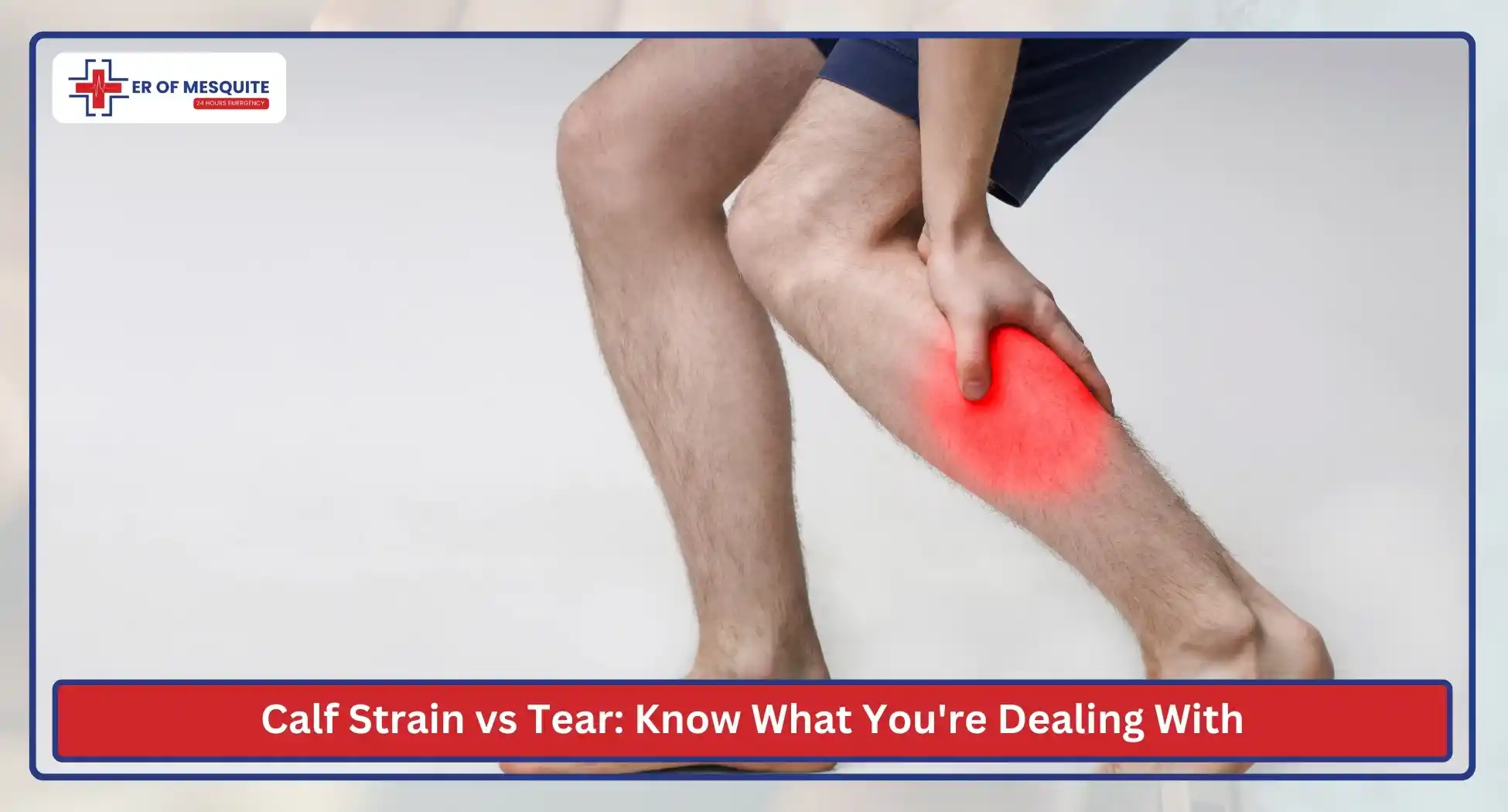
It’s important to understand that not all calf injuries are the same. It is important to know their difference and follow the right treatment, as lumping them together can create more difficulty.
A calf strain is a partial stretch or just a minor tear of the muscle fibres, whereas, on the other hand, a full calf tear means the muscle is either ruptured or completely torn.
With tears, you might notice severe pain and prominent bruising, along with a visible gap between the muscles. A strain might cause pain and extreme tenderness.
The table below illustrates the different pain levels of the calf strain or tear:
| Feature | Calf Strain | Calf Tear |
| Pain level | Moderate to sharp | Severe |
| Bruising | Mild to moderate | Heavy |
| Walking ability | Possible, with discomfort | Very difficult or impossible |
| Muscle gap on touch | No | Yes |
| Recovery | 1 to 8 weeks | 3 to 6 months |
For fast, reliable care, ER of Mesquite provides 24/7 emergency services with advanced diagnostics to help you recover quickly and safely.
Calf Strain Recovery Time
The recovery time of a calf strain depends on the stage of the pain. The grade 1 calf strain recovery time will be shorter than that of grade 3. This is due to the type of muscle affected and how severe it is.
The table below illustrates the recovery time of different calf strains
| Grade | Damage | Typical Recovery Time | What It Feels Like |
| Grade 1 | Fiber tear <10% | 1 to 3 weeks | Tightness and mild pain |
| Grade 2 | Partial tear 10-90% of fibers | 4 to 8 weeks | Significant pain and swelling |
| Grade 3 | Complete rupture | 3 to 6 months+ | Severe pain, inability to walk, and possible surgery |
For a more detailed breakdown of healing timelines, treatment options, and expert-backed strategies, check out our related blog How to Speed Up Muscle Strain Recovery: Timeline, Treatment, and Expert Tips.
Calf Strain Exercises
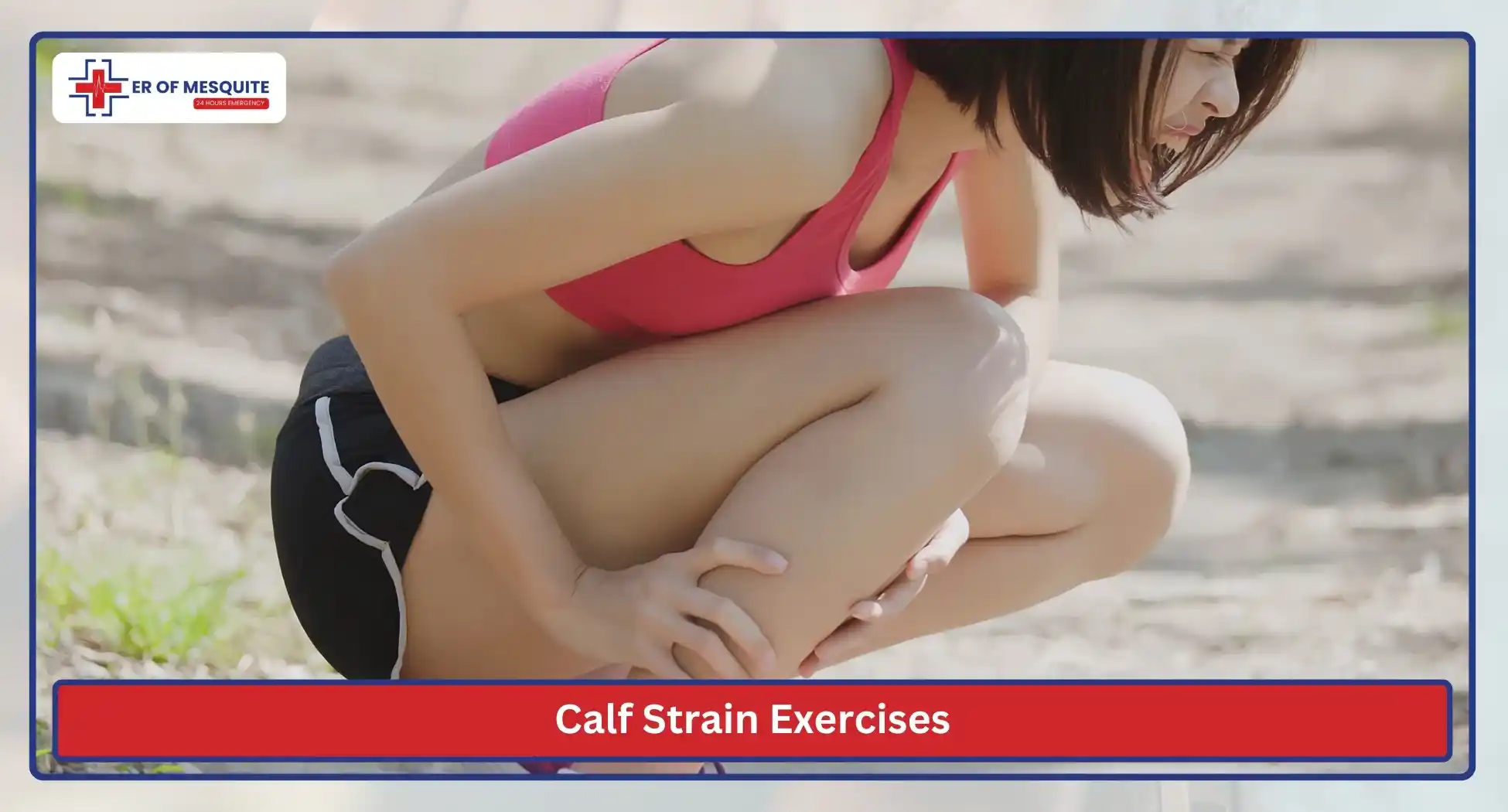
They are different effective calf-strain exercises. By doing the right exercise, you can feel better fast.
Gentle Range of Motion
To do this exercise, sit in a chair and keep both heels on the floor. Now bend both knees slightly and slowly move the foot upward. Aim to pull the toes to the shin and hold this position for 20 to 30 seconds. Repeat it around 3 times.
Ankle Circles
To do this exercise, move your ankles in a circular motion while seated. Do this with no weight and immediately stop if you feel any pain.
Short Walks
Slowly walk on flat ground if you feel no pain. Try to take short steps and do not aim to pull the foot high.
Add a light load
If you walk and feel no pain while walking, then try to add some weight. For this lean into a wall, the back leg should be straight, and the lower back should be down. Hold this position for 3 seconds and do around 3 sets per leg.
RICE Therapy
This is one of the most standard recovery procedures. It includes a combination of all: resting, applying ice, doing compression, and then elevation.
Here is how to do the RICE therapy:
- Rest: Do not put any weight on the legs, and try to rest for the first few hours after a calf strain.
- Ice: Apple ice wrapped in the cloth for 15-20 minutes every 2-3 hours. Do this especially for the first 48 hours. Avoid putting ice directly on the skin; always wrap it in a cloth first and then apply it.
- Compression: Use a compression bandage on the calf sleeves, which helps in reducing swelling. It also supports the area and helps in easing the pain.
- Elevation: Elevate the leg above the heart level, and do it while sitting or lying down. This drains the excess fluid from the area faster.
It is important to note that the heat should be avoided for the first 48 to 72 hours. Do not apply the heat to the injured area directly, as this might increase the blood flow and cause inflammation.
How to Heal a Calf Strain Quickly: Proven Tips for Fast Recovery
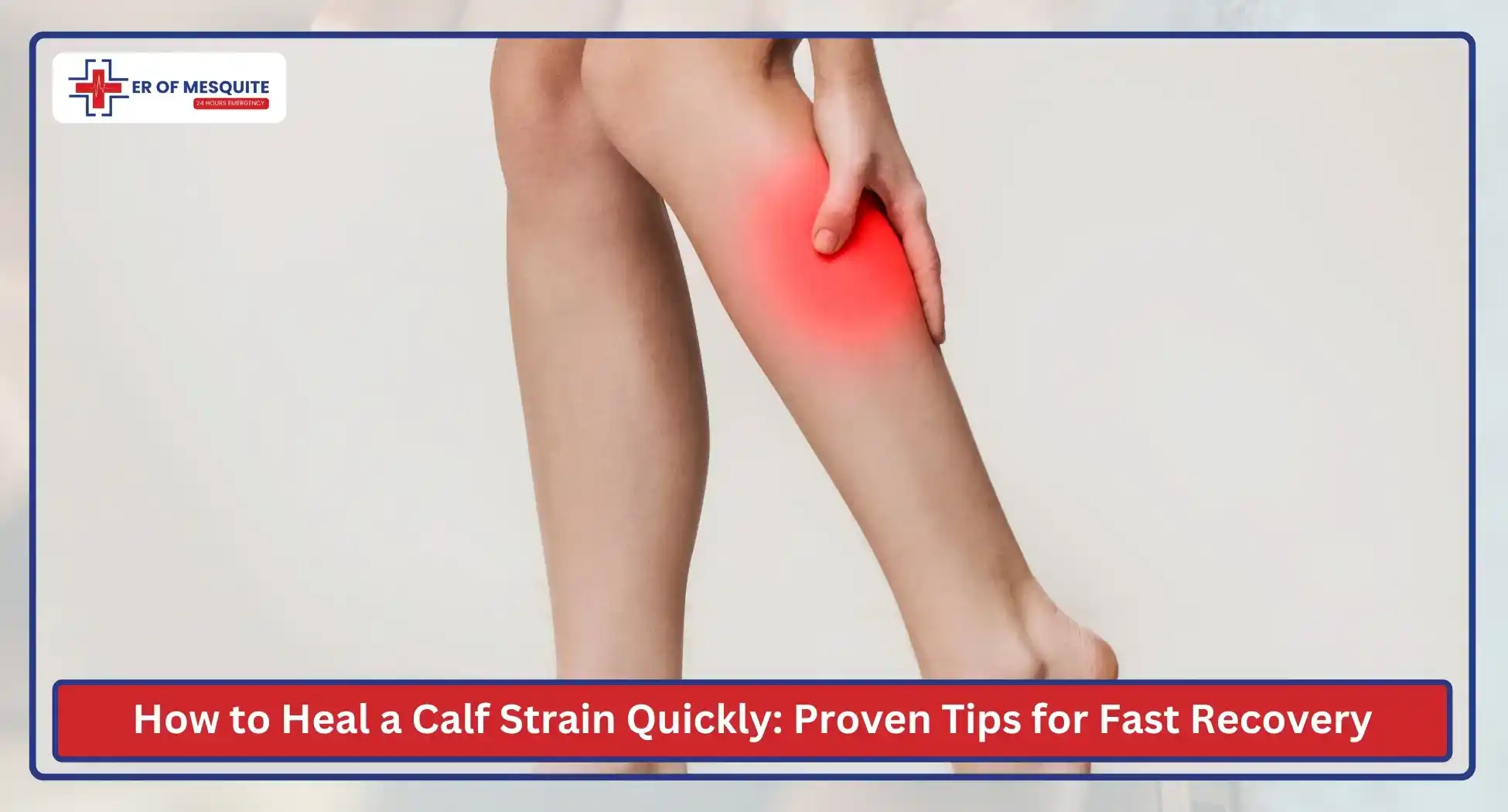
Recovering from a calf strain is always long and frustrating. By taking the right steps at an early stage or by resting, taking ice, compressing, and elevating the leg, you can speed up the recovery process. It is important to listen to your body and do not delay the recovery process, as it might worsen the strain.
By getting it diagnosed at an early stage and trying simple strategies such as gentle stretching, proper hydration, and strength exercises, you can ease the pain and recover soon. If the pain is severe or persistent, then it is better to seek the right medical care to avoid complications.
If your calf pain feels severe or doesn’t improve with basic care, advanced imaging can help rule out deeper injuries. Our related blog, Digital X-Ray in Mesquite: Why Modern Scans Are Safer and Faster?, explains how modern diagnostic tools can quickly and accurately assess muscle
With the right care and patience, most calf strains heal well, allowing you to return to your normal activities stronger and more resilient.
Frequently Asked Questions (FAQs)
Mild strains can heal in 1–2 weeks, whereas more severe injuries can take 4–8 weeks or longer.
Yes, but only light walking if it doesn’t cause pain, but avoid putting too much strain on it.
Use ice in the first 48 hours to reduce swelling, then use a warm compress to make the calf strain better.
Yes, but only gentle stretching.
Severe pain, swelling, bruising, or difficulty walking.