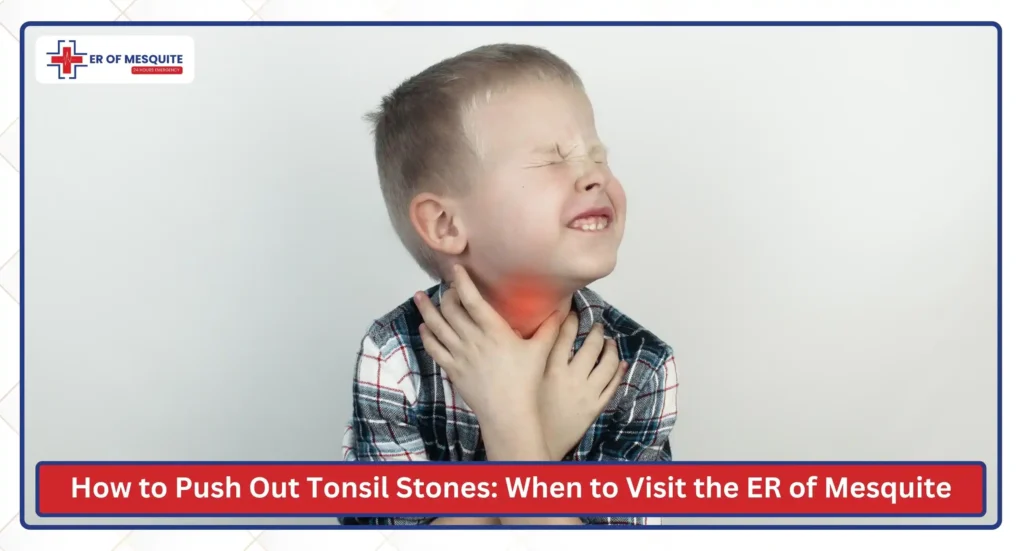
Tonsil stones, also called tonsilloliths, are small, smelly, calcified formations that develop in the tiny pockets of your tonsils.
If your tonsils are worsening and you’re looking for ways to push out tonsil stones, it’s important to fully understand your condition before pursuing any treatment. While many people try to remove them at home, doing it incorrectly can lead to bleeding, infection, or severe throat irritation.
At ER of Mesquite, our emergency care team treats a wide range of throat, sinus, and upper respiratory conditions, offering advanced diagnostics and fast relief when at-home methods fail.
This guide explains how to push out tonsil stones safely, when it’s okay to try removing them at home, and when you should visit an ER for professional care.
How to Push Out Tonsil Stones Safely
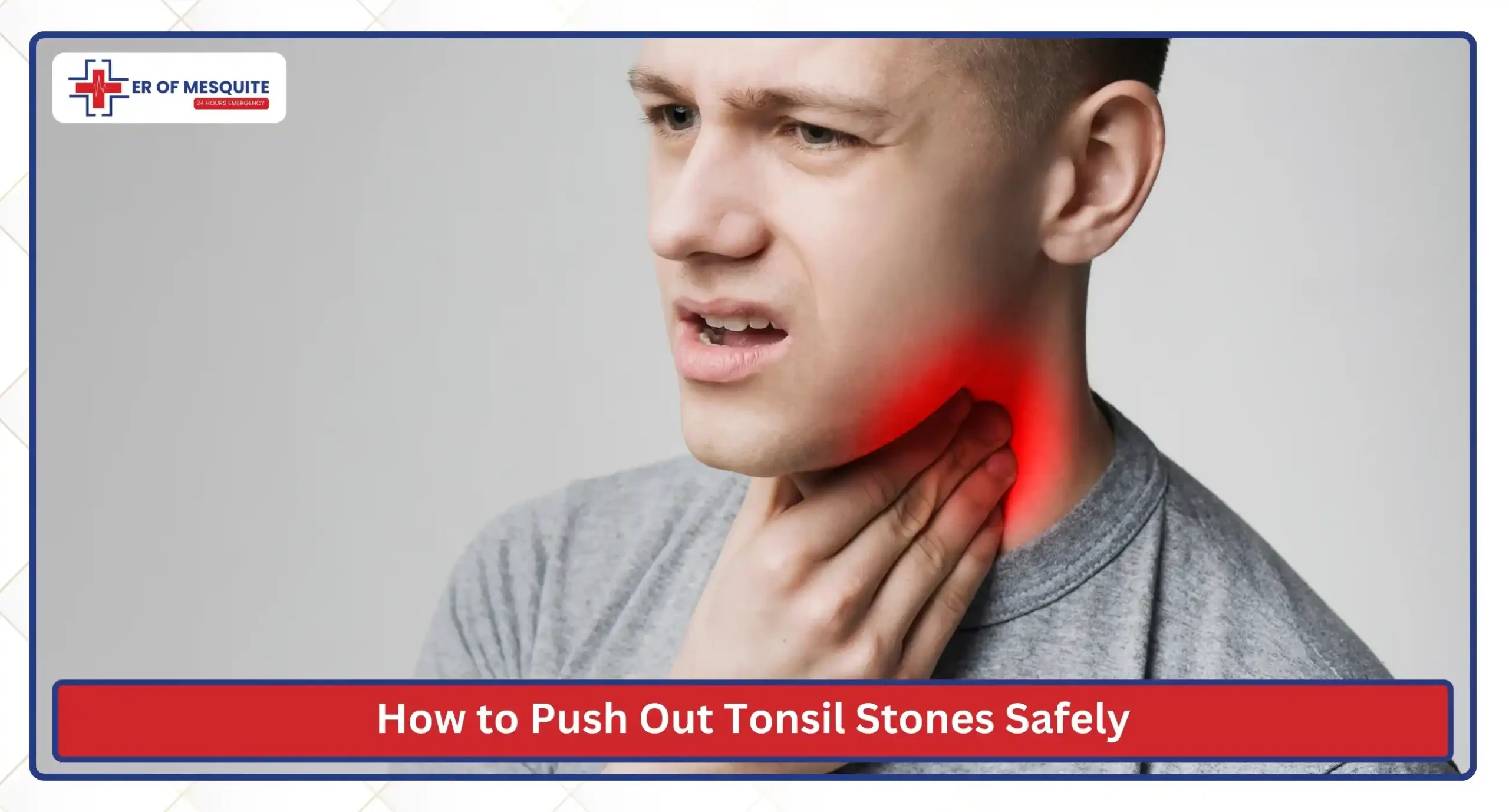
Try Gargling With Warm Saltwater
Gargling can help dislodge small tonsil stones naturally. Warm saltwater reduces swelling and helps loosen debris inside the tonsil crevices. Gargle 3–4 times daily for best results.
Use a Low-Pressure Water Irrigator
A mild water stream can flush out stones without causing bleeding. High-pressure dental irrigators may damage the tonsils.
Cough Firmly
A strong, controlled cough can sometimes expel tonsil stones. This works best when the stone is already near the surface.
Try Cotton Swab Technique
Use a clean cotton swab to gently press beside the tonsil stone until it pops out. Do not try this if you can’t see the stone or notice bleeding
Use Tonsil Stone Tools or a Soft Pick
Special removal tools exist, but only use ones with soft, rounded tips. Don’t try DIY tools like pins, fingernails, or hard objects.
If you or your loved one requires any special medical assistance, then visit us at the ER of Mesquite, where we treat a wide range of throat, sinus, and upper respiratory conditions, offering 24/7 emergency care services, advanced diagnostics, and fast relief when at-home methods fail.
Can Tonsil Stones Cause Other Complications?
Yes, tonsil stones can lead to several uncomfortable or even serious complications if they’re left untreated. When stones stay lodged in the tonsils, they create an ideal environment for bacteria to multiply, which can irritate the throat and trigger recurring inflammation.
Over time, this buildup can cause persistent discomfort, swelling, and even radiating pain toward the ears or jaw. Larger stones or repeated episodes may also signal an underlying infection that requires prompt medical evaluation.
If not managed properly, tonsil stones may lead to:
- Tonsillitis
- Chronic bad breath
- Ear and jaw pain
- Difficulty swallowing
- Tonsil abscess
Prompt medical care helps prevent these issues from escalating.
If your throat pain is worsening or a tonsil stone is stuck deep inside, visit ER of Mesquite for medical assistance. Our board-certified ER doctors are available 24/7 to help you breathe, swallow, and speak comfortably again.
Signs You Should NOT Push Out Tonsil Stones at Home
Trying to remove tonsil stones at home can be risky, especially if the stones are deep or your throat is already inflamed. If you notice your symptoms rapidly worsening, it may indicate a developing infection that needs prompt medical attention.
In such cases, it’s best to let experts evaluate your condition through advanced lab testing at ER of Mesquite to prevent complications.
Stop immediately and seek medical care if you have:
- Bleeding
- Severe sore throat
- Trouble swallowing
- Enlarged tonsils
- Difficulty breathing
- Persistent bad breath despite removal
These can indicate infection, tonsillitis, or a deeper throat condition.
Tonsil Stones vs. Strep Throat – How to Tell the Difference
| Feature | Tonsil Stones | Strep Throat |
| Pain Level | Mild to moderate | Severe, sharp pain |
| Fever | Rare | Very common |
| Odor | Strong bad breath | Not common |
| Appearance | White/yellow stones | Red tonsils, white patches |
| Treatment | Gargles, gentle removal | Antibiotics (after strep throat testing) |
| Emergency Care | Sometimes | Recommended for severe symptoms |
When to Seek Medical Care for Tonsil Stones
If your tonsil stones keep coming back or start causing pain and swelling, it’s time to seek medical care before the condition worsens.
You should visit the ER of Mesquite if:
- Tonsil stones occur frequently
- Severe sore throat
- Sharp pain when swallowing
- Sudden fever and chills
- Strep throat or tonsillitis
- Home removal attempts fail
- Pus or throat redness
Our team provides comprehensive diagnosis and treatment using on-site lab testing, throat infection evaluation, and emergency care.
Conclusion: Don’t Force Tonsil Stones Out
Tonsil stones are irritating, uncomfortable, and often embarrassing, especially when they cause chronic bad breath. While mild tonsil stones can be safely pushed out at home using gentle techniques, deeper or painful stones should be removed by a professional.
At ER of Mesquite, our emergency care team provides safe removal, fast relief, and accurate diagnosis using on-site lab testing, infection evaluation, and complete throat care.
If a tonsil stone is stuck, painful, or causing fever or swallowing difficulty, visit the ER of Mesquite immediately for expert care. We’re open 24/7 with no appointment needed. Call Now or Visit ER of Mesquite
Frequently Asked Questions (FAQs)
Can I safely push out tonsil stones at home?
Yes, but only if they’re small and visible. Stop immediately if you feel pain, bleeding, or discomfort.
Do tonsil stones cause bad breath?
Yes, they contain bacteria and debris that produce a strong odor.
When should I see a doctor for tonsil stones?
If they’re painful, keep returning, or cause fever, swelling, or trouble swallowing.
Can tonsil stones cause ear pain?
Yes, it can cause ear pain because it shares nerve pathways that radiate from the tonsils to the ears.
Will removing tonsils stop tonsil stones forever?
Yes, tonsillectomy eliminates tonsil stones, but it is recommended only in severe or chronic cases.