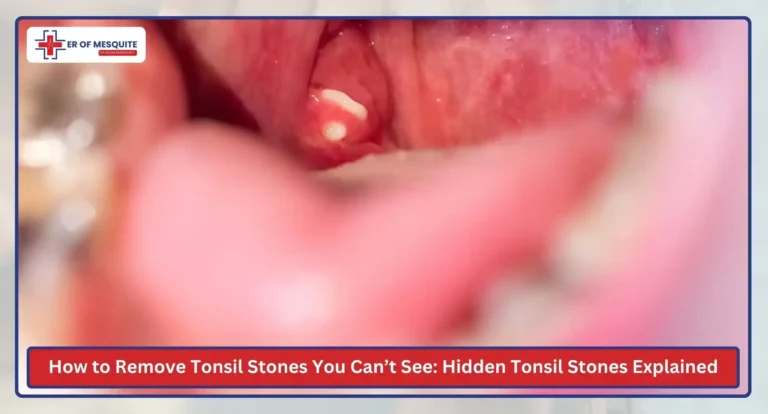
If you’re struggling with bad breath or throat discomfort, it might not always be due to the flu or a sore throat; it could also be caused by tonsil stones. Tonsillar stones are small, hardened deposits that form in the tiny pockets of the tonsils when bacteria and debris become trapped.
At times, these tonsil stones appear as white or yellow spots, but they can also remain hidden deep within the tonsillar tissue. When they remain hidden, that’s when patients come up with a common question: how to remove tonsil stones you can’t see?
Tonsil stones that are hidden deep down can cause continuous pain and throat irritation, causing difficulty in breathing and bad breath. Since they are hidden beneath the surface of tonsils, detecting them during physical examination becomes difficult.
At ER of Mesquite, our advanced emergency room in Mesquite, TX, we carefully examine throat discomfort and provide immediate results. Our board-certified physicians quickly evaluate your medical condition and provide fast medical care or adequate referrals.
What Are Tonsil Stones?
Tonsil stones, also referred to as ‘tonsilloliths’, are small calcified deposits that form in the crevices of the tonsils. As tonsils contain small folds called ‘crypts’, which fight against bacteria, when debris gets trapped, it affects the daily activities, including breathing and eating.
Gradually, this trapped material gathers bacteria and settles down in the tonsil pockets, creating a small stone. They remain tiny or can grow larger, causing serious discomfort.
Most of the time, these tonsil stones are clearly visible on the tonsils, but when they develop deeper inside the tissue, they cannot be seen.
How to Tell If You Have Tonsil Stones:
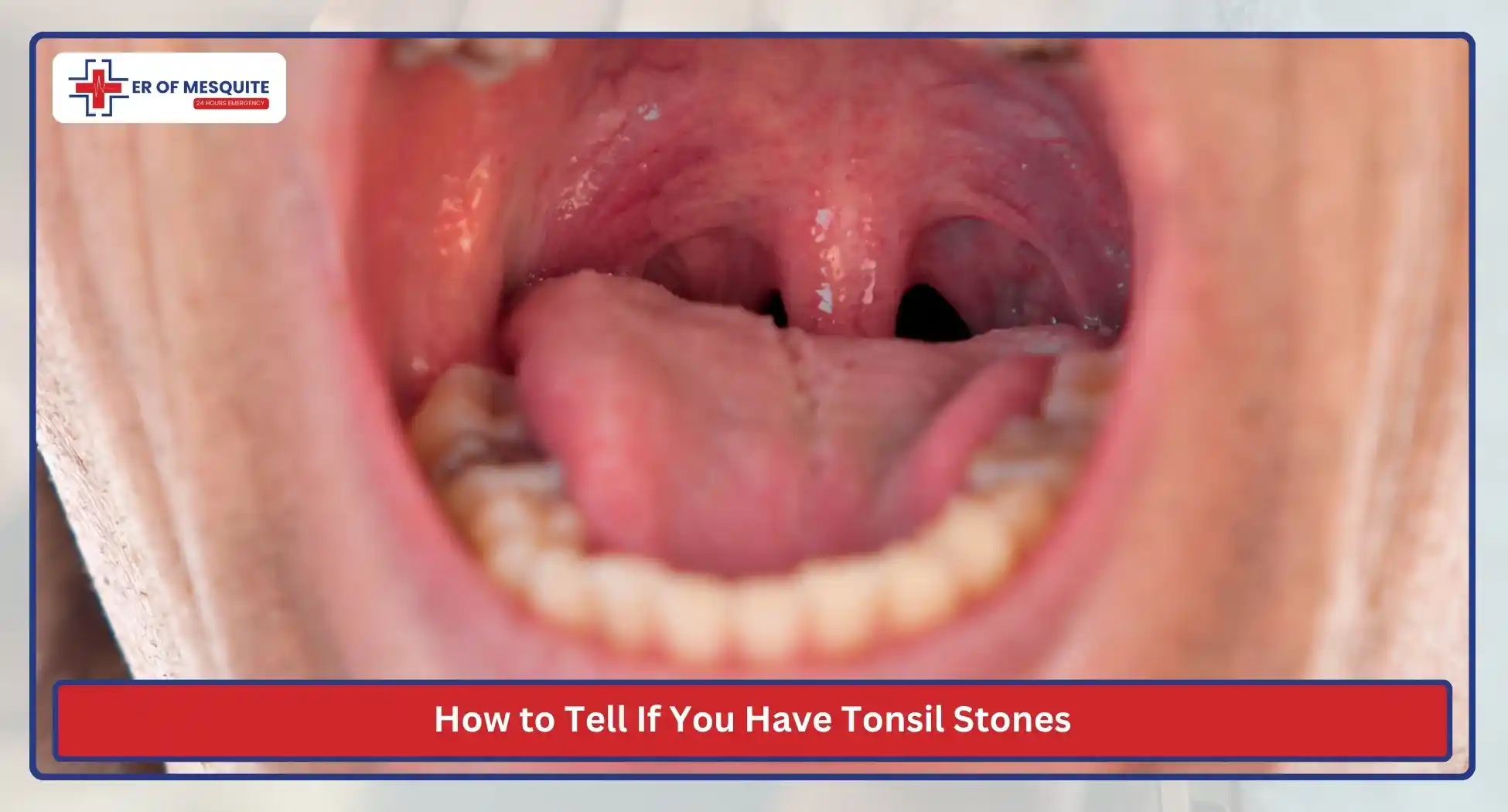
People notice tonsil stones through their early signs before a medical evaluation. At times these stones remain hidden, so the body gives few early signs when the debris is trapped in the tonsils.
Below are a few common tonsil stone symptoms:
- Bad breath
- Sore or irritated throat
- Difficulty swallowing
- Ear pain or pressure
- A feeling that something is stuck in the throat
In most severe cases, patients might notice a high fever during the seasonal flu, thus affecting the immune system. If these symptoms appear continuously for a prolonged time, then it becomes essential to understand their underlying cause.
How to Check for Tonsil Stones
Checking visible tonsil stones can be easily done; however, if the tonsil stones are hidden, detecting them can be difficult. It can be observed with careful examination through good lighting.
While checking for tonsil stones, you should look for white or yellow deposits in the tonsil folds. Moreover, during the checking phase, it is important to open the mouth wide.
Another common checking method includes gently pressing the tonsil with a clean cotton swab. This can sometimes reveal trapped debris that may otherwise remain hidden. Some people notice stones when they cough or after rinsing their throat. Stones that are deep inside the tonsil tissue cannot be easily spotted in a simple inspection.
If you’re suffering from pain and continuous throat discomfort, it is best advised to get an urgent ultrasound done at a reliable ER.
What Causes Tonsil Stones?
Tonsil stones appear when debris gets trapped in the small pockets of tonsils. Gradually bacteria, mucus, and food particles gather and form small stones.
There are certain conditions that build up tonsil stones. It is important to know about these conditions so that you can take early precautions.
Below are a few common causes of tonsil stones:
- Poor oral hygiene
- Continuous throat infections
- Enlarged tonsil crypts
- Postnasal drip
- Chronic sinus issues
- Dry mouth
People suffering from strep throat can also develop tonsil stones. As the infection inflames the tonsils, enlarging the crypts and spaces where debris easily collects.
How Long Do Tonsil Stones Last?
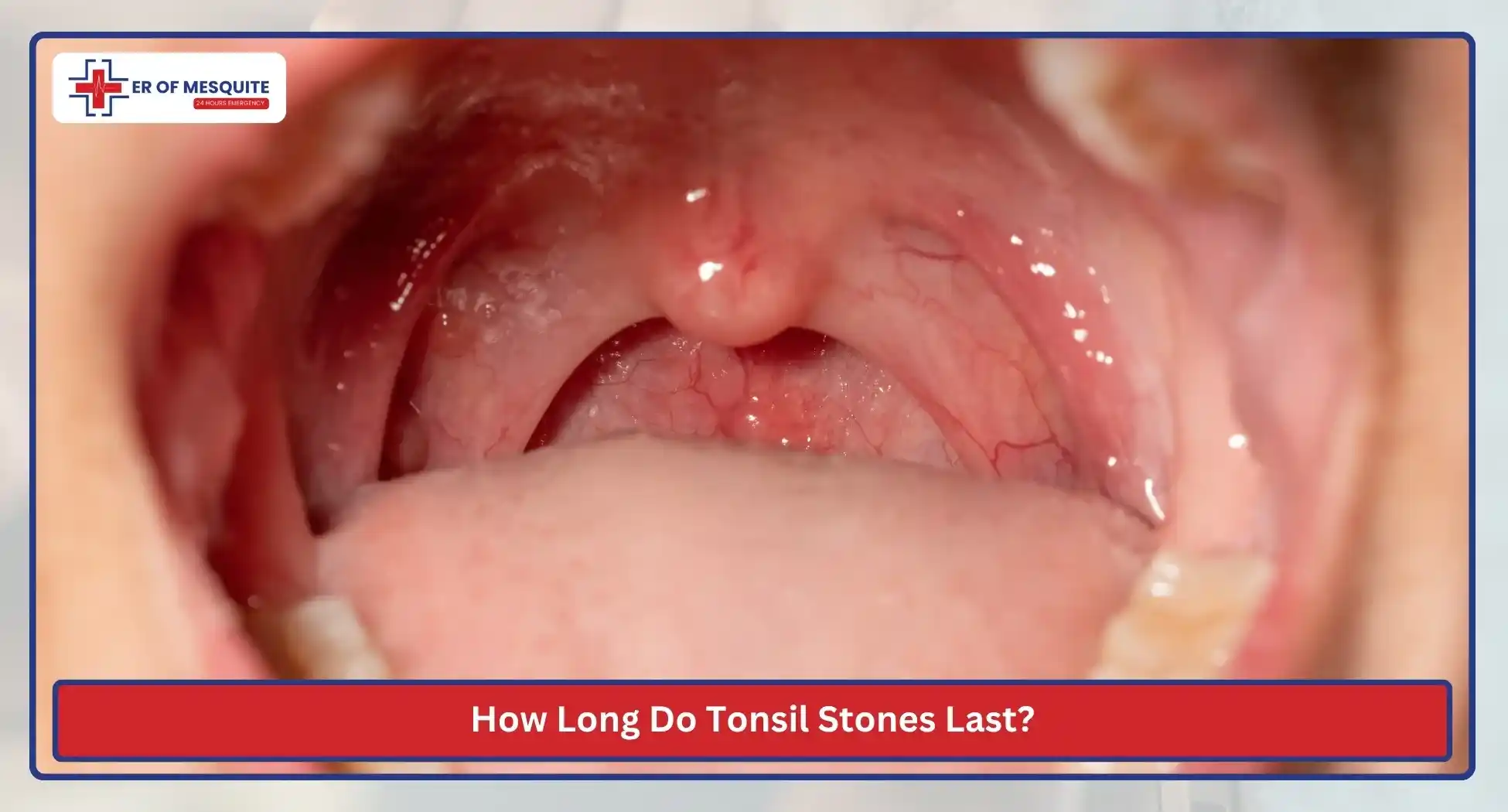
The table below illustrates how long do tonsil stones last:
| Situation | How Long They May Last |
| Small tonsil stones | A few days to 1 week |
| Stones removed with gargling | Around 2–5 days |
| Medium-sized tonsil stones | About 1–3 weeks |
| Deep tonsil stones | Several weeks or months |
| Recurring tonsil stones | May appear repeatedly over time |
Can Tonsil Stones Make You Sick?
Yes, tonsil stones can cause health issues and can make you sick. In most cases when the bacteria accumulate inside the stones, they might make you sick or cause a high fever.
Some people might experience signs including throat pain, swelling or serious infection. Moreover, if the bacteria continue to multiply in the tonsil crypts, it might increase the chances of severe throat discomfort.
When symptoms worsen or infection is suspected, medical evaluation is recommended to prevent complications.
How to Remove Tonsil Stones at Home
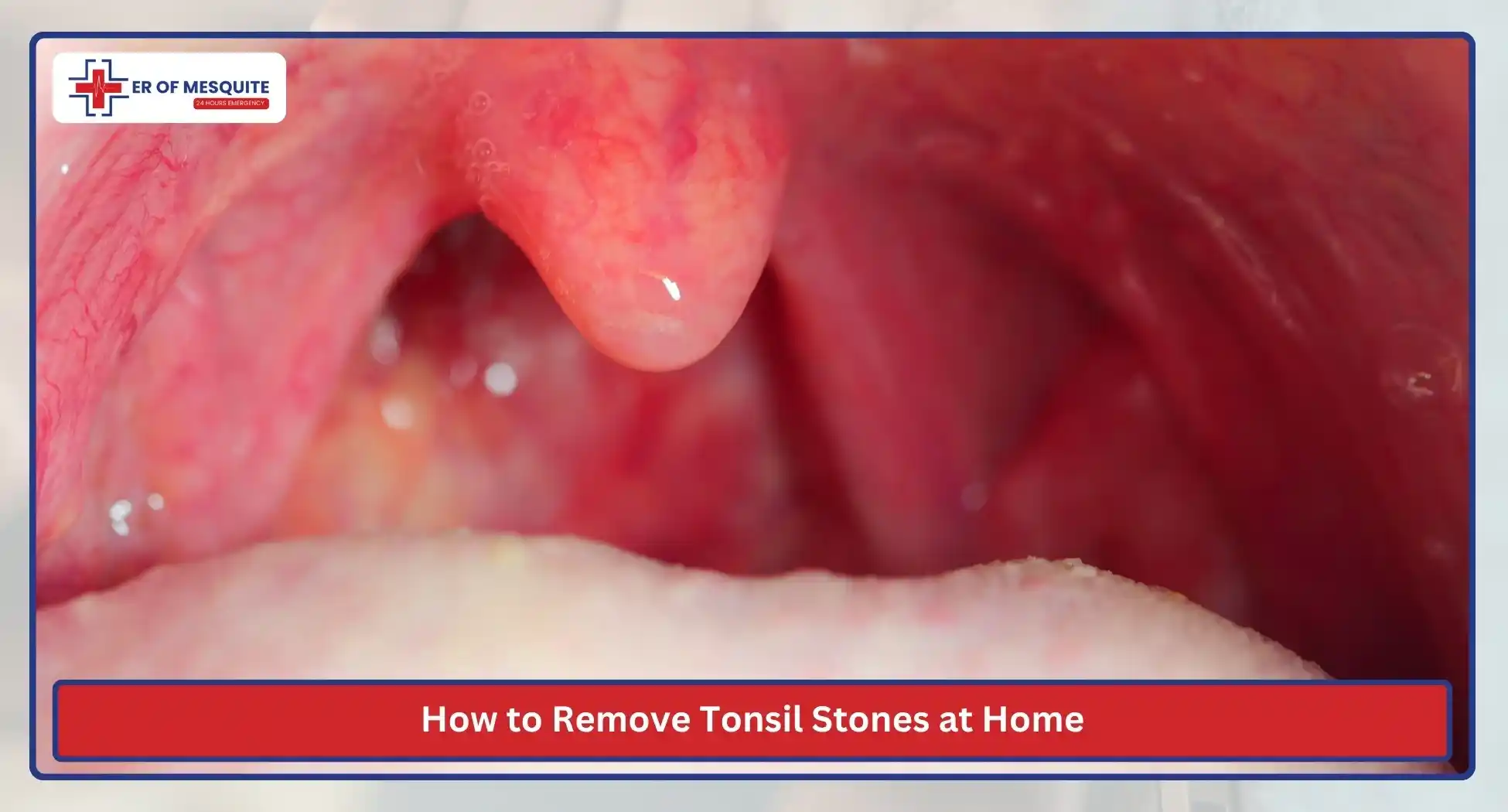
Most times, tonsil stones can be managed at home by making use of gentle methods. However, since these tonsils contain sensitive tissues, it is important to not get involved with sharp objects. If you aim to naturally get rid of tonsil stones along with reducing the bacteria in the throat, then it is important to make use of doctor-suggested home remedies.
Gargle with Warm Salt Water
Gargling with warm salt water is one of the simplest ways to get rid of tonsil stones. It helps loosen debris and reduce bacteria in the throat. At first, prepare a rinse by mixing 1 teaspoon (5 mL) of salt in 1 cup (250 mL) of warm water, then gargle with the mixture for about 15–20 seconds. People also gargle with warm salt water or apple cider vinegar to help break down buildup in the tonsils.
Removal Methods
If you notice the stones near the surface, then gentle techniques may help remove them safely. Common tonsil-stone removal methods include the following:
- Saltwater gargles
- Coughing to loosen debris
- Gently pressing on the tonsil with a cotton swab
- Oral irrigation with low pressure
Hydration and Oral Hygiene
Maintaining good oral hygiene can also prevent new stones from forming. Good oral health can be maintained with consistent saltwater gargles, oil pulling and staying hydrated.
Preventing Tonsil Stones
Tonsil stones can appear for anyone, but maintaining them strongly depends upon good oral and throat hygiene. By taking good care of oral health and reducing the amount of bacteria, one can prevent tonsillitis.
Below are a few common prevention tips:
- Brush teeth twice daily
- Floss regularly
- Rinse after meals
- Gargle with warm salt water
- Stay hydrated
- Manage sinus issues
- Try oil pulling
Final Verdict
Tonsil stones develop when debris becomes trapped in the folds of the tonsils. Most times these stones are visible; many people struggle with deep tonsil stones that remain hidden but still cause symptoms such as bad breath, throat discomfort, and difficulty swallowing.
Learning how to remove tonsil stones you can’t see aids in managing the condition safely and prevents ongoing irritation.
Home remedies such as salt water gargles, hydration, and gentle removal techniques can often help dislodge smaller stones. If throat discomfort becomes severe or is accompanied by fever or swelling, immediate medical assistance becomes essential.
Early care helps in relieving symptoms and prevents future complications. At ER of Mesquite, our emergency physicians provide fast evaluation and treatment for throat conditions, infections, and other urgent health concerns.
Frequently Asked Questions (FAQs)
1. What are tonsil stones?
Small, hardened deposits that form in the tonsil pockets.
2. How can I tell if I have tonsil stones?
Common signs include bad breath, throat discomfort, or feeling something stuck in the throat.
3. Can I remove tonsil stones at home?
Yes, with gentle methods like salt water gargles, coughing, or cotton swabs can help.
4. How long do tonsil stones last?
They can last from a few days to several weeks, depending on size and location.
5. Can tonsil stones make you sick?
Yes, large or infected stones may cause throat pain or infection.