
Feeling pain in muscles that affect your everyday activities might be due to a strain. Since this injury causes discomfort, many people look up ways to speed up muscle strain recovery. Muscle strain could be due to a pulled chest muscle, rib cage, muscle pain, or lower back muscle strain.
The recovery time for a muscle strain typically depends on the severity of the injury. Strains might heal within a few days or might take weeks to heal. To heal quickly, it is important to identify the issue at an early stage so that the proper treatment method can be followed.
It is important to understand the nature of muscle strain and then follow the right treatment, which might include proper rest, therapy, and avoiding activities to reduce pain and further complications.
What Is a Muscle Strain?
A muscle strain happens when the muscle fibres get torn due to intense force or wrong movements. They can tear or overstretch due to intense, heavy exercises, heavy lifting, or excessive force. People might confuse a torn muscle with a pulled muscle, but the intensity of the pain is different.
Below are the different levels of muscle strain:
- Grade 1: Mild case with minor stretching and heals quickly.
- Grade 2: Moderate case with partial tear affecting movement.
- Grade 3: Severe case requiring immediate medical attention.
Knowing the severity of pain helps you follow effective treatment and gives you an estimate of the recovery time period.
In case you feel discomfort in muscles and are confused whether it’s a strain, bruise, or pulled muscle, then visit us at the ER of Mesquite for quick evaluation, along with referrals if required.
Muscle Strain Recovery Time
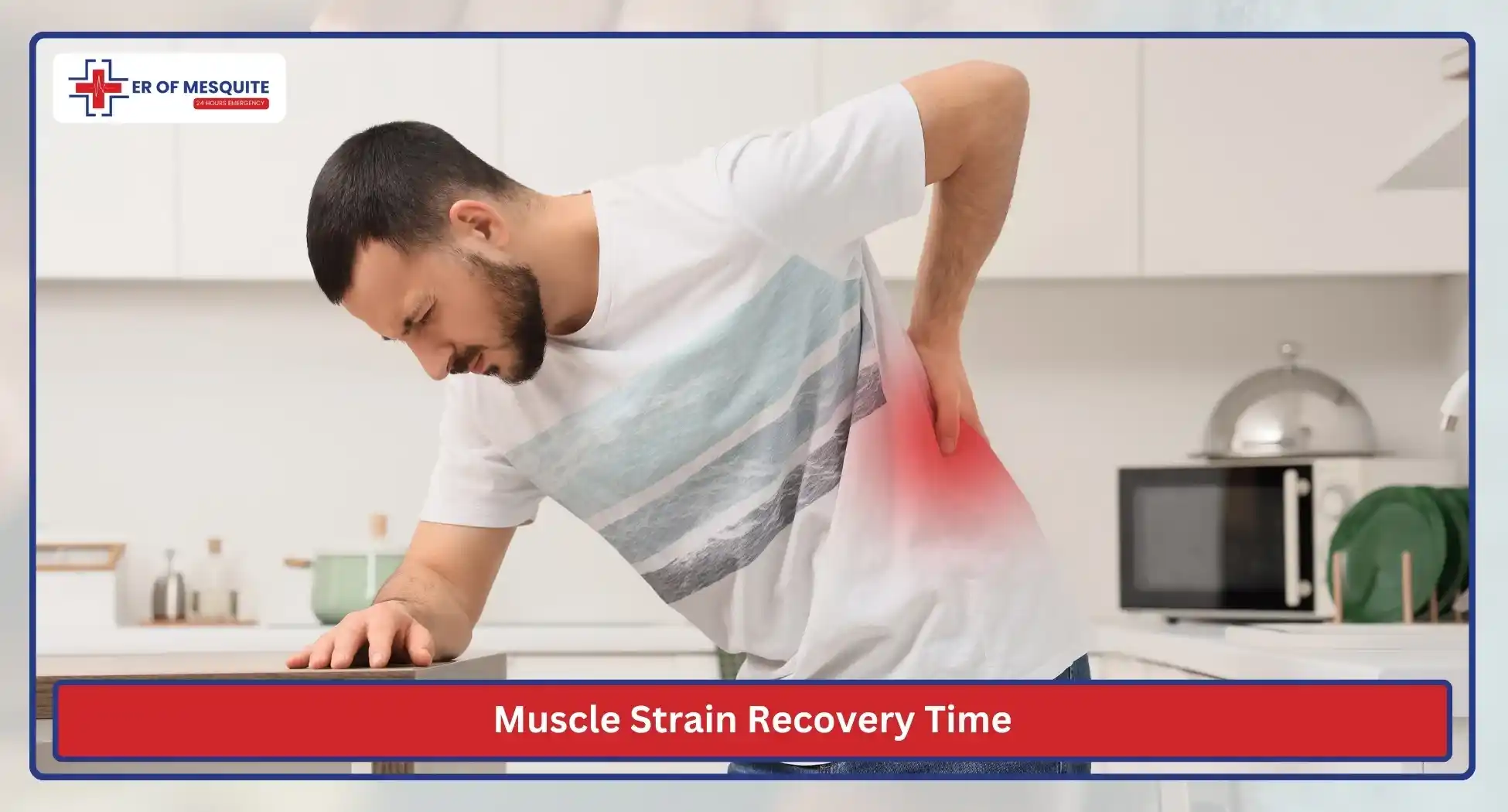
The recovery time of muscle strains varies depending on their type and severity. When people search for how to heal a pulled muscle overnight, they might see results longer than expected. However, the actual period is based on injury. Similarly, the exact time period of muscle strain cannot be provided immediately, but an estimate can be given by closely observing the pain.
Typical Recovery Timelines:
| Type of Strain | Recovery Time |
| Grade 1-Mild | 1 to 2 weeks |
| Grade 2-Moderate | 3 to 6 weeks |
| Grade 3 – Severe | A few months or more |
| Back muscle strain recovery time | Almost 2 to 6 weeks |
| Lower back muscle strain | Almost 4 to 8 weeks |
A digital X-ray can assist in identifying whether the pain is mild, moderate, or severe.
If your injury needs further evaluation, check out Digital X-Ray in Mesquite: Why Modern Scans Are Safer and Faster? to learn how advanced imaging can support quicker diagnosis and treatment.
Tips to Speed Up Muscle Strain Recovery
To recover from muscle strain, it is important to have proper rest and an appropriate treatment method. Although rest is essential, you should also understand to keep a balance, as staying inactive for a long period might slow down the healing process.
Below are a few effective recovery methods:
- Apply RICE therapy (rest, ice, compression, and elevation).
- Keep moving, involving light activities to avoid stiffness
- Avoid extensive moving or heavy exercises
- Gradually resume normal activities upon healing
- Stay hydrated and follow a healthy diet to support muscle repair
- Complete sleep
Taking good care of muscles supports speedy recovery and also prevents further complications.
Pulled vs Torn Muscle
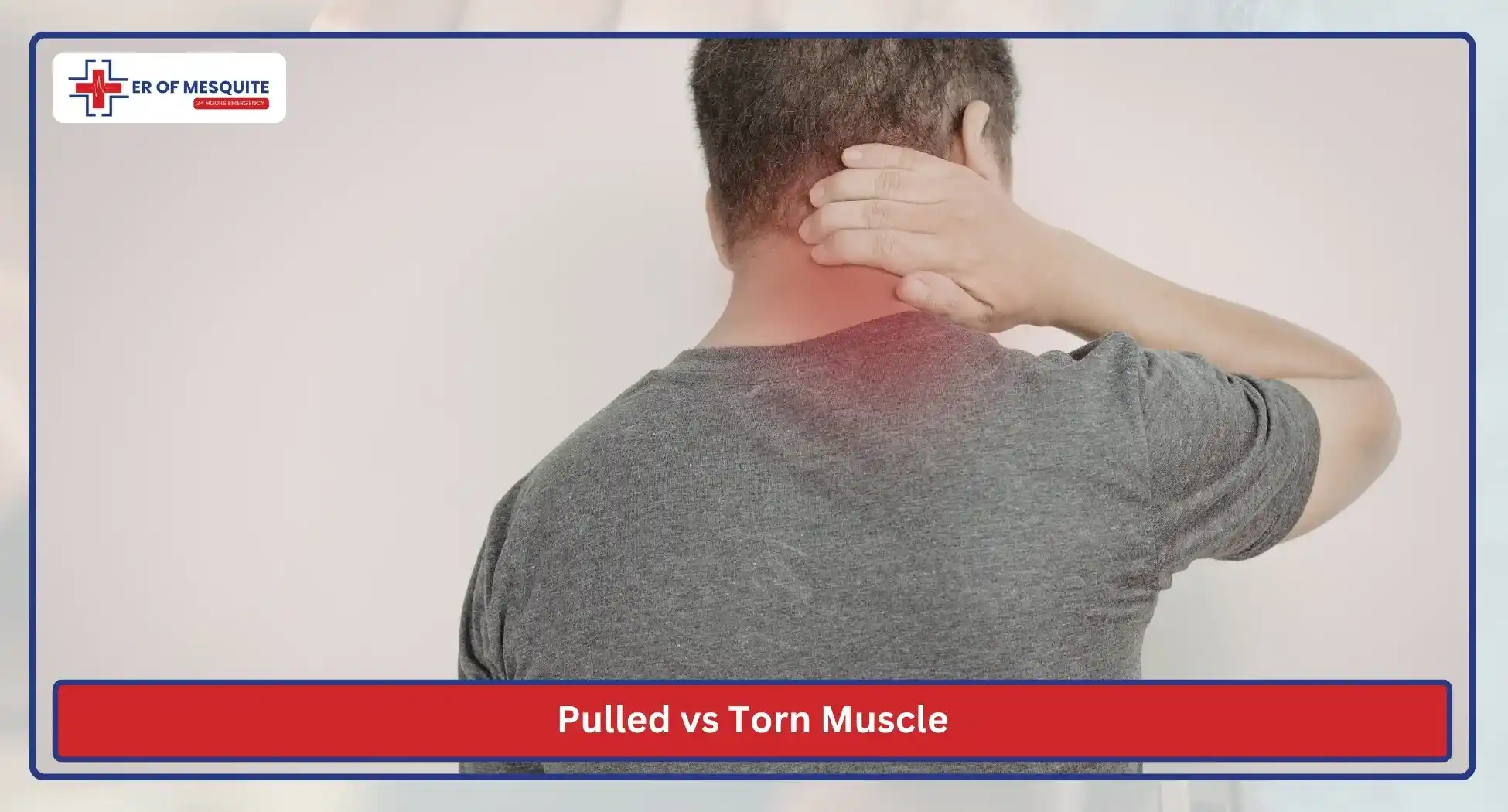
The table below illustrates the difference between a pulled muscle and a torn muscle.
| Feature | Pulled Muscle | Torn Muscle |
| Severity | Minor stretch | Partial or severe tear |
| Pain | Mild to moderate | Sharp, intense |
| Swelling | Minimal | Significant |
| Mobility | Slight limitation | Severe limitation |
| Recovery | A few days to weeks | Weeks to months |
If you’re dealing with chest discomfort, read our Pulled Chest Muscle Guide to better understand symptoms, recovery timelines, and when to seek medical assistance.
Exercises to Support Recovery
Exercises also help in healing, but only once the pain and swelling start going away. These exercises will help in reducing the pain and also prevent further complications.
- Start with light stretching, as it improves flexibility and reduces stiffness.
- Do isometric exercises, as they help tighten muscles.
- Perform low-impact movements, as they maintain healthy blood flow.
Light stretching and exercises help in reducing the strain on the muscle. It also improves the blood flow and strengthens the muscles during recovery. If you experience muscle strain due to chest muscle pain or a pulled chest muscle, then maybe you might feel pain while breathing due to the pressure on the lungs.
Should I See a Doctor for Chest or Back Muscle Strains?

Yes, if you feel pain or your strain is persistent or affects areas such as the lower back or chest, then it is important to seek medical assistance. If you experience grade 2 muscle strain or a torn muscle, then ensure to get it cured through proper healing.
With early intervention, accurate treatment can be initiated on time, and long-term injury can be prevented. Seeking advice from your doctor is important even if muscle strain treatment at home is initiated, as professional advice confirms recovery.
Conclusion
Understanding how to speed up muscle strain recovery helps make a significant difference and also speeds up the recovery process. A few strains are mild, which can heal within a few weeks, whereas a few might require medical assistance and extra medical care treatment, such as RICE therapy or medications.
Whether you’re suffering from a pulled chest muscle, rib cage muscle, or lower back strain, early intervention and following the right care are the keys to maintaining muscle health.
Frequently Asked Questions (FAQs)
1. How to speed up muscle strain recovery?
Use RICE therapy, stay lightly active, and gradually add stretching and strengthening exercises.
2. How long does muscle strain recovery take?
Most strains heal in 1 to 6 weeks, depending on severity and treatment.
3. Can I heal a pulled muscle overnight?
No, but proper care can reduce pain quickly and speed up recovery over time.
4. What is the difference between a pulled and a torn muscle?
A pulled muscle is mild, while a torn muscle involves more severe damage and a longer recovery.
5. What helps chest or rib cage muscle pain?
Rest, ice, and avoiding strain help relieve chest muscle pain and rib cage muscle pain.