A hidden disease that only shows signs after causing serious issues can be dangerous. This is because it might cause discomfort and impact your daily activities. One such issue is a sexually transmitted disease (STD) that spreads through sexual contact.
One drawback of this disease is that it can affect both males and females, although it is not noticeable, causing the disease to spread. By knowing its early signs, you can protect your health and prevent long-term complications, including infertility, pelvic infection, or chronic pain.
By observing your body closely, you can know about the changes, which helps you seek instant medical care at an early stage. In this guide, we will discuss the common STD signs so that you know when to take necessary actions.
What is an STD?
Sexually transmitted diseases (STDs) are common infections that are transmitted through sexual contact. They can affect both males and females. Bacteria, viruses, or parasites can cause STDs.
Most of the time, they show signs like unusual discharge, genital sores, a burning sensation while urinating, or pelvic pain. At times, this infection comes with no prominent signs, due to which regular testing becomes essential.
If it is diagnosed early, then it can be treated or managed with proper medication. Moreover, having safe sexual intercourse and routine screenings can reduce the chances of STDs. Paying attention to changes in your body and seeking medical care early can help prevent the infection from worsening.
What Are STDs or STIs?
Sexually transmitted diseases (STDs), also referred to as ‘sexually transmitted infections’ (STIs). This infection
Can spread through sexual contact and can affect both males and females; moreover, it is caused by different bacteria, viruses, or parasites. They may have clear signs, while the majority of the time can go unnoticed for a long time.
Although STDs and STIs are almost the same, the table below highlights a few differences between STDs and STIs.
| STD | STI |
| It is a sexually transmitted disease | It is a sexually transmitted infection |
| When symptoms or complications appear | Used for infections that may not yet cause symptoms |
| Commonly used in general healthcare | Medical accurate modern term |
| Includes conditions like genital herpes or AIDS | Includes infections like chlamydia or HPV |
| Both terms refer to infections spread through sexual contact | Both terms are often used interchangeably |
These infections quickly spread through vaginal, oral, or anal sex. At times, it can also spread through skin contact or blood exposure. STIs can commonly include gonorrhea, chlamydia, herpes, syphilis, HPV, HIV, and trichomoniasis. The impact of each infection is different on the body, and the signs vary from person to person.
At ER of Mesquite, our experienced emergency team is available 24/7 to evaluate urgent symptoms such as severe pelvic pain, fever, abdominal discomfort, or other concerning health conditions that may require immediate medical attention.
Common Signs of STDs
Normally, the signs of STDs differ based on the infection. There are a few signs that can be identical in both males and females. Below are a few common signs:
- Genital sores
- Bumps
- Burning or itching sensation in the vagina
- Pain during sexual intercourse
- Swelling or redness near the genitals
- Painful blisters
- Open sores in the genital area
Some symptoms of a urinary tract infection can overlap with sexually transmitted infections. Learn more in Signs of STDs: Common Symptoms in Men and Women You Should Never Ignore to better understand warning signs that should not be ignored.
Symptoms of STD in Female
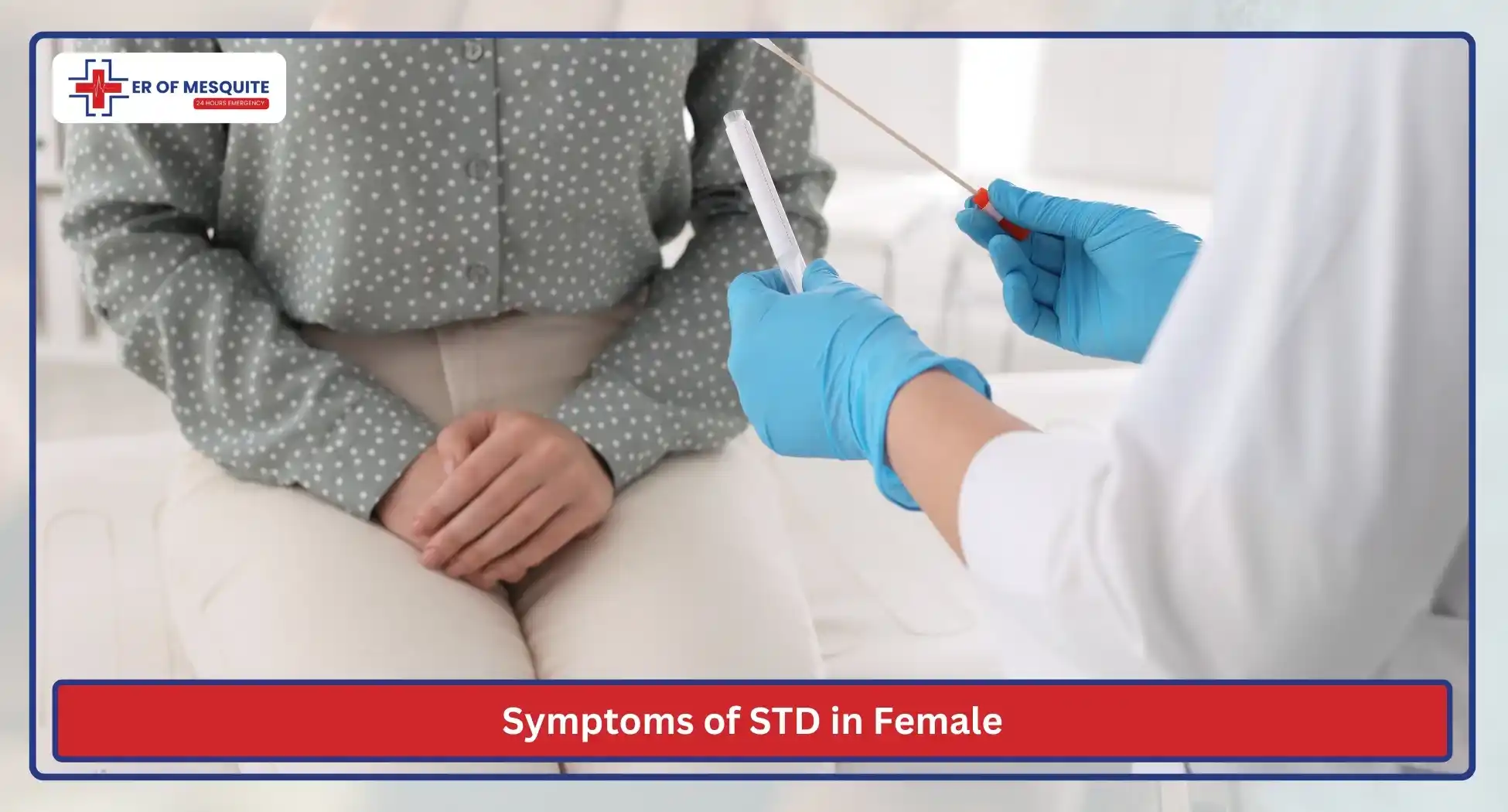
Women notice different signs that can be mistaken for urinary tract infections or hormonal issues. The signs can be mild to severe based on the infection. One of the most common signs is vaginal discharge with a foul odour.
Common signs include:
- Pelvic pain
- Pain during sex
- Bleeding between periods
- Burning while urinating
- Genital sores or bumps
At times, STIs can lead to serious issues, including pelvic inflammatory disease (PID), infertility, or complications during pregnancy. These signs may be mild or absent; regular STI screening is important for sexually active women.
If you experience persistent or severe chest discomfort along with other concerning symptoms, it’s important not to ignore it, as it may be linked to a serious condition such as a heart attack.
Symptoms of STD in Male
STD signs in males can also be different. The signs are easier to identify as compared to females, as they affect the urethra and penis. At times, they might also notice swelling or discomfort in the testicles.
Below are a few common signs of STDs in males:
- Pain during urination
- Penile discharge in men
- Sores or bumps on the penis
- Itching or redness around the genitals
- Painful ejaculation
- Swollen or tender testicles
Although the signs seem minor, when they are left untreated, they can cause serious complications and can be transmitted to sexual partners. Early laboratory testing and treatment are important to prevent complications and reduce transmission.
How STDs Can Affect Your Body

They can have different effects on the body that may vary in different ways, depending on the type of infection. These infections can cause abnormal discharge from the vagina or penis, or a burning sensation during urination and severe irritation. Women often notice unusual vaginal discharge with discomfort or odor.
It can also cause genital sores or bumps, including painful blisters or open sores in the genital area associated with herpes or syphilis. Redness, swelling, itching, and tenderness may develop around the genitals as the infection progresses.
Conditions such as chlamydia, HPV, and HIV cannot be identified for long periods, making regular STI testing important for early diagnosis, treatment, and preventing complications or transmission to others.
While Signs of STDs explains infection-related symptoms, you can also read What Does Chest Muscle Pain Feel Like? Causes, symptoms, and Recovery to understand how different types of body pain may present.
Final Thoughts
STDs and STIs are common infections that can affect anyone who is sexually active, and their symptoms may range from mild irritation to painful sores or unusual discharge. Signs such as burning during urination, genital sores or bumps, itching, and abnormal vaginal or penile discharge should never be ignored. However, many infections like chlamydia, HPV, and HIV may not cause noticeable symptoms right away, making regular STI testing extremely important.
Early diagnosis and treatment can help prevent serious health complications, including infertility, pelvic infections, and the spread of infection to partners. If you notice any unusual changes in your body or experience persistent genital discomfort, seek medical attention promptly. Timely care and awareness can make a major difference in managing STDs effectively and maintaining overall reproductive health.
Frequently Asked Questions (FAQs)
What are the most common signs of STDs?
Common signs include unusual discharge, burning during urination, genital sores, itching, and pain during sex.
Can STDs go away on their own?
Most STDs require medical treatment and should not be ignored.
Can you have an STD without symptoms?
Yes, many STIs like chlamydia and HPV may not show symptoms early on.
What causes burning during urination?
Burning urination can be caused by STIs such as gonorrhea or chlamydia.
Are genital sores always an STD?
Not always, but sores or bumps should be checked by a doctor promptly.
How are STDs diagnosed?
Doctors diagnose STDs through urine tests, blood tests, swabs, or physical exams.