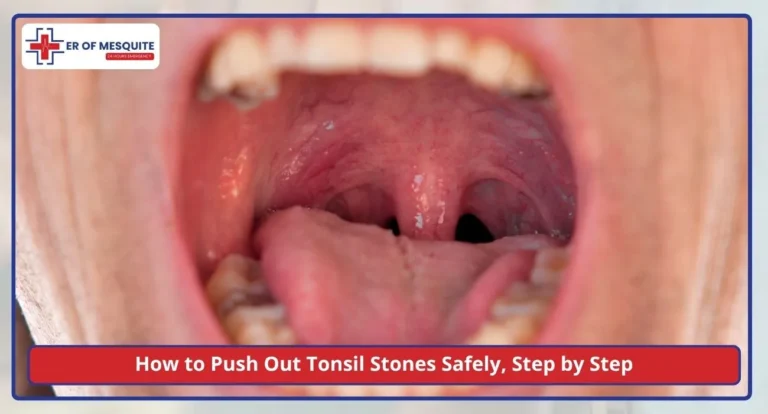
The safest way to push out a tonsil stone is to loosen it first with a warm saltwater gargle, then press gently on the tonsil next to the stone with a clean, damp cotton swab until it pops free. A firm cough or a water flosser on its lowest setting can also work. Never dig at a stone with a fingernail, toothpick, or anything sharp, and stop if you see blood. Most tonsil stones are harmless and many fall out on their own.
Key takeaways
- Gargle with warm salt water first. It loosens stones and makes every other method easier.
- Press beside the stone, not on it. Pushing straight down can drive it deeper.
- A low-pressure water flosser can flush stones out of the tonsil pits without touching them.
- Stop after a few gentle tries. Sore, bruised tonsils make the next attempt harder.
- Regular gargling, brushing your tongue, and drinking enough water help stop new stones from forming.
Before You Start
- Wash your hands and use clean tools only.
- Use a mirror and a light. A phone flashlight works well.
- Wait until your stomach is fairly empty. Touching the back of the throat can trigger gagging.
- Breathe slowly through your nose and stick your tongue out to bring the tonsils forward.
- Tense your throat as if saying “ahh” or flexing it. This can push the tonsils outward and make stones easier to reach.
5 Ways to Push Out Tonsil Stones

These are the methods Cleveland Clinic lists for removing tonsil stones at home: gargling, coughing, a water pick, and gently pushing with a cotton swab.
1. Gargle With Warm Salt Water
Stir half a teaspoon of salt into 8 ounces of warm water. Tilt your head back and gargle for 20 to 30 seconds, letting the water reach the back of your throat, then spit. Repeat two or three times. The salt water loosens debris in the tonsil pits, and small stones sometimes come out on their own.
2. Cough Firmly
A strong, deliberate cough can pop out a stone that is already loose or near the surface. Try it right after gargling.
3. Press Beside the Stone With a Cotton Swab
Wet a clean cotton swab so it is soft and less likely to scratch. Find the stone in the mirror, then press gently on the tonsil just next to it or just below it, rolling the swab toward the stone to ease it out. Do not jab at the stone itself. If it does not move after two or three gentle tries, stop and try again another day.
4. Use a Water Flosser on the Lowest Setting
Set a water flosser to its lowest pressure and aim the stream at the tonsil from the side, not straight into it. The gentle flow can flush stones out of the pits without any contact. High pressure can injure the tonsil and push debris deeper.
5. Let It Work Loose on Its Own
Many tonsil stones fall out by themselves, often while eating, coughing, or gargling. If a stone is not bothering you, regular saltwater gargles for a few days are often enough.
Which Method Should You Try First?
| Method | Best for | Main caution |
| Salt water gargle | Every stone, as a first step | None for most people |
| Firm cough | Loose stones near the surface | Will not move deeply lodged stones |
| Cotton swab | Visible stones you can reach | Press beside the stone, never dig |
| Water flosser | Stones in pits you can see | Lowest setting only, aimed from the side |
| Waiting | Small stones that cause no symptoms | Keep gargling to help them along |
Does Gargling Salt Water Help With Tonsil Stones?
Yes. Salt water is the simplest and safest place to start. It helps loosen trapped debris, rinses away food particles that feed new stones, and soothes an irritated throat. Gargling after meals is one of the best ways to stop stones from forming, and Cleveland Clinic includes it in its prevention advice. Salt water will not dissolve a hard stone, but it often loosens one enough for a cough or cotton swab to finish the job.
How to Get Rid of Tonsil Stones You Can’t See
Some stones sit deep in the tonsil pits where no mirror can reach. Do not go digging for them. Instead:
- Gargle with warm salt water two or three times a day.
- Use a water flosser on low, aimed at the general area.
- Cough firmly after gargling.
- Keep up with brushing, including your tongue, and drink plenty of water.
Hidden stones often surface on their own after a few days of this. Deep stones are sometimes found by chance on a CT scan done for another reason. A clinician can also remove them with special instruments.
What to Do When a Tonsil Stone Won’t Come Out

If a stone will not budge after a few gentle attempts, stop. Repeated pressing bruises the tonsil, makes it swell, and can hide the stone even further. Gargle with salt water for a day or two and try again once the area feels normal. A clinician can remove a stubborn stone quickly with a small instrument or gentle irrigation.
What Not to Do
- Do not use fingernails, toothpicks, bobby pins, tweezers, or anything sharp.
- Do not press directly on the stone or push hard.
- Do not use a water flosser on a high setting or aim it straight into the tonsil.
- Do not keep trying if your tonsil bleeds or becomes painful.
- Do not try to remove stones from a child’s tonsils yourself.
What Are Tonsil Stones?
Doctors call them tonsilloliths. They are small, hard lumps that build up in the pits and folds of the tonsils. Cleveland Clinic describes them as calcified material made of hardened minerals such as calcium, food debris, and bacteria or fungi. They are usually white or yellow, from the size of a grain of rice to a pea, and rarely larger. Cleveland Clinic notes they are common, rarely cause serious health problems, and many people have them without knowing.
You are more likely to get them if you have frequent tonsil infections, deep pits in your tonsils, are often dehydrated, or are a teenager.
Tonsil Stone Symptoms
- Bad breath, the most common symptom
- A bad taste in your mouth
- A feeling that something is stuck in your throat
- A mild sore throat or cough
- Ear pain on the same side
- White or yellow lumps visible on the tonsils
Tonsil Stones vs. Strep Throat
| Feature | Tonsil stones | Strep throat |
| Throat pain | None or mild | Sudden and severe, worse when swallowing |
| Fever | No | Usually |
| Bad breath | Very common | Less common |
| What you see | Firm white or yellow lumps in the tonsil pits | Red, swollen tonsils with white patches or streaks |
| Neck glands | Normal | Swollen and tender |
If your throat is very sore, swallowing hurts, and you have a fever, a quick strep and mono testing swab can tell you whether it is strep throat rather than tonsil stones.
How to Prevent Tonsil Stones
Cleveland Clinic recommends:
- Brushing and flossing regularly, and brushing your tongue too
- Gargling with salt water after meals
- Staying well hydrated
- Quitting smoking
How to Get Rid of Tonsil Stones Forever
For most people, good oral hygiene and regular gargling keep stones under control. For people with frequent, troublesome stones, Cleveland Clinic notes that removing the tonsils (tonsillectomy) is an option. It is the only permanent fix, but it is surgery with a recovery period, so it is usually reserved for severe or recurring cases.
ER of Mesquite
ER of Mesquite is open 24/7 with board-certified emergency physicians, on-site lab testing, and a full range of emergency services for throat and other conditions.
Visit our emergency room in Mesquite at 1080 E Cartwright Rd, Mesquite, TX 75149, or call (469) 649-1007. No appointment needed.
Frequently Asked Questions
Is it safe to push out tonsil stones at home?
Yes, for small stones you can see, if you use gentle methods like gargling, coughing, or a damp cotton swab pressed beside the stone. Stop if you see blood or feel pain.
Is it bad to squeeze tonsil stones out?
Squeezing hard or digging can scratch or bruise the tonsil and push the stone deeper. Gentle pressure next to the stone is the safer approach.
Do tonsil stones go away on their own?
Often, yes. Many small stones fall out while eating, coughing, or gargling.
Does salt water get rid of tonsil stones?
Salt water does not dissolve stones, but it loosens them, rinses away debris, and helps prevent new ones from forming.
Why do I keep getting tonsil stones?
Deep pits in the tonsils, frequent tonsil infections, dehydration, and food debris left in the mouth all make stones more likely.
Do tonsil stones cause bad breath?
Yes. Bad breath is the most common symptom because the stones contain bacteria that release strong-smelling compounds.