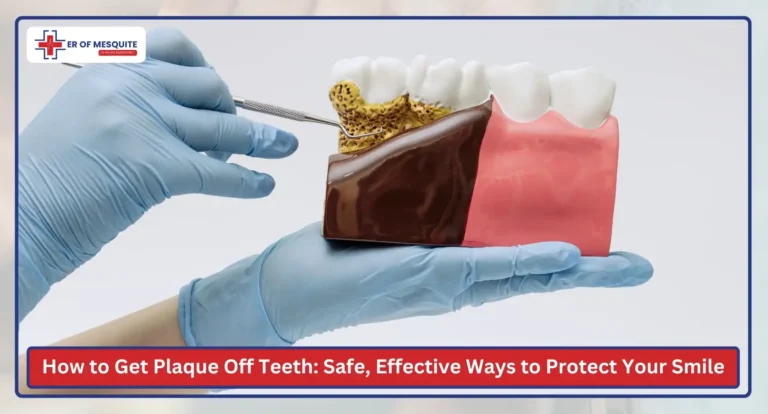
One of the most common dental concerns people have is how to get plaque off teeth. This is because it is a sticky film of bacteria that can become hard and turn into tartar, causing gum disease, cavities, and tooth loss.
Unlike tartar, plaque can be removed at home, but with consistency. It is important to follow the right brushing habit and also make use of different home remedies, such as baking soda and dietary changes.
In this guide, we will illustrate in detail how to remove plaque, along with details on tartar buildup and how to avoid receding gums.
Why is plaque harmful?
Plaque is made up of bacteria and leftover food particles. It forms on the teeth, and if not removed, it can result in serious dental issues.
Below are a few reasons why plaque can be harmful:
- Produces acids
- Causes cavities and tooth decay
- Irritates gums
- Causes inflammation
- Causes gum disease
When plaque is untreated, it gradually turns into tartar and becomes hard, requiring professional cleaning.
Plaque vs Tartar
Plaque, if not treated, can gradually become hard and form tartar. Once it becomes tartar, it can only be removed with the help of a professional treatment. It is important to understand the difference between plaque and tartar so that you can follow the right treatment:
The table below illustrates the difference between plaque and tartar:
| Aspect | Plaque | Tartar |
| Texture | Soft and sticky | Hard and crusty |
| Treatment | Can be removed at home | Requires professional cleaning |
| Color | Colorless or pale yellow | Yellow or brown |
| Causes | Occurs at the early stage | Intense, hard bacteria build-up |
If the plaque becomes hard and turns into tartar, it cannot be removed with simple brushing, but it can be removed with proper medical treatment.
How to Get Plaque Off Teeth at Home
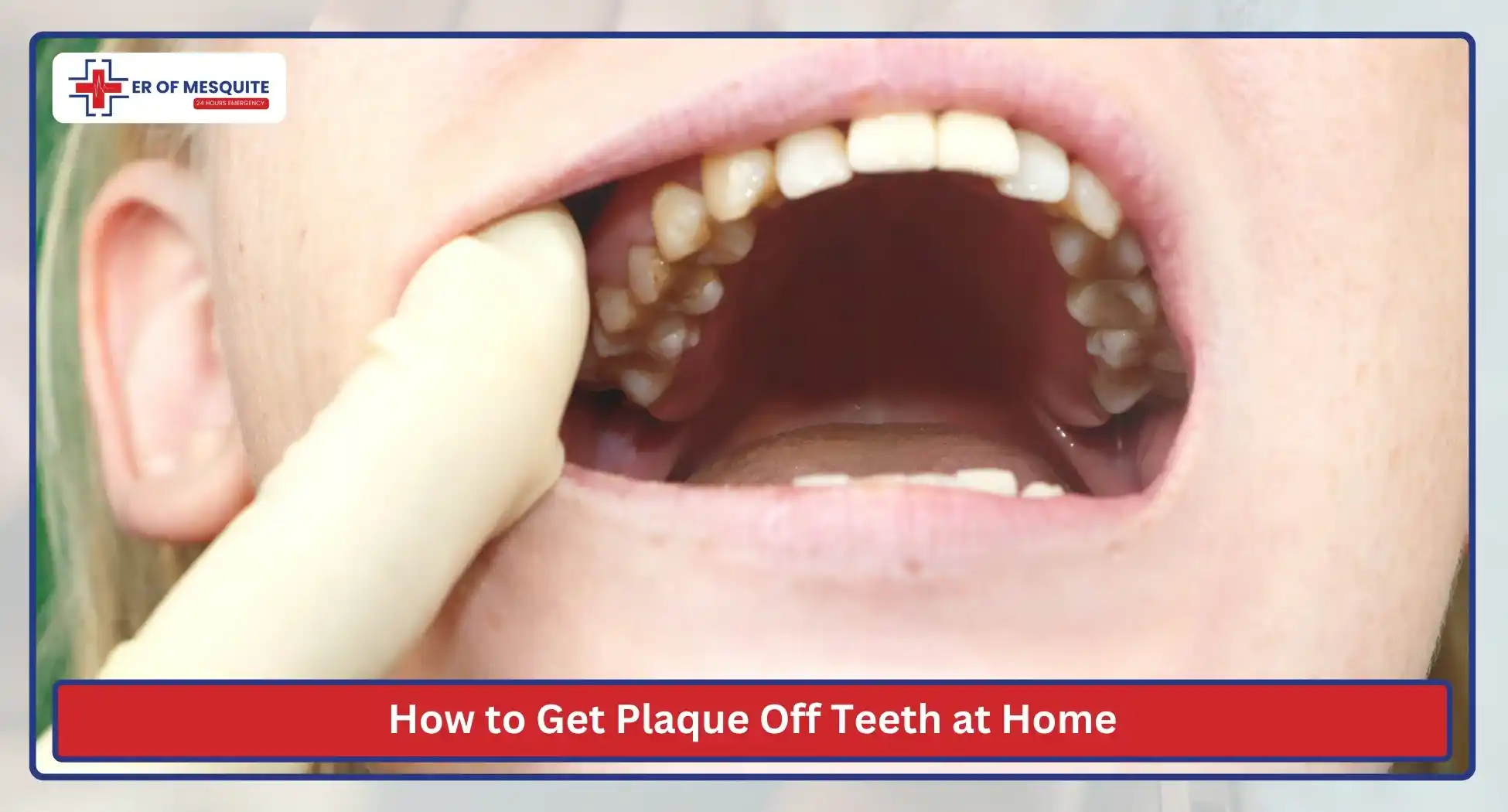
It can safely be removed with a few daily habits and proper techniques. Moreover, along with following a healthy routine, it is important to stay consistent.
Below are a few essential steps:
- Brushing twice a day
- Brush the right way
- Floss daily
- Clear with antiseptic mouthwash
These methods ensure effective brushing, flossing, and using an antiseptic mouthwash.
Signs of Plaque buildup
Below are a few common signs that the plaque is building up:
- Bad breath
- Gum bleeding
- The tooth surface becomes rough
- Tartar appearing near the gumline
- Yellowish texture on teeth
Noticing such signs needs immediate medical action; ignoring them might lead to serious complications.
For urgent symptoms like infection or swelling, ER of Mesquite offers immediate medical evaluation and can refer you for proper dental care.
Use Baking Soda
Baking soda is one of the most common home remedies for removing plaque.
It helps in:
- Balancing acids in the mouth
- Removes stains in the mouth
- Minimizes bacterial growth
To use it, mix a small quantity of baking soda with water and apply it to your toothbrush. Gently brush your teeth with that mixture for around 1-2 minutes. It safely removes plaque but should be used in a moderate way, and overuse of it can wear down the enamel.
Eat Crunchy, Fibrous Foods
Making changes in diet also helps in getting rid of plaque, as diet plays a major role in maintaining oral health. Try to eat crunchy, fibrous foods such as apples, carrots, cucumbers, and celery. It supports your tooth and helps in removing plaque from teeth naturally, stimulating saliva production, and cleaning the mouth.
How to Remove Tartar at Home?
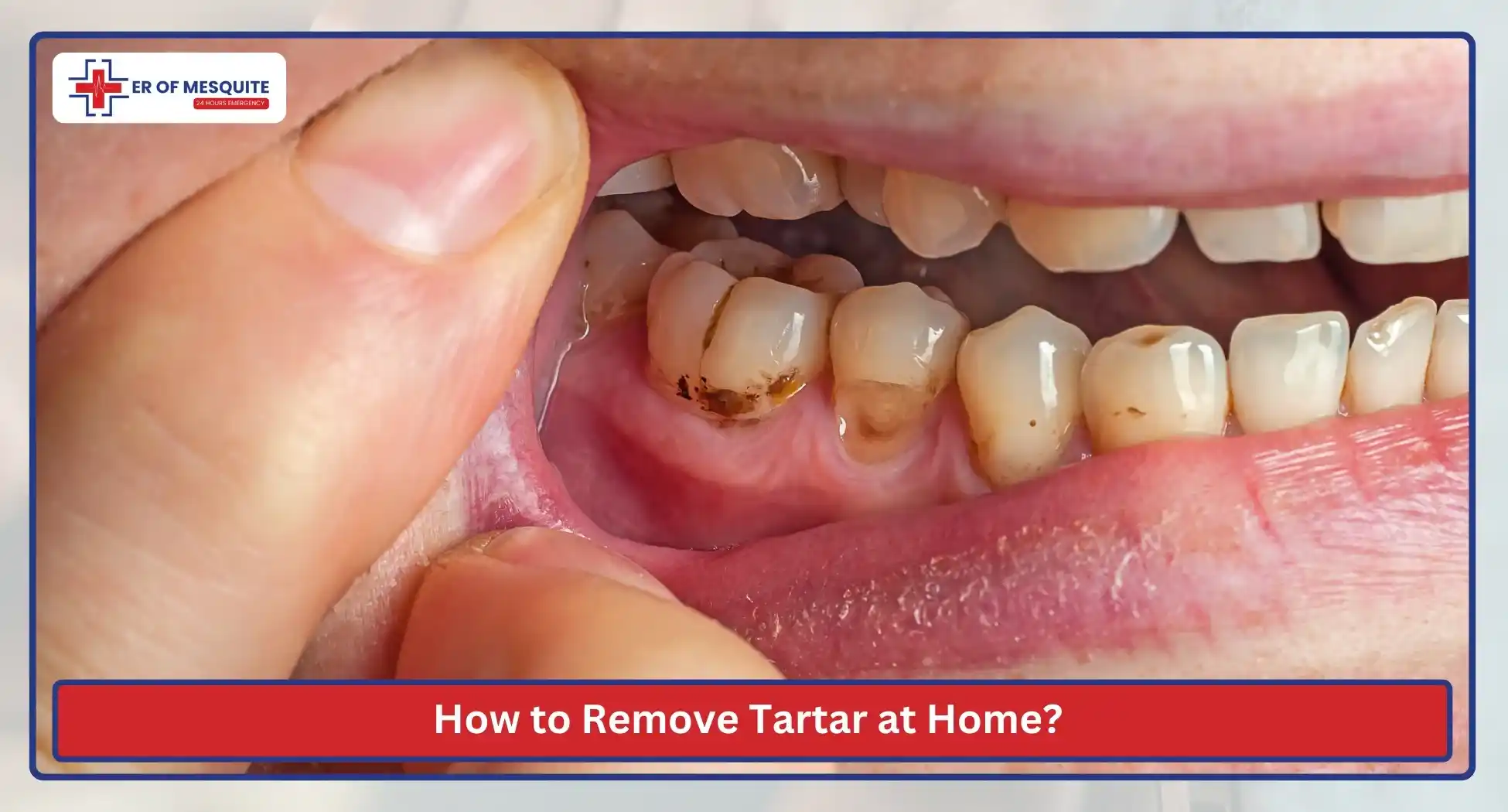
Tartar appears when the bacteria turned into plaque become hard. Although to completely get rid of tartar, it is important to seek medical assistance to completely get rid of tartar, but they are still a few home remedies that can be tried. This is because early buildup can sometimes remove tartar.
The best approach for its prevention is to remove plaque before it gradually turns into tartar. When you try to scrape it off, it might damage enamel and gums. When the tartar becomes hard, removing it at home is not safe.
How to Stop Receding Gums
When the plaque and tartar start building up, it might cause gum recession. It is important to understand how to stop receding gums, as it helps in preventing future damage.
Below are a few tips to stop receding gums:
- Use a soft-brustled tooth to brush teeth
- Do not aggressively brush your teeth
- Maintain oral hygiene
- Do not skip dental appointments
Maintaining healthy gums is important, as they keep the teeth strong. If you’re dealing with alignment issues, check out our guide on How to Fix an Overbite: Simple Ways to Treat and Manage It.
How to Treat Receding Gums
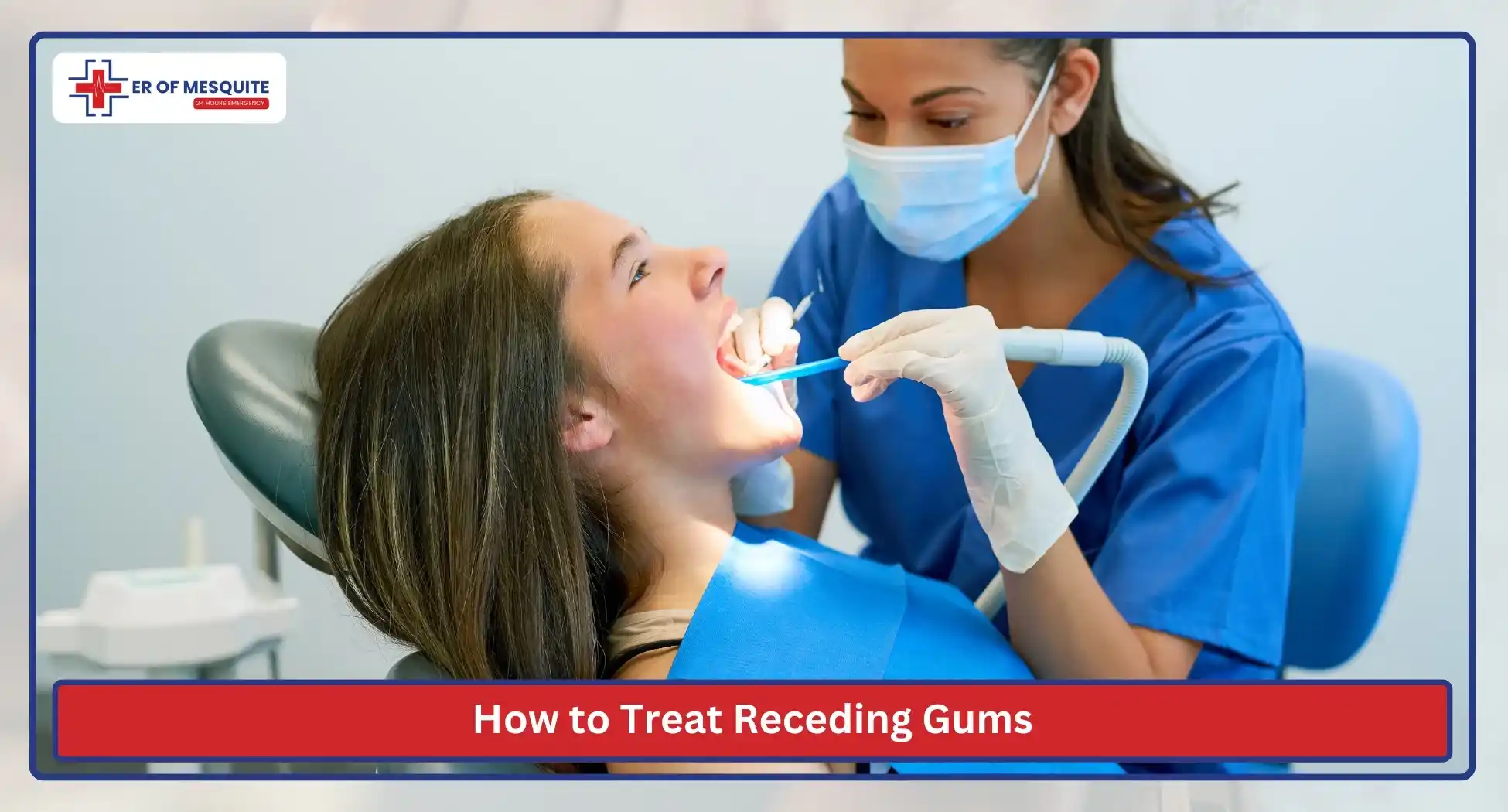
If the gum recession has started, then it is important to know who to turn to treat it.
Below are a few treatment options to treat receding gums:
- Follow a healthy oral hygiene routine
- Gum grafting for a severe case
- Dental cleaning
Gum recession during an early stage can be managed with proper care and lifestyle adjustments.
Conclusion
By understanding how to remove plaque from teeth, you can quickly address this issue before it builds up into tartar. For long-term health and to prevent future complications, it is important to maintain good dental hygiene, including brushing, flossing, and using a mouthwash.
It is important to know the difference between plaque and tartar, as it helps in understanding whether the plaque has started becoming tartar or not. Plaque is caused by the buildup of bacteria, so removing it early can assist easily getting rid of it.
Plaque can be removed safely at home; however, tartar often requires professional care, making prevention your best strategy. By maintaining good oral hygiene, you can keep your teeth and gums clean and healthy.
Frequently Asked Questions (FAQs)
How can I get plaque off my teeth at home?
It can be removed with regular brushing, flossing, and taking care of oral health.
Can baking soda remove plaque from teeth?
Yes, brushing with baking soda can safely and effectively remove plaque.
Difference between plaque and tartar?
Plaque is removable at home, while tartar on teeth is hardened and requires professional cleaning.
Can tartar be removed at home?
Tartar removal at home is not recommended.
How do I stop receding gums?
Practice gentle brushing, maintain oral hygiene, and visit a dentist regularly.