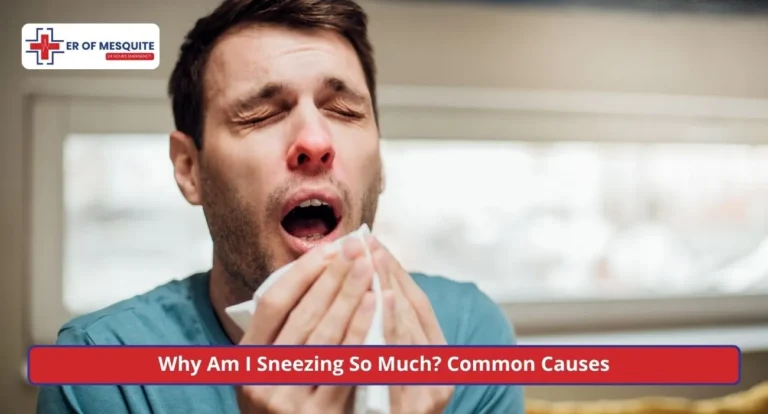
Why am I sneezing so much? It is one of the most common questions people ask Google in spring and fall, and the honest answer is almost always one of three things: allergies, a mild virus, or an environmental trigger you have not pinpointed yet. Rarely is sneezing on its own a sign of something serious, but the pattern around it reveals what is actually happening. Here are the real causes, the clues that tell them apart, and the few situations where sneezing is a signal to come in.
Why Does Sneezing Happen in the First Place?
Sneezing is a protective reflex. When nerves in the lining of your nose detect an irritant, dust, pollen, cold air, strong smell, or a virus, they send a signal to the brainstem, which triggers a forceful burst of air through the nose and mouth to clear the irritant. A single sneeze can push air out at 100 miles per hour.
What matters is not whether you sneeze, but how often, for how long, and what else comes with it.
Three everyday situations trigger more sneezes than anything else: breathing in an airborne allergen (pollen, dust, pet dander), catching a mild viral infection, and encountering a non-allergic irritant like perfume, smoke, or temperature change. Each pattern looks a little different.
Excessive Sneezing Causes: What Could Be Behind It
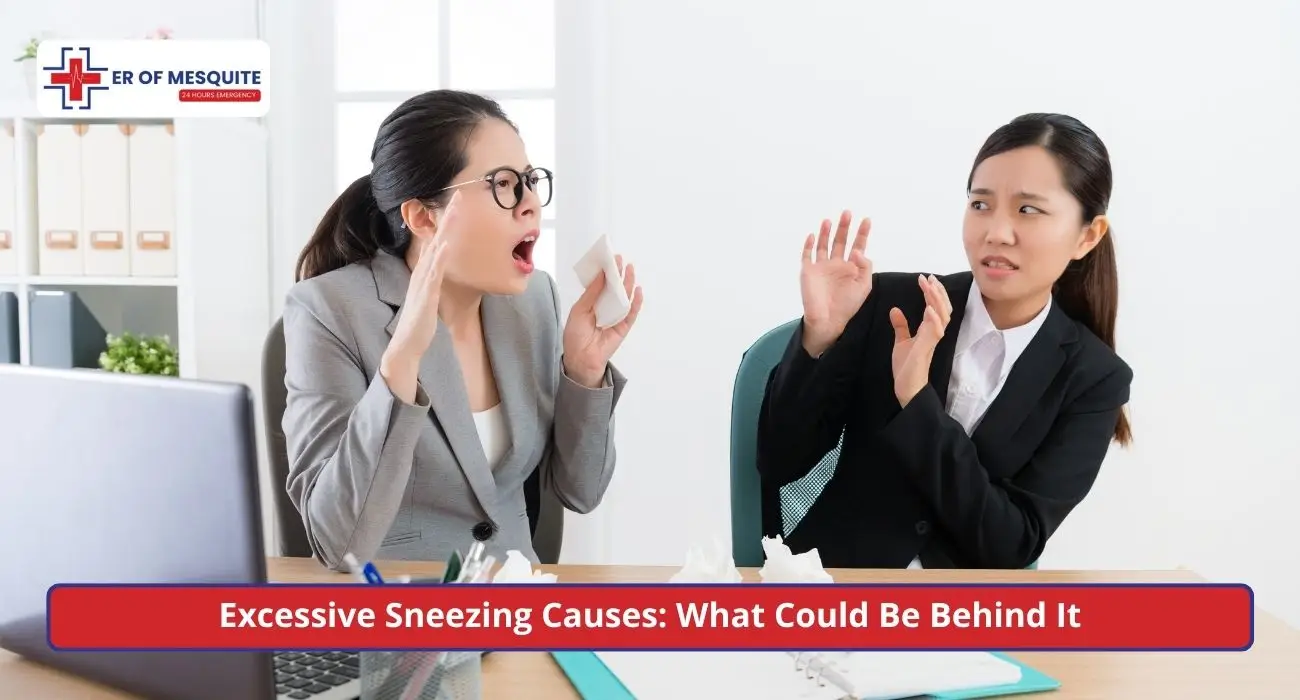
The most common excessive sneezing causes are seasonal allergies (allergic rhinitis), the common cold, non-allergic rhinitis, sinus infections, and environmental irritants. Rare causes include a photic sneeze reflex (bright-light-triggered) and medication side effects. The pattern around the sneezing usually tells you which category fits.
| Cause | What Else You Notice | Typical Duration |
|---|---|---|
| Seasonal allergies | Itchy eyes, clear runny nose, no fever | Weeks (while allergen is present) |
| Common cold | Mild fever, sore throat, body aches, thick mucus eventually | 7-10 days |
| Flu | High fever, body aches, exhaustion, cough | 7-14 days |
| Non-allergic rhinitis | Triggered by smells, temperature, no itch | Varies |
| Sinus infection | Facial pressure, thick colored discharge, headache | 10+ days |
| Environmental irritants | Only when exposed (smoke, perfume, dust) | Minutes to hours |
| Photic sneeze reflex | Sneezing when exposed to bright light | Seconds |
| Medication-induced | Started after new medication | While on the trigger |
Per the American Academy of Allergy, Asthma, and Immunology, allergic rhinitis affects about 1 in 6 Americans and is the leading cause of ongoing sneezing without illness (AAAAI Hay Fever).¹
Allergy vs. Cold vs. Flu: How to Tell the Difference
Allergies, colds, and flu all cause sneezing but have distinct patterns. Allergies produce itch and watery eyes without fever. Colds come with mild fever and body aches. Flu brings high fever, exhaustion, and body aches that keep you in bed. Timing and company of symptoms separate them within hours.
| Feature | Allergies | Cold | Flu |
|---|---|---|---|
| Onset | Gradual, triggered | Gradual, over days | Sudden, within hours |
| Fever | No | Low-grade or none | 101°F or higher |
| Itchy eyes/nose | Yes | Rare | No |
| Body aches | No | Mild | Severe |
| Fatigue | Mild | Mild | Severe, floor you |
| Throat | Scratchy | Sore | Can be sore |
| Nasal discharge | Clear, watery | Clear, then thick | Variable |
| Duration | Weeks or ongoing | 7-10 days | 7-14 days |
When sneezing comes without fever, body aches, or exhaustion, allergy is the most likely answer. The National Center for Complementary and Integrative Health notes that seasonal allergies can produce weeks of symptoms during pollen peaks (NCCIH Seasonal Allergies).²
Sneezing a Lot but Not Sick: Non-Infection Triggers
Sneezing a lot but not sick usually points to allergies, non-allergic rhinitis, or environmental irritants. The absence of fever and body aches rules out infection, which narrows the field quickly. Identifying the specific trigger is the fastest route to relief.
Common non-infection triggers:
- Pollen from trees, grass, or weeds (varies by season)
- Dust mites in bedding, carpets, upholstered furniture
- Pet dander from cats, dogs, or other furred animals
- Mold spores indoors or outdoors
- Cigarette smoke and air pollution
- Strong perfumes, candles, cleaning products
- Sudden temperature or humidity changes
- Spicy food (gustatory rhinitis)
- Bright sunlight (photic sneeze reflex, affects about 20-35% of people)
- New medications started recently
The trick is tracking when the sneezing starts and stops. If it worsens in a specific room, during a particular season, or around certain animals, you have your trigger. If it starts after a new medication, mention it to your prescriber.
How to Stop Sneezing Fits at Home
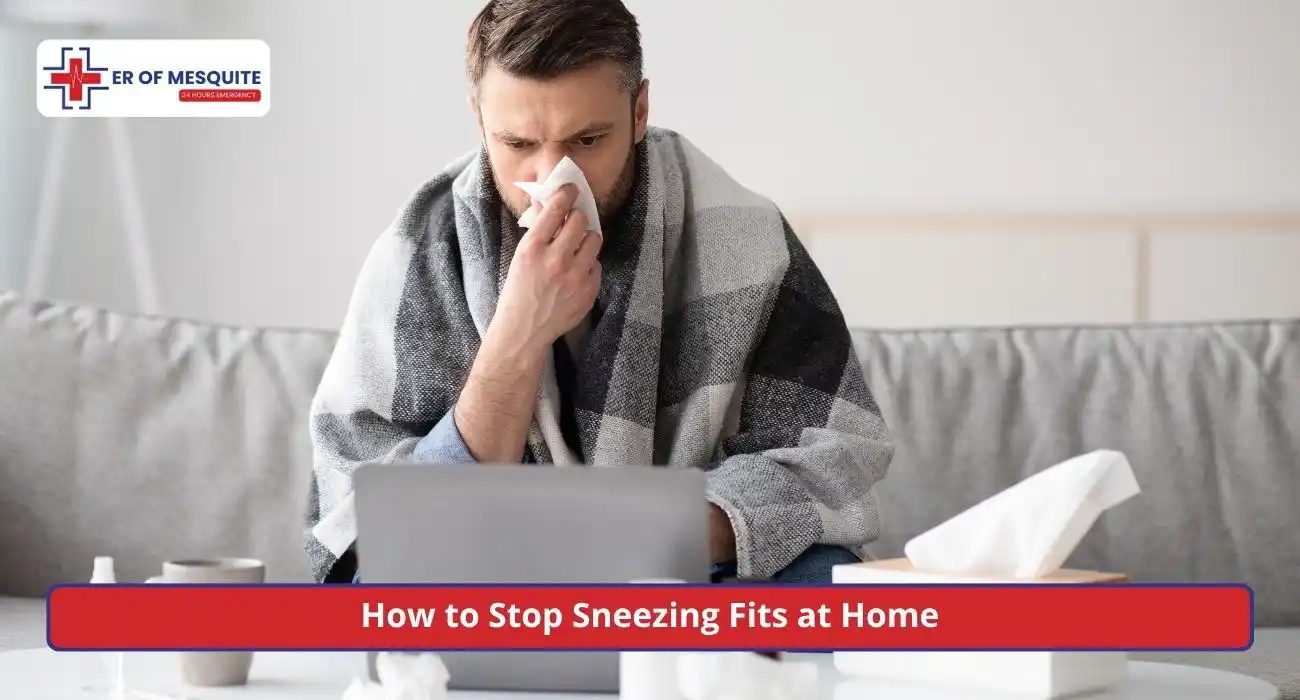
How to stop sneezing fits depends on the cause. For allergy-driven sneezing, reducing allergen exposure, rinsing nasal passages with saline, and keeping windows closed during high-pollen hours help the most. For irritant-driven sneezing, removing the irritant is faster than any product.
Non-medication strategies that help:
- Rinse nasal passages with saline spray or a neti pot to flush allergens
- Shower and change clothes after coming inside during pollen season
- Wash bedding weekly in hot water to kill dust mites
- Use a HEPA air purifier in the bedroom
- Keep windows closed during high-pollen hours
- Vacuum with a HEPA filter weekly
- Avoid known irritants like strong perfumes, candles, and smoke
- Stay hydrated to keep nasal mucus thin
If sneezing continues despite these measures, over-the-counter antihistamines and nasal sprays can help. Talk with a pharmacist or primary care provider about the right choice.
When Should Sneezing Make You See a Doctor?
Sneezing alone almost never signals an emergency. But sneezing paired with high fever, severe facial pain, blood, breathing difficulty, or signs of allergic reaction crosses into territory where same-day care matters. Any of the following with the sneezing means do not wait.
Same-day medical care warranted for:
- Thick colored mucus with facial pain lasting more than 10 days (possible sinus infection)
- Fever above 102°F with the sneezing
- Blood in nasal discharge beyond a single light streak
- One-sided facial pain with the nasal symptoms
- Sneezing that started after a new medication and will not stop
Walk in to our emergency room in Mesquite immediately for:
- Difficulty breathing or wheezing with the sneezing
- Swelling of lips, tongue, or throat
- Hives or widespread rash with breathing changes
- Rapid heartbeat with dizziness
- Severe facial swelling
These signs can indicate anaphylaxis or severe allergic reaction and need immediate evaluation.
When Sneezing in Children Needs Faster Care
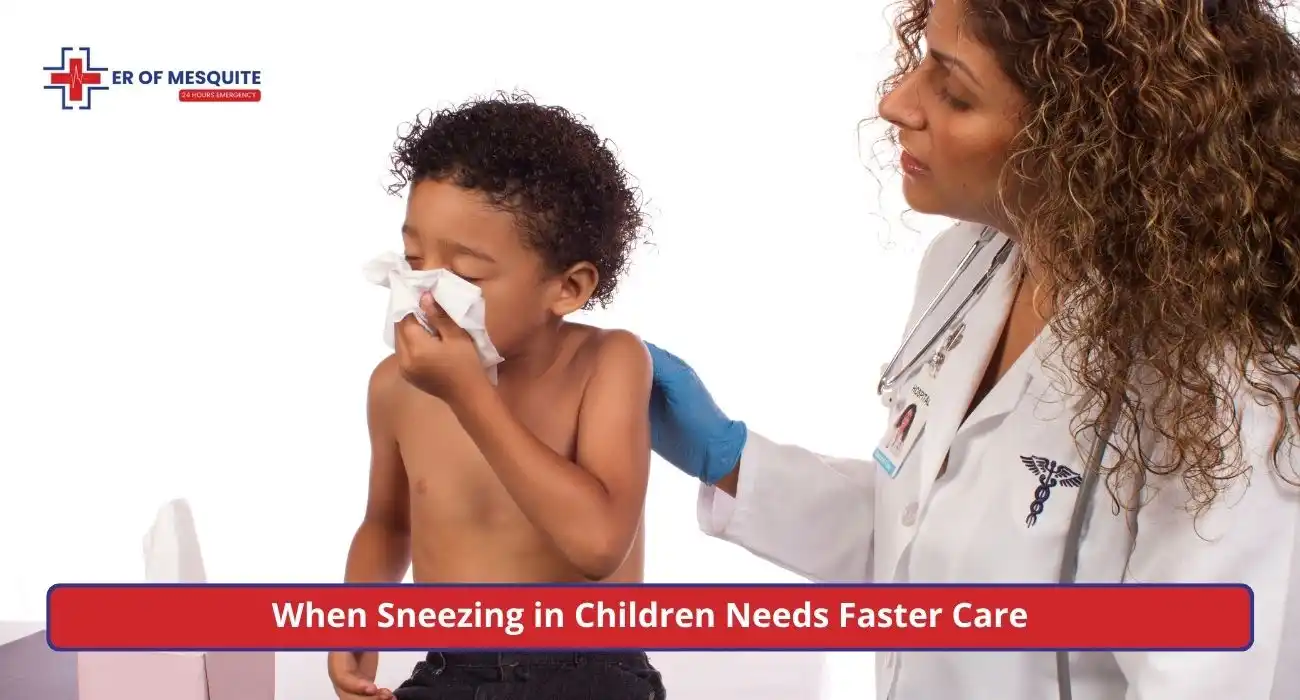
Sneezing in children usually looks like it does in adults, but kids can escalate from mild to concerning faster. Watch for breathing difficulty, high fever, severe fussiness, or signs of dehydration. Our pediatric emergency room evaluates children with respiratory symptoms the same day with no appointment needed.
Red flags in children paired with sneezing:
- Fast breathing or chest retractions (ribs pulling in with each breath)
- Fever above 100.4°F in a baby under 3 months
- Wheezing or stridor (noisy breathing in)
- Difficulty feeding or drinking
- Lethargy, pale or bluish skin
- Any swelling of the face, lips, or tongue
When high fever is part of the picture, our emergency high fever treatment covers the full workup our team runs.
Call 911 Immediately for Severe Allergic Reactions
Call 911 right away for any of the following with sneezing:
- Trouble breathing or swallowing
- Swelling of the lips, tongue, or throat
- Loss of consciousness or severe dizziness
- Widespread hives with any breathing or heart symptom
- Rapid pulse with cold, clammy skin
Do not drive yourself. Emergency medical teams can begin treatment during transport.
Location, Hours & Insurance
ER of Mesquite, Cartwright
1080 E Cartwright Rd, Suite 100, Mesquite, TX 75149
Phone: (469) 649-1007
Hours: Open 24/7/365, walk-ins welcome
We serve Mesquite, Balch Springs, Sunnyvale, Forney, Garland, Seagoville, and surrounding communities. We accept most major private (PPO) health insurance plans.
FAQs
Why am I sneezing so much all of a sudden?
Sudden sneezing often means recent exposure to an allergen (new pet, open window, dusty space) or the start of a mild virus. If no fever develops within 48 hours, allergy is more likely.
What are the most common excessive sneezing causes without a cold?
The most common excessive sneezing causes without illness are allergic rhinitis, non-allergic rhinitis (triggered by smells or temperature), environmental irritants, and medication side effects. All respond to removing or managing the trigger.
Why am I sneezing a lot but not sick in one specific room?
Sneezing a lot but not sick in one room usually points to dust mites, mold, or pet dander in that space. Check bedding, carpets, air filters, and recent cleaning product changes.
How do I stop sneezing fits fast?
How to stop sneezing fits fast: rinse your nose with saline, step away from the suspected trigger, wash your face, and change clothes if you suspect pollen exposure. These work faster than most products.
Can allergies cause fever and body aches?
No. Allergies do not cause fever or significant body aches. If you have those symptoms with sneezing, you likely have a viral infection, not an allergy, and should rest and hydrate.
When Sneezing Signals Something Serious, We Are Here
Most sneezing resolves with simple home steps and trigger avoidance. But when it comes with breathing difficulty, severe facial pain, or signs of allergic reaction, ER of Mesquite is open 24/7 with rapid evaluation, on-site labs, and respiratory support when you need it. Walk in anytime, no appointment required.