
Dehydration is one of the most underestimated medical emergencies. Many adults dismiss the early signs as being tired or thirsty while the body is losing critical fluids and electrolytes fast. Untreated severe dehydration affects the heart, kidneys, brain, and blood pressure and can trigger fainting, heart rhythm problems, seizures, kidney damage, and shock. This guide covers the signs of severe dehydration, when it becomes an emergency, and how ER of Mesquite evaluates it 24/7 with no appointment needed.
What Is Dehydration?
Dehydration happens when your body loses more fluid than it takes in. The body is roughly 60% water, and every organ depends on that balance. When fluid drops, blood volume shrinks, circulation slows, and organs begin to struggle. Dehydration also disrupts electrolyte balance, the sodium, potassium, and other minerals keeping your heart, muscles, and nervous system working.
It develops faster than most people realize: a few hours in Texas heat, one rough night of vomiting or diarrhea, or skipped fluids during illness or exercise. Older adults may not feel thirsty until they are already moderately dehydrated, and people with diabetes can dehydrate rapidly when blood sugar runs high.
The Stages of Dehydration

Mild
Thirst, slightly darker urine, mild headache, and a slightly dry mouth, at roughly 2% of body weight in fluid loss. Usually manageable with rest and fluids.
Moderate
Strong thirst, dry mouth with sticky saliva, headache, fatigue, reduced urination, amber urine, muscle cramps, and dizziness when standing, at 3 to 5% fluid loss. This stage needs medical evaluation if it is not improving within a few hours of home rehydration.
Severe
Everything above plus confusion, extreme fatigue, no urination, rapid heart rate, low blood pressure, sunken eyes, and possible fainting, at 6% or more fluid loss. This is a medical emergency. Walk in, or call 911 if symptoms are extreme.
The transition between stages can happen within hours during heat exposure, illness, or when fluids will not stay down. If symptoms are worsening, do not wait to see how bad it gets.
Signs of Severe Dehydration in Adults
Severe dehydration affects nearly every body system. Any combination of the following means emergency care:
Neurological Signs
Confusion or difficulty thinking clearly, extreme drowsiness, lightheadedness, especially when standing, fainting or near-fainting, persistent headache, unusual behavior changes, or slurred speech in severe cases.
Skin and Mouth Signs
Very dry, cracked lips and mouth, sunken eyes, skin that stays tented when pinched on the back of the hand, and no tears when crying.
Urinary Signs
No urination for 8 or more hours, dark amber or tea-colored urine, or very small amounts when you do go.
Heart and Breathing Signs
Rapid heartbeat even at rest, feeling faint when standing, palpitations, weakness, and rapid shallow breathing or breathlessness with minimal activity.
Temperature Signs
Inability to sweat during heat exposure is a serious warning sign, along with elevated body temperature.
If two or more of these are happening at once, walk in immediately.
Common Causes of Dehydration in Adults
- Illness: Vomiting is one of the fastest routes to severe dehydration, along with diarrhea lasting more than 24 hours and fever increasing fluid loss through sweat. Our food poisoning treatment team sees GI-driven dehydration daily.
- Heat exposure: Texas summers, outdoor work in construction, landscaping, and roofing, sports in high heat, and enclosed spaces without air conditioning.
- Intense exercise: Long workouts and endurance sports without sufficient fluid replacement.
- Not drinking enough: Busy schedules, reduced thirst awareness in older adults, and mobility difficulties limit access to fluids.
- Uncontrolled diabetes: High blood sugar pulls water out through frequent urination, and diabetic emergencies can produce severe dehydration within hours.
- Alcohol: Even moderate use increases fluid loss, and combined with heat or exercise, it escalates quickly.
Dehydration vs. Heat Exhaustion vs. Heat Stroke
These three overlap and are often confused, which matters in Texas summers.
- Dehydration is fluid loss from any cause: thirst, dry mouth, dark urine, fatigue, and dizziness, with body temperature normal or slightly elevated.
- Heat exhaustion is heat exposure plus dehydration plus heavy sweating: cool, moist, pale skin despite feeling hot, muscle cramps, nausea, headache, and rapid pulse, with body temperature usually below 104°F.
- Heat stroke is life-threatening: body temperature at or above 104°F, hot dry skin because sweating has stopped, confusion or agitation, rapid pulse and breathing, and possible seizure or loss of consciousness. Call 911. Do not wait.
When to Go to the ER for Dehydration
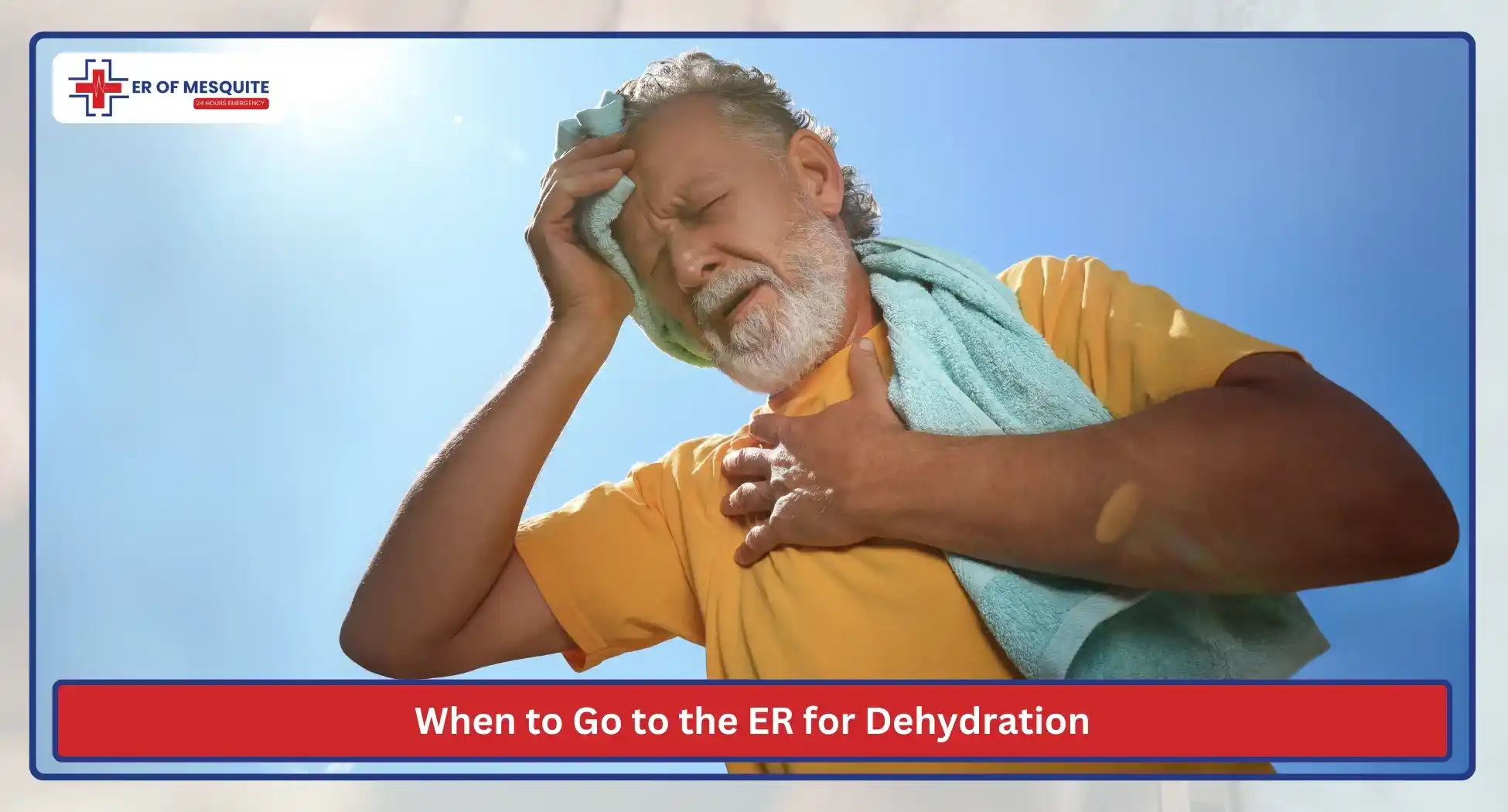
Walk into the ER of Mesquite when any of the following apply:
- Any severe dehydration sign listed above
- Persistent vomiting preventing fluids from staying down
- Diarrhea lasting more than 24 hours
- High fever with dehydration, evaluated through our fever treatment services
- No urination for 8 or more hours
- Extreme fatigue, lightheadedness, or near-fainting
- No improvement despite consistent home fluids
- Dehydration after heat exposure
- Dehydration in an older adult, during pregnancy, or in anyone with diabetes, kidney disease, or heart conditions
Call 911 Instead of Driving For:
Loss of consciousness, seizure, severe confusion, chest pain alongside dehydration, suspected heat stroke, signs of shock including cold, clammy skin and a rapid weak pulse, or vomiting blood.
Higher-Risk Groups
Older Adults
Thirst response weakens with age, kidneys hold less water, and common conditions increase fluid loss. Dehydration in seniors often presents as confusion, weakness, or a fall rather than obvious thirst. Any older adult with new confusion, weakness, or a fall deserves evaluation.
Pregnant Women
Severe morning sickness is a major dehydration driver, and dehydration itself can trigger contractions or preterm labor. Any severe symptoms during pregnancy need evaluation.
People With Diabetes
High blood sugar drives rapid fluid loss, and diabetic emergencies escalate within hours. Blood sugar and electrolyte testing are essential parts of the workup, so come in early.
Kidney and Heart Patients
Both conditions make fluid balance delicate. Dehydration can trigger acute kidney injury, rhythm problems, or heart failure decompensation.
Athletes and Outdoor Workers
Texas heat plus heavy exertion produces extreme fluid and electrolyte losses, and heat exhaustion can shift into heat stroke quickly.
How the ER of Mesquite Evaluates Dehydration

You are triaged the moment you arrive, with heart rate, blood pressure both sitting and standing, temperature, and oxygen saturation checked immediately. A board-certified emergency physician assesses your mental status and examines for the classic signs while evaluating underlying causes.
The full workup happens on-site:
- Complete lab panel: blood counts, electrolytes, kidney function, blood sugar, and infection markers, with results in minutes through our emergency lab testing
- Urinalysis checks for concentration, ketones, and infection clues
- EKG, since severe dehydration and electrolyte imbalance can trigger heart rhythm changes
- Ultrasound and CT when an underlying cause like kidney stones, gallbladder trouble, or obstruction needs imaging
- IV rehydration with fluids tailored to your labs is central to treatment. Most patients feel significantly better before discharge, and most visits are completed within 1 to 3 hours.
If the underlying cause requires hospital admission, we stabilize you first and coordinate ambulance transfer.
Preventing Recurrence
You leave with written guidance on hydration for the next 24 to 72 hours, warning signs that mean return immediately, and prevention tips: hydrate before, during, and after outdoor activity in Texas heat, sip small amounts frequently when sick and come in early if fluids will not stay down, monitor blood sugar closely during illness if diabetic, and keep water accessible for elderly loved ones. Depending on the cause, we may recommend follow-up with your primary care doctor or a relevant specialist.
Frequently Asked Questions
What are the signs of severe dehydration in adults?
Confusion, extreme fatigue, no urination for 8 or more hours, dark amber urine, rapid heartbeat, low blood pressure, sunken eyes, very dry mouth, dizziness or fainting, and rapid shallow breathing. Any combination of these means walk in immediately.
Should I go to the ER for dehydration?
Yes, for any severe signs, persistent vomiting or diarrhea, high fever, dehydration during pregnancy or in an elderly loved one, dehydration with diabetes or heart conditions, or when home rehydration is not working. Faster evaluation is safer.
Can I rehydrate at home?
Mild dehydration, yes, with small, frequent sips of water or electrolyte fluids. Home rehydration should produce improvement within a few hours. If it does not, or if you cannot keep fluids down, walk in.
Why is my urine dark brown or amber?
Dark urine means your kidneys are concentrating fluid to conserve water, one of the most reliable dehydration signs. If it does not lighten with fluid intake, get evaluated.
Is dehydration more dangerous in older adults?
Significantly. Seniors have a weaker thirst response, hold less water, and often present with confusion, weakness, or a fall instead of thirst. Any of these signs deserves evaluation.
What is the difference between dehydration and heat exhaustion?
Dehydration is fluid loss from any cause. Heat exhaustion adds heavy heat exposure, with cool moist skin, heavy sweating, cramps, and dizziness. Heat stroke is the life-threatening stage: high body temperature, no sweating, and confusion. Heat stroke requires 911.