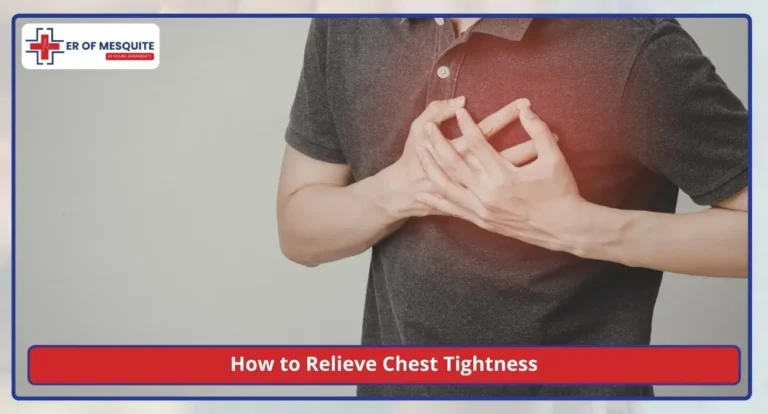
If your chest feels tight, your first job is not relief. It is ruling out a heart emergency. Chest tightness can point to something simple like anxiety, GERD, or muscle strain, or something serious like a heart attack. Once red flags are clear, safe relief methods can bring real comfort.
Here is how to relieve chest tightness the safe way, and when to walk in to ER of Mesquite instead.
Rule Out a Heart Emergency First
SAFETY FIRST: Before trying any relief technique, check for signs of a heart emergency.
If any of the following are present, stop reading and call 911 or walk in immediately. Home relief is not appropriate for cardiac tightness, and delaying evaluation can cost heart muscle.
Call 911 or walk in NOW if you have any of these:
- Crushing, squeezing, or pressure-like chest tightness
- Pain radiating to arm, jaw, back, or neck
- Shortness of breath along with the tightness
- Cold sweats, nausea, or vomiting
- Sudden dizziness or fainting
- Tightness that started at rest or with mild activity
- History of heart disease, diabetes, or a family history of early heart attacks
- Tightness lasting more than a few minutes without relief
Per the National Heart, Lung, and Blood Institute, heart attack symptoms often include chest discomfort with pain in the arm, jaw, or back, along with shortness of breath and cold sweat (NHLBI Heart Attack Symptoms). When any of these are present, minutes matter.
Only continue with the relief techniques below if you have already ruled out cardiac cause, or if a physician has previously diagnosed your tightness as anxiety, GERD, muscle strain, or another benign cause.
What Causes Non-Emergency Chest Tightness?
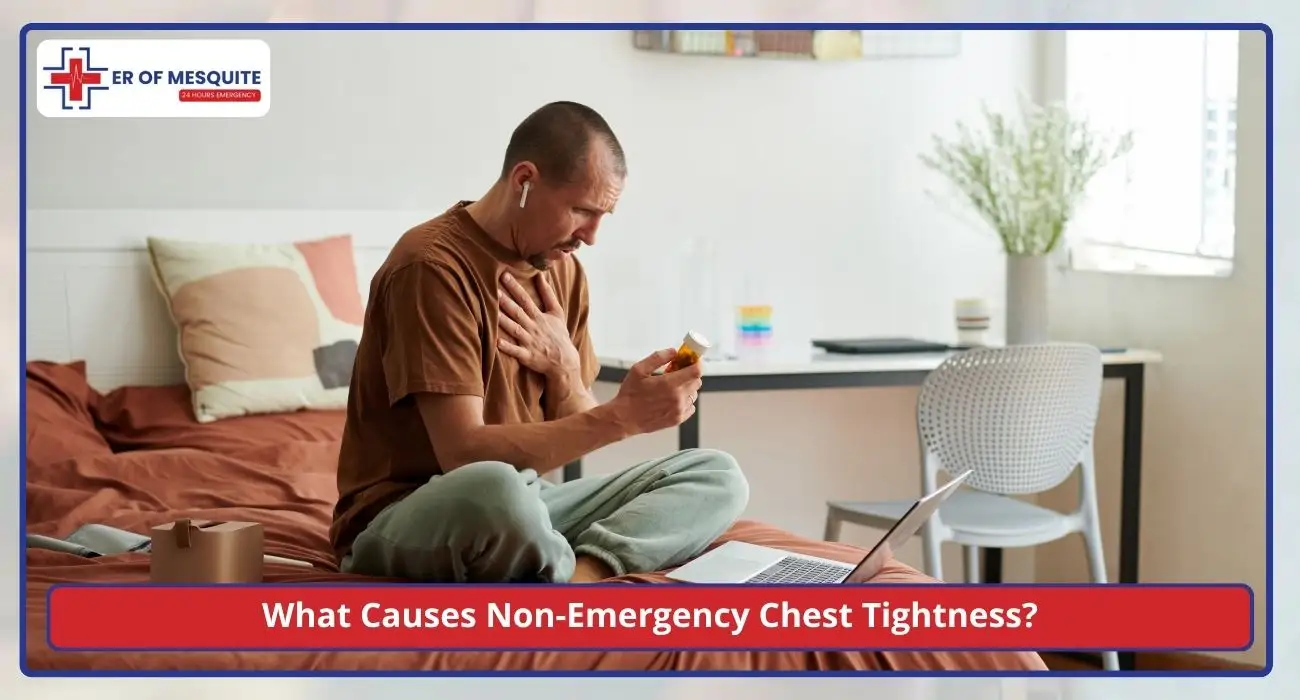
Non-emergency chest tightness usually comes from anxiety, GERD (acid reflux), muscle strain, costochondritis, or mild asthma. These causes share the same sensation but respond well to home relief once emergency causes are ruled out.
- Anxiety and panic attacks produce tightness from rapid, shallow breathing and muscle tension
- GERD causes tightness or burning that worsens after eating or lying down
- Costochondritis creates sharp or achy tightness from rib cartilage inflammation
- Muscle strain feels worse with movement, coughing, or deep breaths
- Mild asthma causes tightness with wheezing or shortness of breath
The chest wall pain guide covers how to tell muscle-based tightness from cardiac pain in detail.
How to Relieve Chest Tightness: Step-by-Step Home Techniques
Once cardiac causes are ruled out, the following chest tightness relief techniques address the most common non-emergency causes. Start with the technique that matches your suspected cause and give it 5 to 10 minutes before deciding whether it is helping.
- Slow diaphragmatic (belly) breathing. Sit upright, one hand on chest, one on belly. Breathe in through your nose for 4 seconds so your belly rises. Hold 2 seconds. Exhale through pursed lips for 6 seconds. Repeat for 5 minutes.
- Box breathing. Inhale 4 seconds, hold 4, exhale 4, hold 4. Repeat for at least 4 cycles. This calms the nervous system and is used by first responders during acute stress.
- Change your position. For GERD tightness, sit upright or stand. Lying flat worsens reflux. For muscle tightness, gentle shoulder rolls and chest-wall stretches ease pressure.
- Sip warm water. Warm water helps settle esophageal spasm and reflux-related tightness. Avoid cold water, which can trigger vagal responses.
- Apply a warm compress. For muscle strain or costochondritis, a warm compress on the chest wall for 15 minutes reduces tension and inflammation.
- Use the 5-4-3-2-1 grounding method. For anxiety tightness, name 5 things you see, 4 you can touch, 3 you hear, 2 you smell, 1 you taste. This interrupts the panic cycle.
- Try progressive muscle relaxation. Tense your feet for 5 seconds, release. Move up: calves, thighs, abdomen, chest, shoulders, arms, face. This releases muscle tension amplifying the tightness.
Per Harvard Health, breathing exercises and body-based grounding techniques are among the most effective self-management tools for anxiety-related physical symptoms (Harvard Health on Anxiety).
Chest Tightness From Anxiety: What Actually Helps

Chest tightness from anxiety feels indistinguishable from cardiac tightness in the moment, which is part of why panic escalates. Relief comes from slowing the breath, grounding the body, and giving the nervous system time to reset. Home techniques work well once cardiac causes are ruled out.
The most effective techniques for chest tightness from anxiety combine physical breath control with mental grounding. Neither alone works as well as both together.
- Start with box breathing to slow the breath
- Move to 5-4-3-2-1 grounding once your heart rate steadies
- Sit upright with feet flat on the floor
- Avoid caffeine, nicotine, and alcohol during and after an episode
- Follow up with primary care if these episodes recur
If chest tightness from anxiety comes with fainting, blue lips, or fails to respond within 20 minutes, walk in. Panic attacks and heart attacks can overlap.
When Chest Tightness Needs ER Evaluation
When chest tightness needs ER care depends on how long the symptom lasts, whether relief works, and whether any red flag appears. When chest tightness needs ER evaluation, self-care must yield to professional workup, not the other way around.
Walk in immediately if:
- Any red flag from the emergency panel appears
- Relief techniques fail after 20 minutes
- Tightness returns repeatedly the same day
- New symptoms develop (fever, cough, leg swelling)
- Tightness after a long flight, car ride, or recent surgery
- Tightness in someone over 40 with any heart disease risk factors
Same-day evaluation if:
- Tightness has been present for days without improvement
- Home techniques help but tightness keeps returning
- You have a history of heart disease, diabetes, or family cardiac history
What ER of Mesquite Does for Chest Tightness
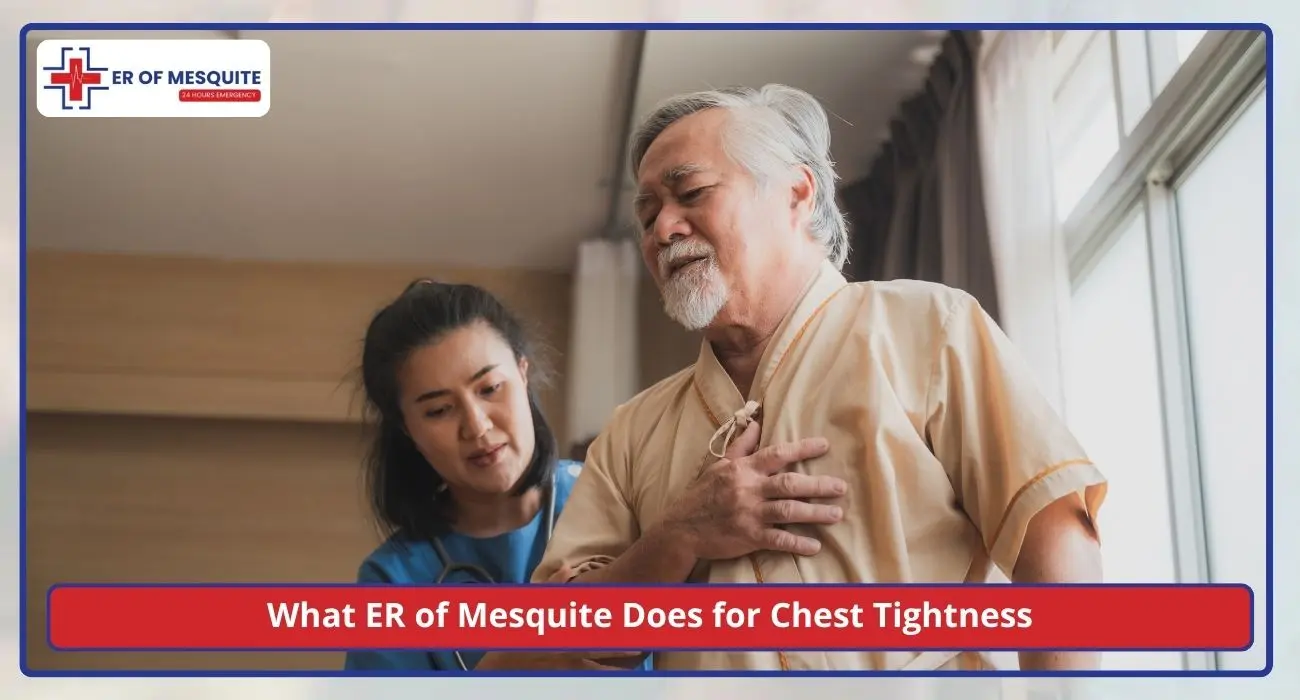
ER evaluation for chest tightness starts with an EKG within 10 minutes and vital signs, followed by cardiac blood work and chest imaging on-site. Our board-certified physicians distinguish heart attack, blood clot, and other serious causes from muscle strain or anxiety within the hour.
At our emergency room in Mesquite, the chest tightness workup includes:
- EKG within 10 minutes of walk-in
- Vital signs, oxygen saturation, and rapid physical exam
- Cardiac blood work (troponin, complete blood count, D-dimer)
- On-site digital chest X-ray for pneumonia, fluid, or lung issues
- CT scan on-site if pulmonary embolism or aortic issue is suspected
- Coordinated transfer to cardiology if a heart attack is confirmed
For families new to freestanding ERs, the benefits of a freestanding emergency room include shorter wait times and quieter treatment rooms during a stressful visit.
Call 911 If You Have Any of These
- Sudden crushing chest tightness lasting more than a few minutes
- Chest tightness with fainting or loss of consciousness
- Chest tightness with severe shortness of breath
- Chest tightness with cold clammy skin or blue lips
- Chest tightness in someone with known heart disease
Do not drive yourself. Emergency medical teams can begin treatment before hospital arrival.
Location, Hours & Insurance
ER of Mesquite, Cartwright
1080 E Cartwright Rd, Suite 100, Mesquite, TX 75149
📞 (469) 649-1007
🕒 Open 24/7/365, walk-ins welcome
We serve Mesquite, Balch Springs, Sunnyvale, Forney, Garland, Seagoville, and surrounding communities. We accept most major private (PPO) health insurance plans.
FAQs
How to relieve chest tightness fast at home?
Sit upright, practice slow diaphragmatic breathing for 5 minutes, and use grounding techniques. If cardiac causes have not been ruled out or symptoms persist beyond 20 minutes, walk in for evaluation instead.
What are the best chest tightness relief techniques for anxiety?
Box breathing and 5-4-3-2-1 grounding are the most effective chest tightness relief techniques for anxiety. Combine slow breathing with mental grounding and give the nervous system 10 to 20 minutes to reset.
How do I know if my chest tightness is heart-related or anxiety?
You cannot reliably tell in the moment. Heart-related tightness often radiates to the arm or jaw with sweating and nausea. Anxiety improves with slow breathing. When unsure, walk in for an EKG.
When does chest tightness need ER evaluation?
When chest tightness needs ER care is any time a red flag appears, relief techniques fail after 20 minutes, or tightness returns repeatedly. Cardiac causes must be ruled out with an EKG and blood work.
Can dehydration cause chest tightness?
Yes. Mild dehydration can cause muscle tension and reduced blood volume that feel like chest tightness. Sip water slowly. If tightness persists or comes with fainting, get evaluated for cardiac causes.
When Relief Isn’t Enough, Come In
If you have tried the relief techniques and chest tightness persists, worsens, or comes with any warning sign, walk in to ER of Mesquite. EKG within 10 minutes, on-site imaging, and 24/7 walk-in care give you the answer that home methods cannot.