Medically reviewed by ER of Mesquite Medical Team
Dog bite infection signs usually appear within 24 to 72 hours of the bite and include redness, swelling, warmth, pus, and increasing pain. About 1 in 5 dog bites becomes infected.
Deep puncture wounds, hand and face bites, and bites in older or immunocompromised adults are the highest-risk cases. Knowing what to watch for in the first three days tells you whether you can monitor at home or need to walk in.
Why Do Dog Bites Get Infected So Easily?
Dog mouths carry dozens of bacterial species including Pasteurella, Capnocytophaga, Staphylococcus, and Streptococcus. A bite drives those organisms deep into tissue where normal skin defenses do not reach.
Puncture wounds are especially risky because the small opening traps bacteria while the deep track provides a warm, moist environment for growth. Shallow lacerations are often easier to clean than small puncture holes.
Three things determine infection risk: how deep the bite is, where on the body it occurred, and how quickly the wound was cleaned and evaluated. Hand and face bites get infected more often than bites on the trunk or legs.
Dog Bite Infection Signs by Severity
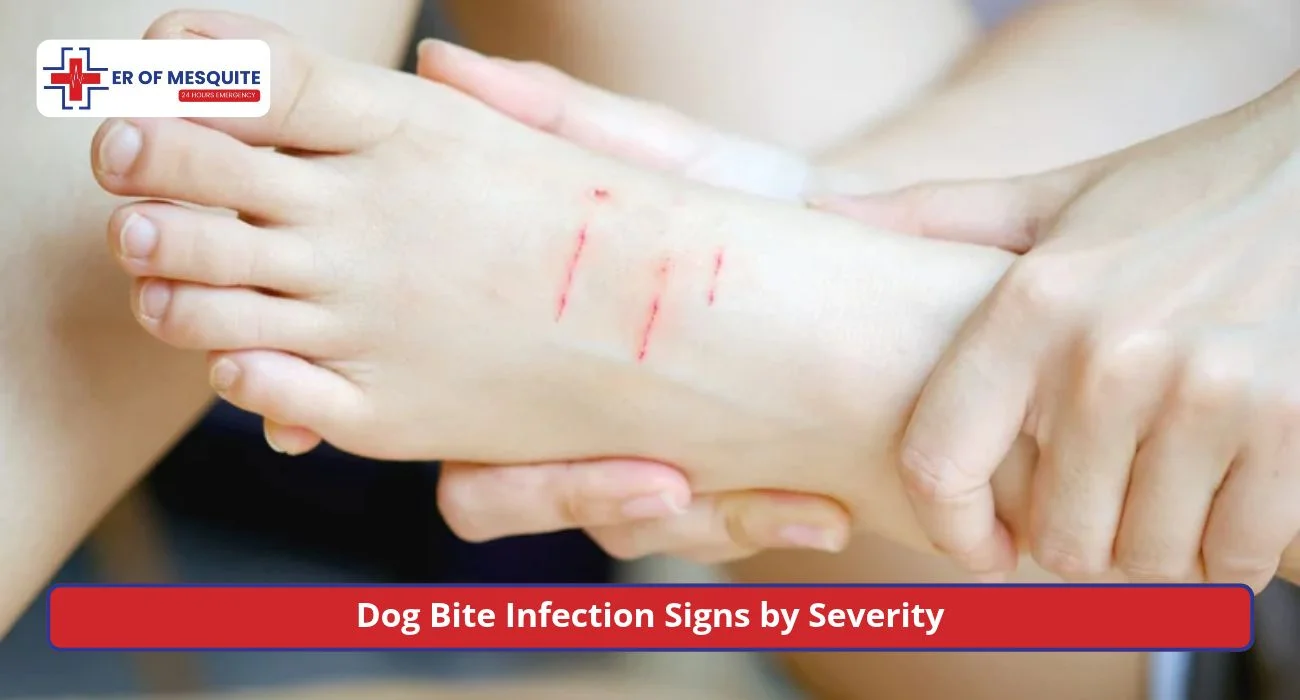
Dog bite infection signs progress through three stages: early local inflammation (24-48 hours), spreading cellulitis (2-5 days), and systemic infection (3-7 days). Catching signs at the earliest stage usually keeps treatment simple and outpatient.
| Stage | Signs | Timing | Action |
|---|---|---|---|
| Early local | Redness, mild swelling, warmth, tenderness | 24-48 hours | Same-day evaluation |
| Spreading | Red streaks, expanding redness, pus, throbbing pain | 2-5 days | Walk in now |
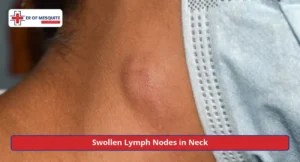
| Systemic | Fever, chills, fatigue, swollen lymph nodes | 3-7 days | Immediate ER |
| Severe | Confusion, low blood pressure, rapid pulse | Days 3+ | Call 911 |
Per Merck Manual, dog bite infections are the most common complication after any skin-breaking bite and are more frequent on hands, feet, and face (Merck Manual Animal Bites).¹
For deep wounds where bone involvement or retained tooth fragments are a concern, our digital X-ray gives same-visit answers.
Early Signs of Dog Bite Infection
Early signs of dog bite infection appear within the first 24 to 48 hours. The first clue is almost always redness expanding beyond the wound edge, along with warmth and tenderness that worsens rather than improves.
Watch for these within 48 hours:
- Redness spreading more than 1 cm beyond the wound
- Increasing pain instead of decreasing
- Warmth around the wound
- Mild swelling that keeps growing
- Yellow or green discharge
- Firm raised area around the bite
Also concerning within 48 hours:
- Red streaks running from the wound toward the heart
- Low-grade fever (99-101°F)
- Tender lump in the armpit, groin, or near the bite
- Wound edges separating or not closing
If any of these appear in a bite already monitored at home, our full emergency services in Mesquite handle rapid wound evaluation and infection control 24/7.
The 72-Hour Dog Bite Timeline
Knowing what happens hour by hour helps you spot infection faster. The most dangerous window is the first three days.
| Timing | What You Should See | Red Flags |
|---|---|---|
| Hour 0 | Wash wound under running water for 10-15 minutes | Heavy bleeding, deep puncture |
| First 8 hours | Ideal window for medical evaluation | Facial bite, hand bite, deep wound |
| 24 hours | Mild tenderness, no fever, no spreading redness | Expanding redness, new pain |
| 48 hours | Wound closing, soreness fading | Pus, warmth, red streaks |
| 72 hours | Scab forming, no fever | Fever, chills, body aches |
| Day 4-7 | Steady healing | New fever, confusion, severe swelling |
Per Johns Hopkins Medicine, any bite from an animal with unknown rabies status, a stray, or a wild animal needs same-day medical evaluation for rabies and infection risk (Johns Hopkins Bites and Stings: Animals).²
Our pediatric emergency room care team runs the same timeline assessment for children, where hand and face bites need faster evaluation.
Bite Type and Risk Classification
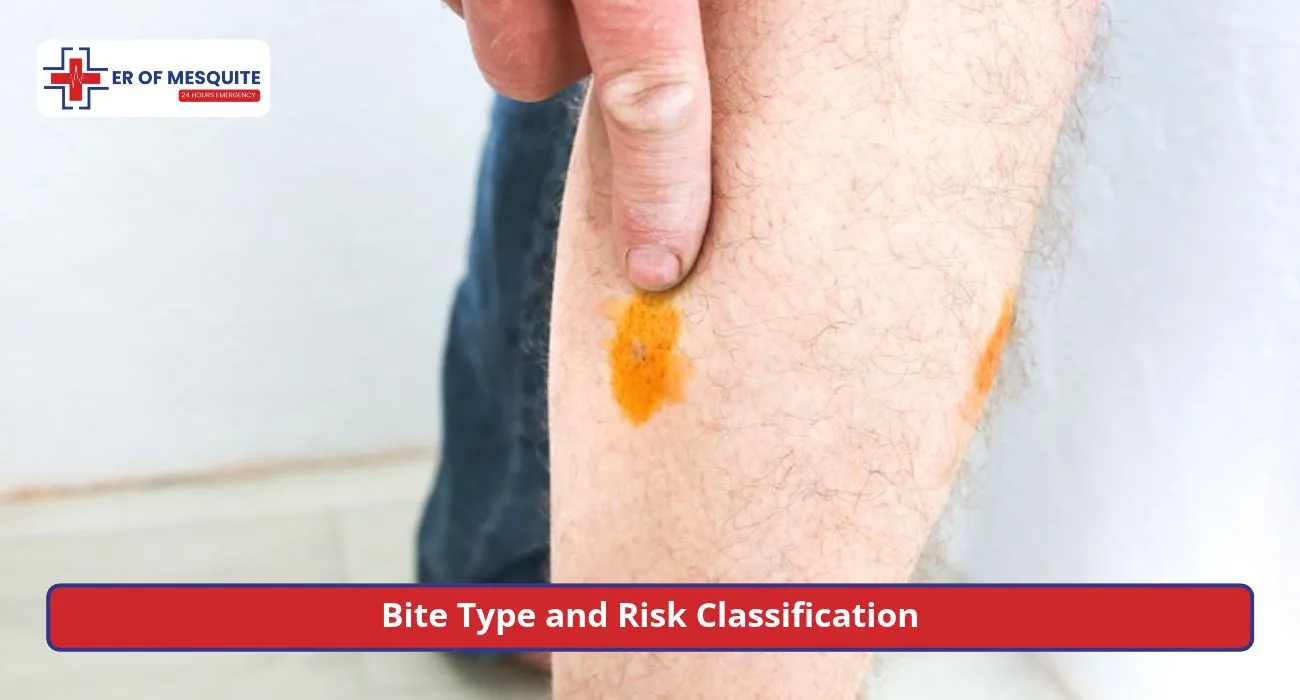
Not every dog bite carries the same infection risk. Puncture wounds and crushing bites cause more deep-tissue damage than simple scratches.
Low-risk bites:
- Superficial scratch with no skin break
- Small clean laceration cleaned within 1 hour
- Bite on trunk or thigh in a healthy adult
Moderate-risk bites:
- Laceration needing stitches
- Bite on arm or leg with mild swelling
- Bite in healthy child with no face involvement
High-risk bites (walk in):
- Puncture wound (deep narrow hole)
- Hand, foot, face, or genital bite
- Bite over a joint
- Bite in a diabetic, immunocompromised, or adult over 60
- Bite from a stray or unvaccinated dog
For high-risk bites with any sign of fever or body aches, our emergency high fever treatment workflow runs blood work and inflammatory markers on-site.
First Aid Steps After a Dog Bite
Immediate first aid in the first hour matters more than almost anything else. Rapid cleaning reduces infection risk by half.
- Stop the bleeding with firm pressure using a clean cloth
- Wash the wound under running water for 10 to 15 minutes
- Clean gently with mild soap, avoiding scrubbing deep punctures
- Pat dry, apply clean dry gauze (do not seal with ointment yet)
- Raise the limb above heart level if the bite is on an arm or leg
- Document the dog (owner info, vaccination status, breed)
- Seek medical evaluation within the first 8 hours for anything beyond a superficial scratch
Avoid these common mistakes: taping the wound shut, ignoring a small puncture, or waiting to see if swelling improves. Puncture wounds especially need professional cleaning.
For severe bleeding, vomiting, or signs of shock while waiting for care, our IV rehydration support keeps patients medically stable on arrival.
When to Go to ER After Dog Bite
When to go to ER after dog bite is immediate for any deep puncture, face or hand bite, bite in a high-risk patient, unknown-rabies-status dog, or any sign of infection developing within 48 hours.
Walk in immediately for:
- Any bite that broke the skin on hand, face, foot, or genitals
- Deep puncture wound
- Bite from an unknown or stray dog
- Bite where you cannot confirm rabies vaccination
- Expanding redness, pus, or red streaks
- Fever after a bite
- Diabetic, immunocompromised, or older adult patient
Same-day evaluation warranted for:
- Laceration that may need stitches
- Any tenderness increasing after 24 hours
- No tetanus shot within 5 years
Home monitoring may be appropriate for:
- Superficial scratch with intact skin
- Minor nick that stopped bleeding quickly
- Healthy adult, trunk or thigh location, known vaccinated dog
For families new to walk-in ER care, the benefits of a freestanding emergency room include short wait times and on-site imaging during a stressful visit.
What ER of Mesquite Does for Dog Bite Wounds
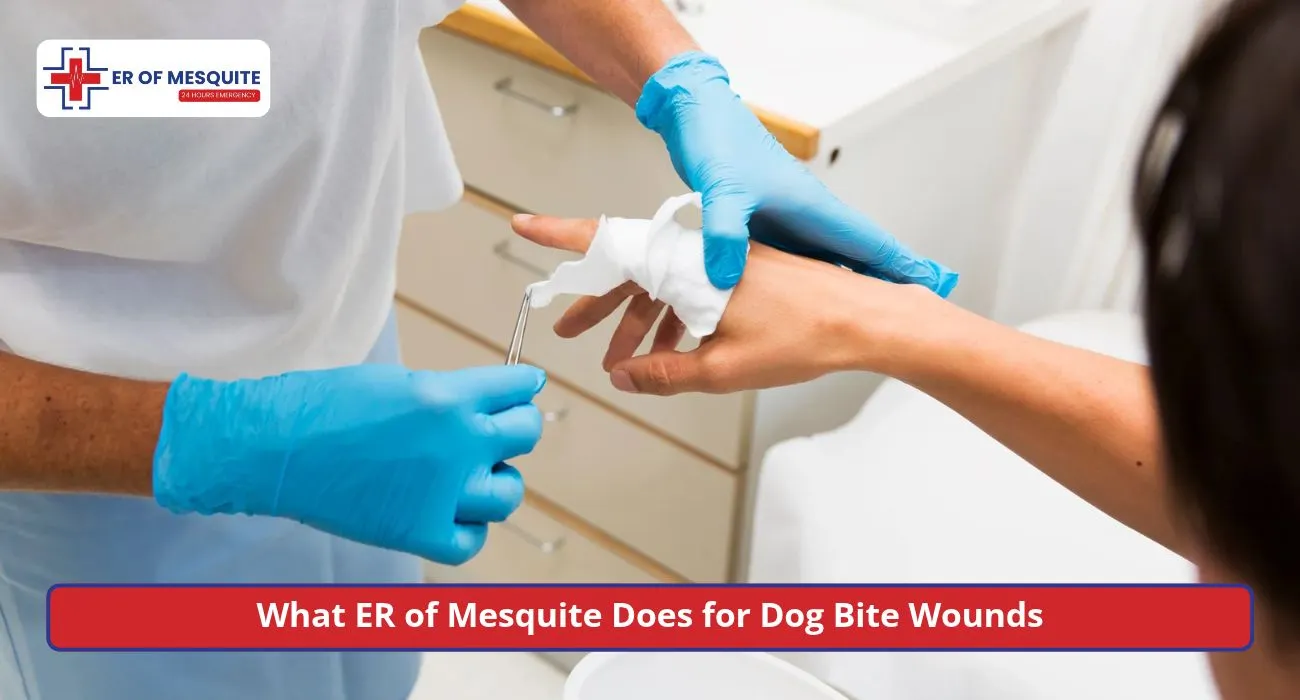
Our ER evaluation starts with vital signs, wound exam, and tetanus and rabies risk assessment. On-site imaging checks for bone involvement, retained teeth, or foreign material.
Wound irrigation, infection control, and closure decisions happen the same visit.
The workup includes:
- Vital signs and exam of the wound site and nearby lymph nodes
- Deep wound irrigation with sterile saline
- Tetanus booster if your last shot was over 5 years ago
- Rabies exposure risk assessment
- Rabies post-exposure prophylaxis coordination when indicated
- On-site imaging when bone, joint, or deep tissue involvement is suspected
- Antibiotics for high-risk bites (hand, face, puncture, immunocompromised)
- Wound closure decision (open, delayed primary, or primary closure)
For patients with signs of severe infection or sepsis, we provide intravenous fluids and coordinate hospital transfer when needed.
Call 911 Immediately for These Signs
- Severe bleeding that will not stop with pressure
- Bite victim is a young child or infant with facial or neck wound
- Loss of consciousness or confusion after a bite
- Difficulty breathing or swallowing after a bite
- Suspected rabid animal attack
- Rapidly spreading infection with high fever and confusion
- Bite causing suspected eye or airway injury
Do not drive yourself for severe bleeding or systemic symptoms.
Location, Hours & Insurance
ER of Mesquite, Cartwright
1080 E Cartwright Rd, Suite 100, Mesquite, TX 75149
Phone: (469) 649-1007
Hours: Open 24/7/365, walk-ins welcome
We serve Mesquite, Balch Springs, Sunnyvale, Forney, Garland, Seagoville, and surrounding communities. We accept most major private (PPO) health insurance plans.
FAQs
What are the earliest signs of dog bite infection?
Early signs of dog bite infection include redness expanding past the wound, increasing pain, warmth, mild swelling, and pus within 24-48 hours of the bite.
When to go to ER after dog bite for infection?
When to go to ER after dog bite is immediate for red streaks, fever, pus, expanding swelling, hand or face location, puncture, or bite from an unknown dog.
What are signs of infection from dog bite after 3 days?
Signs of infection from dog bite at day 3+ include fever, chills, swollen lymph nodes, red streaks, body aches, and worsening wound pain or drainage.
Do all dog bites need antibiotics?
Not all. Low-risk superficial bites in healthy adults often heal without. High-risk bites (hand, face, puncture, immunocompromised) usually need them after evaluation.
How quickly do dog bite infections spread?
Pasteurella infections can appear within 3 to 24 hours. Most other bacterial infections show up within 24 to 72 hours. Rapid spread with fever means walk in now.
When Any Infection Sign Appears, Walk In
Dog bites heal fast when treated early and poorly when missed. If any of the warning signs show up in the first 72 hours, do not wait at home.
Walk in to ER of Mesquite for same-day wound evaluation, irrigation, imaging, and infection control.