You have had a cough for days, and your chest feels heavy. Is it just a bad cold, or has it turned into bronchitis? The two share overlapping symptoms but affect different parts of the respiratory system and carry different risks. This guide breaks down the differences, the warning signs that mean a respiratory infection has become an emergency, and how ER of Mesquite evaluates respiratory illness 24/7 with no appointment needed.
What Is a Common Cold?
A cold is a viral infection of the upper respiratory tract, affecting the nose, throat, and sinuses. Typical symptoms include a runny or stuffy nose, sneezing, sore throat, mild cough, post-nasal drip, mild fatigue, watery eyes, and sometimes a low-grade fever, more often in children.
Most colds resolve on their own in 7 to 10 days, with symptoms peaking around day 3 or 4 and improving afterward. Symptoms that worsen instead of improving may signal something else developing.
What Is Bronchitis?
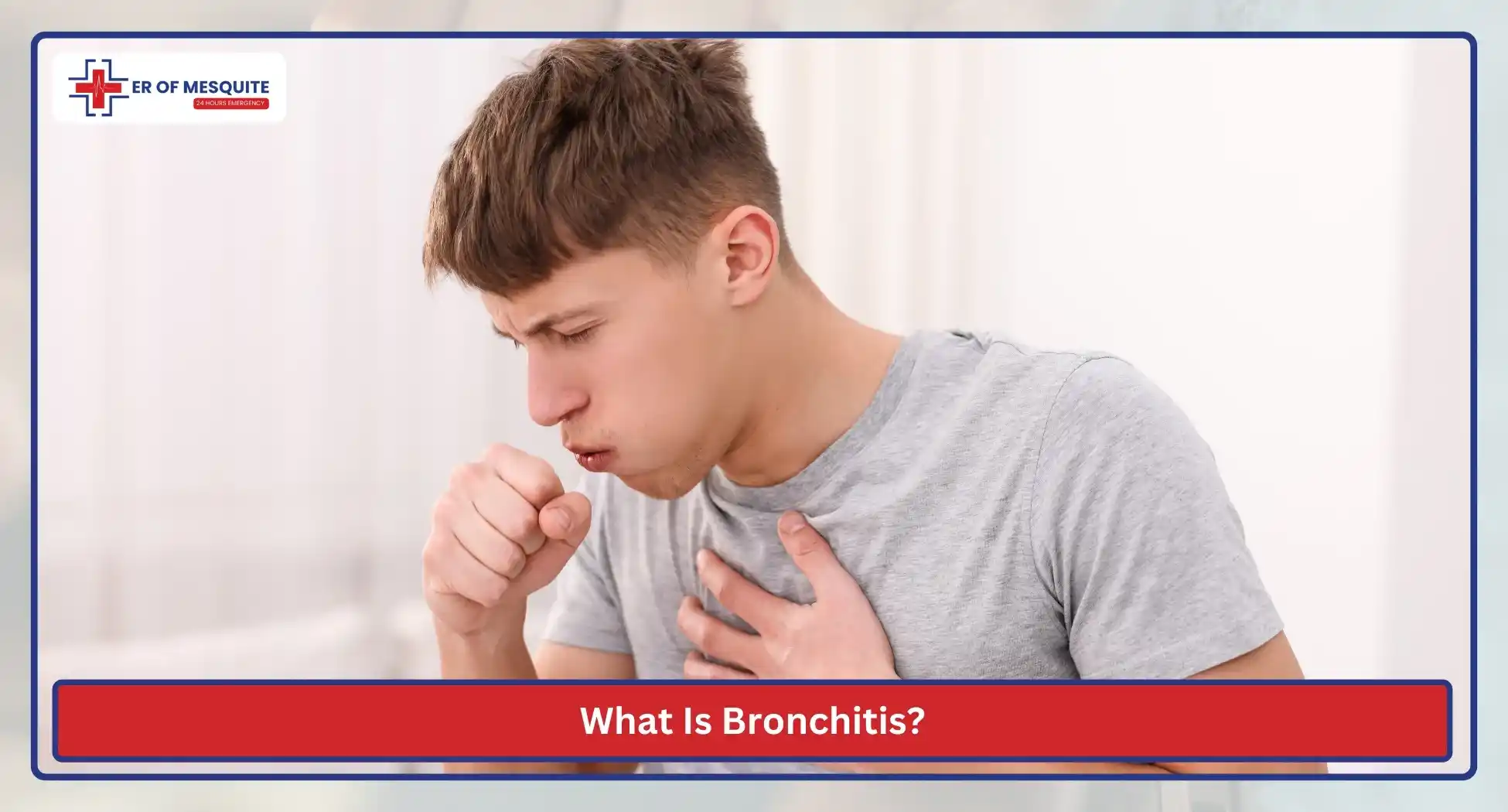
Bronchitis is inflammation of the bronchial tubes, the airways carrying air from your windpipe into your lungs. Because it sits deeper in the chest than a cold, it produces a heavier, chestier cough and carries a higher risk of complications such as pneumonia.
Acute Bronchitis
Acute bronchitis is usually caused by the same viruses behind colds and flu, and often follows one of them as the virus moves deeper into the airways. It typically lasts 10 days to 3 weeks, and the cough can linger for 4 to 6 weeks after other symptoms resolve.
Chronic Bronchitis
Chronic bronchitis is a long-term condition lasting months or years, most commonly caused by smoking or long-term exposure to airborne pollutants. It requires ongoing management with a specialist, and flares that escalate beyond your normal management plan can require emergency care.
How to Tell Them Apart
The simplest distinction: a cold lives mostly above the neck, while bronchitis lives in the chest.
Signs It Is a Cold
Symptoms centered in the nose, throat, and sinuses. A mild cough. Little or no chest congestion. Mild body aches and fatigue. Resolution within 7 to 10 days.
Signs It Is Bronchitis
A deep, chesty cough that often produces mucus. Significant chest congestion with a heavy or rattling feeling. Wheezing or a whistling sound when breathing. Chest tightness or soreness from coughing. Noticeable fatigue. Symptoms lasting 10 days to 3 weeks with a cough that lingers well beyond.
Where the Flu Fits In
Flu arrives suddenly, often within an hour, with high fever, severe body aches, extreme fatigue, and a dry cough. It can lead to bronchitis or pneumonia as a complication. Because colds, bronchitis, and flu overlap and sometimes coexist, the only reliable way to know exactly what you have is rapid respiratory testing, which we run on-site with results in 15 to 30 minutes.
When a Respiratory Infection Becomes an Emergency

Most colds and most acute bronchitis cases can be managed at home. Walk in to ER of Mesquite for any of the following:
- Trouble breathing or shortness of breath at rest
- New or worsening wheezing
- Chest pain or tightness beyond simple coughing soreness
- Coughing up blood or bloody mucus
- Fever over 103°F that will not come down
- Confusion or extreme drowsiness
- Symptoms worsen after 5 to 7 days instead of improving
- Double sickening: you got better, then got significantly worse, a classic sign of a secondary infection like pneumonia
- A cough lasting more than 3 weeks with no improvement
- Persistent vomiting or signs of dehydration
- Severe symptoms in anyone who is elderly, immunocompromised, or managing asthma, lung disease, heart disease, or diabetes
Call 911 Instead of Driving For:
- Severe difficulty breathing or gasping for air
- Bluish lips, face, or fingertips
- Chest pain combined with breathing difficulty
- Loss of consciousness or severe confusion
- Coughing up large amounts of blood
Do not drive yourself while struggling to breathe.
Higher-Risk Groups
Infants and Young Children
Children do not get bronchitis the way adults do. What looks similar is often bronchiolitis, croup, RSV, or pneumonia, all of which behave differently in small airways. Watch for fast breathing, ribs visibly pulling in with each breath, refusal to drink, blue lips, or lethargy. Any of these means walk in immediately. Our pediatric emergency care team evaluates children of all ages.
Older Adults
Adults over 65 face a significantly higher risk of pneumonia developing from a cold or bronchitis. A mild illness can progress quickly at this age. Do not wait if symptoms worsen or breathing changes.
People With Asthma or Chronic Lung Conditions
Any respiratory infection can trigger a flare of an underlying condition. If your usual management is not controlling symptoms, or you need it more often than normal, come in for evaluation.
Pregnant and Immunocompromised Patients
Respiratory illness during pregnancy warrants earlier evaluation, especially with fever or breathing changes. The same applies to anyone with a weakened immune system from cancer treatment, transplant, or autoimmune conditions.
How ER of Mesquite Evaluates Respiratory Symptoms
Immediate Triage and Exam
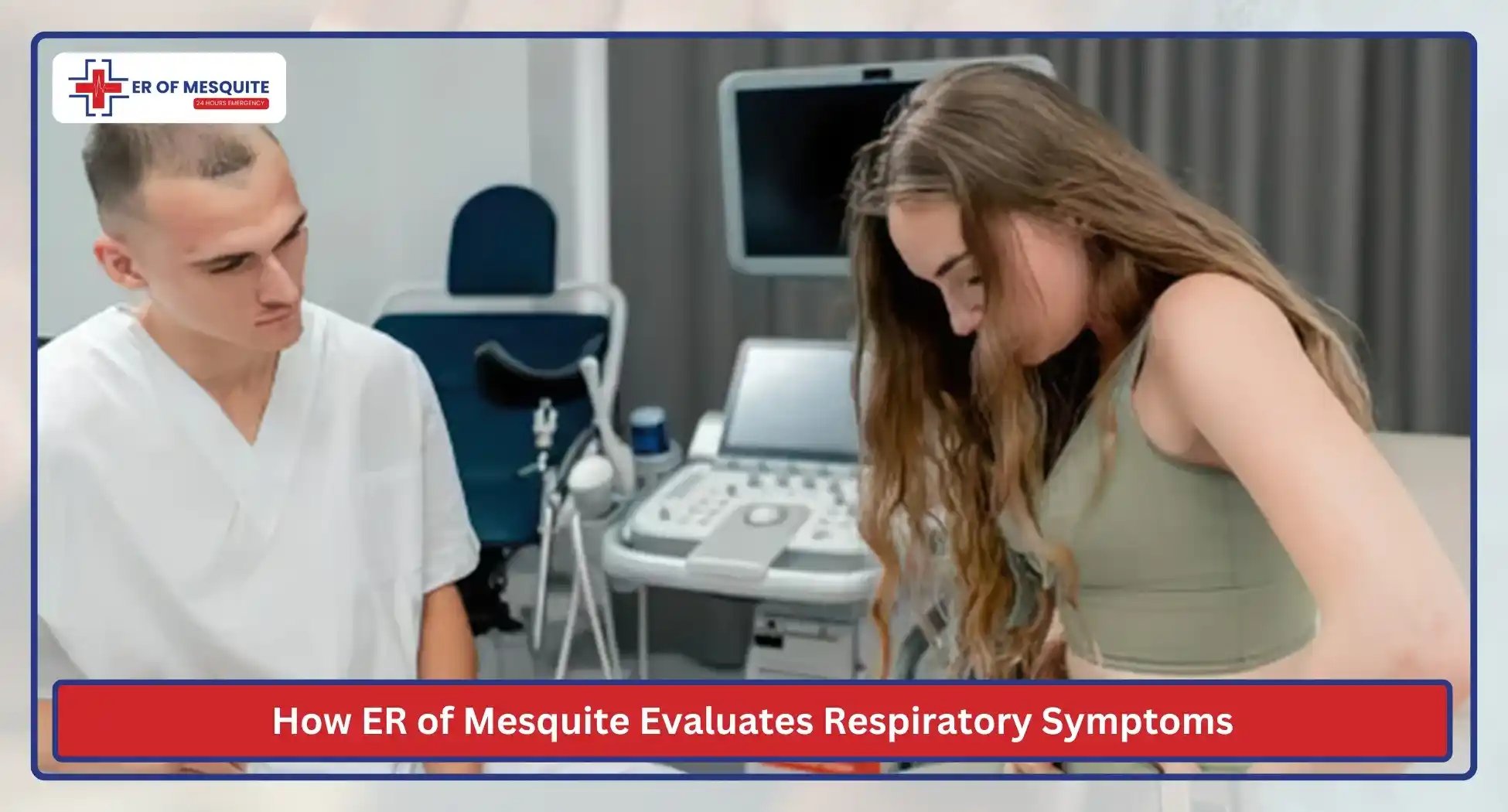
You are triaged the moment you arrive, with breathing rate, temperature, and oxygen saturation checked immediately. A board-certified emergency physician then performs a full respiratory exam, listening for wheezing, crackles, and decreased breath sounds that point toward pneumonia or other complications.
Rapid Respiratory Testing
A combined on-site panel checks for flu, COVID-19, RSV, and strep with results in 15 to 30 minutes, so you leave knowing what you actually have rather than guessing.
On-Site Chest Imaging
If pneumonia or another complication is suspected, a chest X-ray is performed on-site through our digital X-ray services with no transfer and no outside imaging appointment. CT scanning is also available when the exam suggests something more serious.
Labs, Observation, and Transfer
Our on-site lab runs blood counts, infection markers, and electrolytes with rapid results. Patients with breathing difficulty or evolving symptoms can be observed before discharge. If inpatient hospital care is needed, we stabilize you first and coordinate ambulance transfer.
After Your Visit
You leave with a clear diagnosis whenever possible, written recovery guidance covering rest, hydration, and warning signs, specific return precautions including worsening breathing, high fever, chest pain, or blood in your cough, and referral to your primary care doctor, pediatrician, or a lung specialist for chronic or recurring issues.
Frequently Asked Questions
How long should a cold last?
Most colds resolve in 7 to 10 days, peaking around day 3 or 4. If symptoms worsen after day 5 or you are still sick after 2 weeks, it may not just be a cold. Come in for evaluation.
How long does bronchitis last?
Acute bronchitis typically lasts 10 days to 3 weeks, though the cough can linger 4 to 6 weeks after everything else resolves. Chronic bronchitis lasts months or years and needs specialist management.
Can bronchitis turn into pneumonia?
Yes. Pneumonia can develop from bronchitis, flu, or a severe cold. Warning signs include high fever, chest pain, severe cough, shortness of breath, and rapid breathing. If you are worried about pneumonia, walk in for a chest X-ray.
Do I need a chest X-ray for a bad cough?
Not always. Imaging matters when there is breathing difficulty, high fever with a productive cough, chest pain, or symptoms that are not improving. Our physicians decide based on your exam and history and explain the reasoning either way.
Is my cough contagious?
Most respiratory infections are contagious, especially in the first few days. Cover your cough, wash your hands often, and avoid contact with infants, older adults, and immunocompromised people while sick.