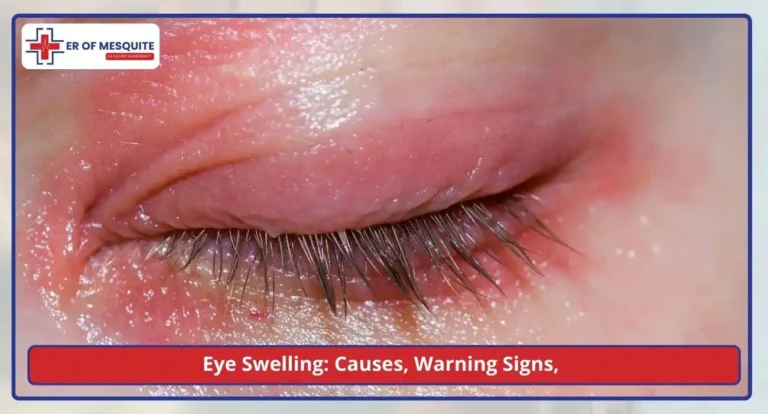
Eye swelling can look like a minor annoyance or signal a vision-threatening emergency. A puffy lid from allergies looks almost identical to the early stages of orbital cellulitis, an infection that can lead to blindness or spread to the brain. Knowing the difference matters.
Here are the real causes, the warning signs that change everything, and when to walk in to ER of Mesquite for same-day evaluation.
What Does a Swollen Eye Actually Tell You?
A swollen eye means fluid, inflammation, or infection has built up in the eyelid or the tissues around it. The cause ranges from harmless allergies to deep bacterial infection behind the orbit. Pattern, pain, vision changes, and speed of onset are the clues that separate routine from emergency.
Most puffy-eye cases are mild and resolve with simple home care. A smaller number need urgent evaluation because they involve infection, trauma, or allergic reactions that escalate within hours.
The American Academy of Ophthalmology notes that swelling with vision loss, severe pain, or restricted eye movement always warrants same-day evaluation (AAO Swollen Eye).
Common Eye Swelling Causes
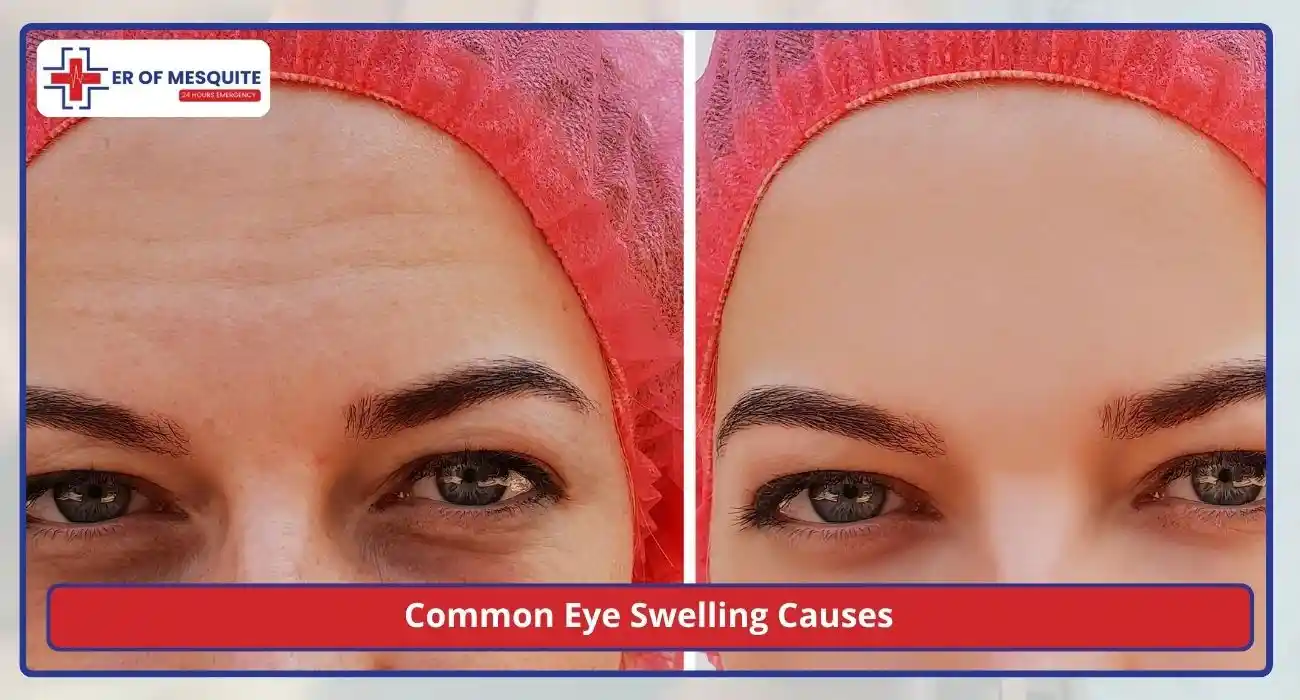
The most frequent triggers are allergies, pink eye, styes, and insect bites. Trauma, chalazion, and preseptal cellulitis are less common but still routine. The dangerous ones, orbital cellulitis and anaphylaxis, are rare but demand immediate emergency care.
| Cause | What It Looks Like | Typical Course |
|---|---|---|
| Allergic reaction | Puffy, itchy, often both eyes, watery | Hours to days |
| Pink eye (conjunctivitis) | Red, discharge, mild lid puffiness, often one side first | 5-7 days |
| Stye (hordeolum) | Painful red bump on the lid edge | 7-10 days |
| Chalazion | Painless firm lump mid-lid | Weeks to resolve |
| Insect bite | Localized puffy lid, may itch | 2-3 days |
| Trauma | Bruising, often rapid onset after impact | Varies by injury |
| Preseptal cellulitis | Red, warm, tender eyelid, no vision changes | Needs same-day care |
| Orbital cellulitis | Deep pain, vision changes, trouble moving the eye | Emergency |
| Angioedema | Rapid onset, may involve lips, throat | Emergency if breathing involved |
The last three on this list are the ones that change the plan. If any of them fit your picture, scroll to the warning signs section before trying home care. A chemical splash also skips home care entirely.
Swollen Eye Warning Signs
Swollen eye warning signs that demand immediate ER evaluation include severe pain behind the eye, blurred or double vision, inability to move the eye, bulging of the eyeball, fever, or puffiness that spread rapidly from the eye to the lips or throat. Any one of these means walk in or call 911.
Walk in or call 911 immediately for:
- Severe pain behind or deep in the eye
- Blurred, double, or lost vision
- Trouble moving the eye in any direction
- Eye bulging forward (proptosis)
- Fever with the puffiness
- Rapid spread to the lips, tongue, or throat
- Difficulty breathing or swallowing
- Symptoms after a chemical splash or blow to the eye
- Severe one-sided swollen eye warning signs in a child
Orbital cellulitis, the deep infection behind the eye, can lead to blindness or spread to the brain if untreated. Per NIH, early recognition and aggressive management are what prevent permanent damage (NIH Orbital Cellulitis).
Preseptal vs. Orbital Cellulitis: The Distinction That Matters Most
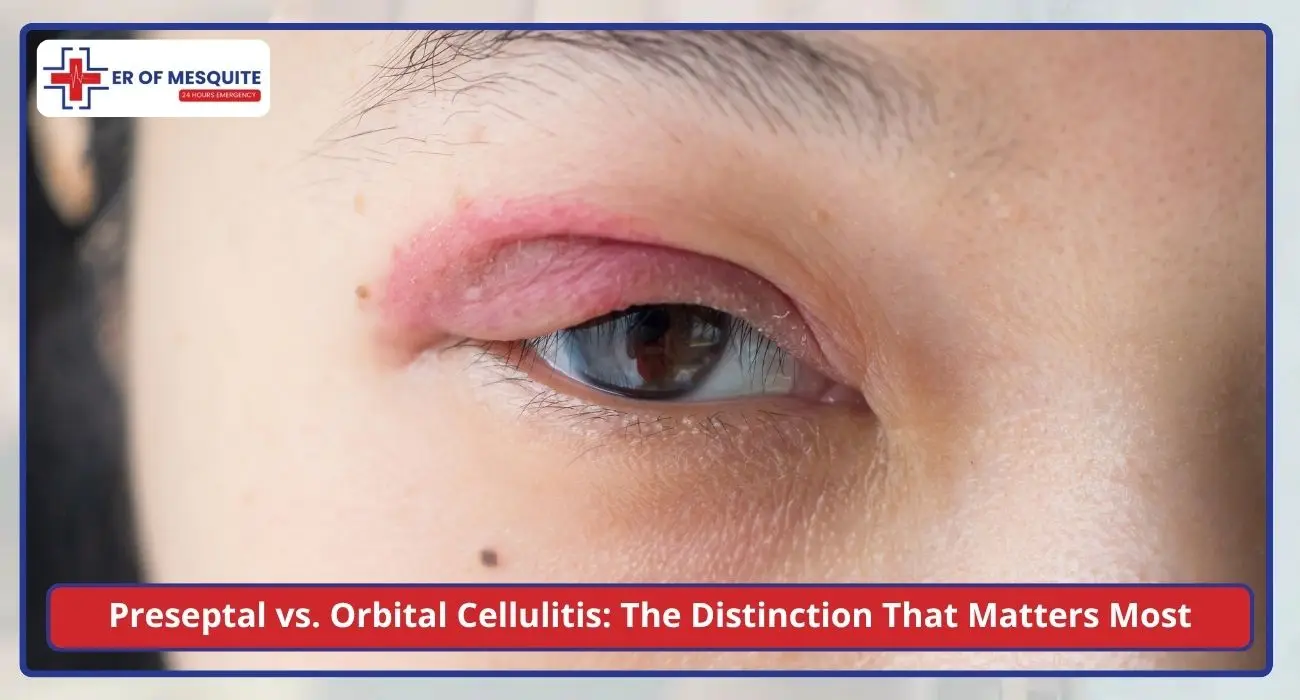
Preseptal cellulitis stays in front of the eye socket and usually responds to outpatient care. Orbital cellulitis sits behind the socket and threatens vision and life. The two look similar on first glance, but orbital involvement adds vision changes, deep pain, fever, and restricted eye movement.
| Feature | Preseptal Cellulitis | Orbital Cellulitis |
|---|---|---|
| Pain with eye movement | Usually no | Yes, often severe |
| Vision changes | No | Blurred, double, or lost |
| Eye bulging (proptosis) | No | Yes |
| Fever | Mild or absent | Common, often high |
| Appearance | Red, warm eyelid | Red lid plus deep puffiness |
| Urgency | Same-day care | Emergency, admit and image |
If you cannot tell which one you have, treat it as orbital until proven otherwise. ER imaging and blood work make the call within an hour.
Puffy Eyes in Children: What Changes
Puffy eyes in children progress faster and are more likely to involve orbital cellulitis than in adults. Children with a swollen lid plus fever, fussiness, or reluctance to open the eye need same-day evaluation. Sinus infections are the most common source in kids.
- One eye more puffy than the other with fever
- Child cannot or will not open the eye
- Unusual sleepiness, crankiness, or vomiting
- Recent sinus infection or upper respiratory illness
- Redness spreading toward the cheek or forehead
Our pediatric emergency room team evaluates kids with puffy or infected eyes the same day, including on-site imaging to rule out orbital involvement. Similar urgency applies when high fever accompanies the lid changes.
When to Go to ER for Eye Swelling
When to go to ER for eye swelling comes down to red flags and speed of onset. Walk in for any vision change, deep pain, fever, trouble moving the eye, or rapid spread. Also come in for post-trauma puffiness and any case that worsens despite home care.
Walk in immediately for:
- Any swollen eye warning sign from the panel above
- Rapid-onset puffiness in a child
- Case after trauma or chemical exposure
- Any breathing or swallowing difficulty
- One-sided redness with high fever
Same-day evaluation for:
- Painful red lump that keeps getting worse
- Lid puffiness not improving after 48 hours
- Pink eye with heavy discharge or significant lid thickening
- Recent sinus infection with new lid changes
Home care often sufficient for:
- Mild puffy allergic lids without pain or vision changes
- Classic stye with mild tenderness
- Insect bite puffiness without spreading
Still asking when to go to ER for eye swelling? If any red flag applies, walk in.
Safe Home Care for a Mild Puffy Eye
A mild puffy eye without warning signs can usually be managed at home. Cool compresses, gentle cleansing, and avoiding allergen triggers help most non-emergency cases. Watch for any change, and come in if things worsen.
- Cool compress for 10-15 minutes several times a day for allergy or bite puffiness
- Warm compress for a stye to help it drain
- Clean gently with mild soap and water to clear discharge from pink eye
- Avoid rubbing no matter how itchy it feels
- Remove contact lenses until it resolves
- Avoid eye makeup during active lid changes
If there is no improvement within 48 hours or new symptoms appear, stop home care and come in.
What ER of Mesquite Does for a Swollen Eye

Evaluation for a seriously swollen eye starts with a thorough exam of eye movement, vision, and the surrounding tissues. Our team runs on-site imaging and blood work when orbital involvement is suspected, and coordinates ophthalmology referral or hospital transfer when needed.
At our emergency room in Mesquite, the workup includes:
- Vital signs and full history of onset, trauma, and vision changes
- Visual acuity check in each eye
- Eye movement exam checking for restriction or pain
- Pupil response and external eye exam
- Complete blood count and inflammatory markers if infection is suspected
- CT scan on-site if orbital cellulitis or trauma complications are possible
For families new to freestanding ERs, the benefits of a freestanding emergency room include shorter wait times and on-site CT during a potentially vision-threatening visit.
Call 911 If You Have Any of These
- Rapid onset that reaches the throat or interferes with breathing
- Loss of consciousness or severe confusion
- Vision loss with severe pain behind the eye
- Chemical splash with vision changes
- Severe facial puffiness with wheezing (possible anaphylaxis)
- Suspected spinal or head trauma with lid changes
Do not drive yourself. Emergency medical teams can begin treatment before hospital arrival.
Location, Hours & Insurance
ER of Mesquite, Cartwright
1080 E Cartwright Rd, Suite 100, Mesquite, TX 75149
📞 (469) 649-1007
🕒 Open 24/7/365, walk-ins welcome
We serve Mesquite, Balch Springs, Sunnyvale, Forney, Garland, Seagoville, and surrounding communities. We accept most major private (PPO) health insurance plans.
FAQs
What are the most common eye swelling causes?
Allergies, pink eye, styes, and insect bites account for most cases. Trauma and preseptal cellulitis are less common but still frequent. Orbital cellulitis and anaphylaxis are rare emergencies.
How do I know if a puffy eye is serious?
A swollen lid is serious if it comes with pain behind the eye, vision changes, trouble moving the eye, bulging eyeball, fever, or rapid spread toward the lips or throat. Any of these warrants walking in.
When should I go to the ER for a swollen eye?
Immediately for any warning sign: vision loss, deep pain, trouble moving the eye, fever, breathing difficulty, trauma, or chemical splash. Also come in for one-sided puffiness in children.
Can allergies cause one eye to look worse than the other?
Yes, especially from direct contact with an allergen in that eye. But one-sided puffiness with pain, fever, or vision changes points away from allergy and toward infection or orbital involvement.
How long does an allergy-related puffy eye last?
Allergic lid puffiness usually resolves within hours to a day once the allergen is removed. If it persists past 48 hours or develops pain, come in to rule out infection.
Don’t Guess With Your Vision
If any warning sign from this guide applies, walk in to ER of Mesquite. On-site vision exam, CT imaging, and 24/7 walk-in care give you a fast, definite answer when sight itself may be at risk.