Medically reviewed by ER of Mesquite Medical Team
Shingles symptoms usually begin 1 to 5 days before any rash appears, as a tingling, burning, or stabbing pain on one side of the body. The blistering rash that follows runs in a stripe or band across the skin and typically lasts 2 to 4 weeks.
Starting antiviral treatment within the first 72 hours makes a real difference in how severe the illness becomes. Knowing the earliest signs is what gets you into care before that window closes.
Why Shingles Happens in the First Place
Shingles is caused by reactivation of the varicella-zoster virus that caused your chickenpox. After chickenpox resolves, the virus stays dormant in nerve roots near the spinal cord for years or decades.
When immune defenses drop with age, stress, or medication, the virus can wake up and travel down a single nerve to the skin. That is why shingles almost always appears on one side of the body only.
About 1 in 3 US adults will get shingles at some point. Risk climbs sharply after age 50 and again after age 60.
Shingles Symptoms Day-by-Day
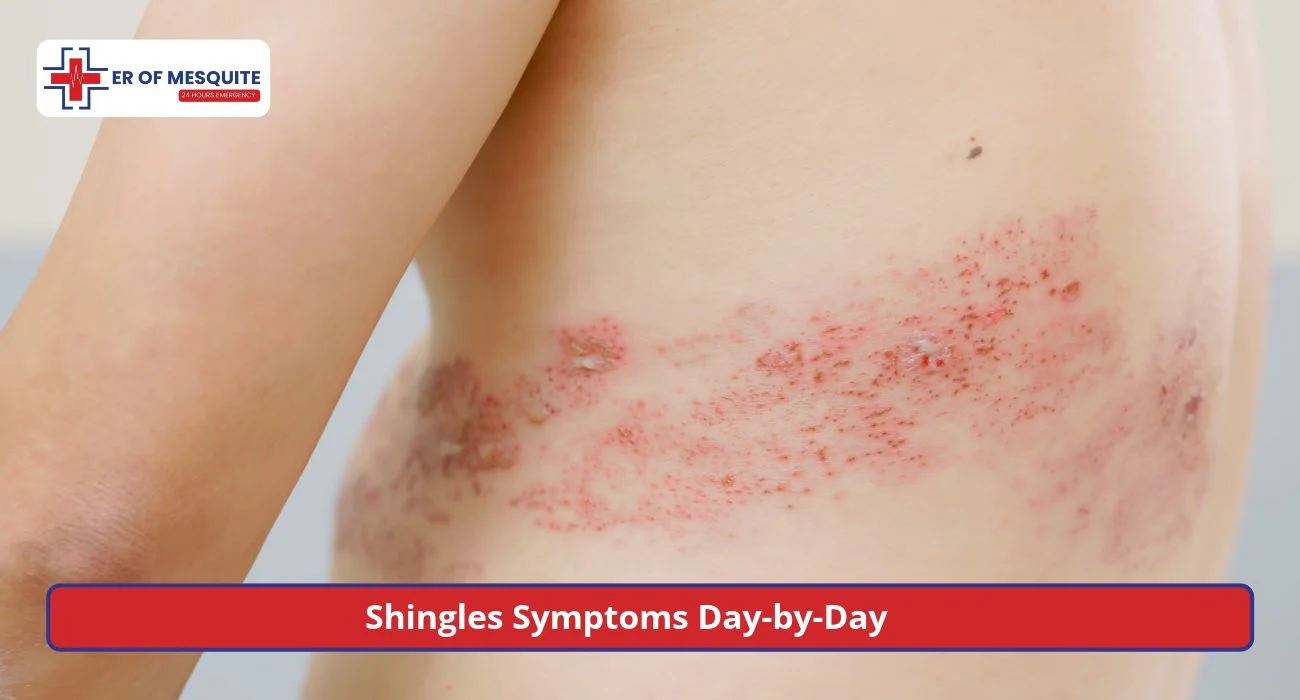
Shingles symptoms unfold in a predictable sequence over 2 to 4 weeks. Early tingling and pain appear first, followed by a red rash on day 2 to 5, blisters by day 5 to 7, and crusting by day 7 to 14. Knowing which day you are on helps determine urgency.
| Day | What You Feel or See |
|---|---|
| Days 1-5 | Tingling, burning, itching, or stabbing pain on one side |
| Days 2-5 | Red bumps or small patches appear on the painful area |
| Days 5-7 | Fluid-filled blisters form in clusters (shingles rash fully visible) |
| Days 7-10 | Blisters break open and start to weep |
| Days 10-14 | Crusts form, skin begins to heal |
| Weeks 2-4 | Crusts fall off, skin color may stay changed for months |
| After rash | Possible ongoing nerve pain (postherpetic neuralgia) |
Per the CDC, treatment is most effective when started within 72 hours of the rash appearing, which is why same-day medical evaluation matters (CDC Shingles Guidance).¹
For patients with painful one-sided chest rashes that initially feel like other causes, our guide on chest wall pain covers overlap between shingles and musculoskeletal pain.
What Does Shingles Rash Look Like?
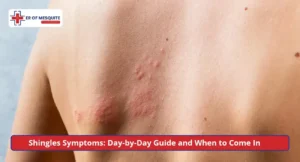
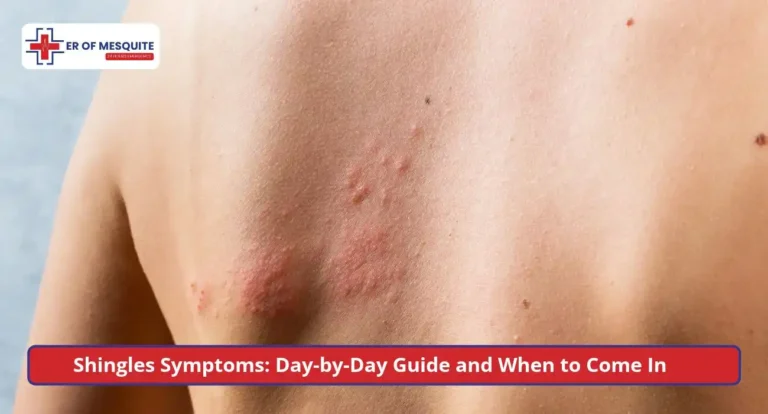
What does shingles rash look like? A classic shingles rash is a red, painful band or stripe of grouped blisters on one side of the body, usually on the torso. The blisters are small, clustered, fluid-filled, and often follow the path of a single nerve.
The hallmark features of a shingles rash:
- One-sided, never crossing the midline
- Grouped small blisters on red skin
- Burning, stabbing, or electric-shock-like pain
- Band or stripe pattern following a nerve path
- Starts as red bumps, becomes blisters, then crusts
- Blisters are fragile, open and weep over several days
The rash often becomes most painful 1 to 3 days after it appears. Simple touch, clothing, or even a breeze can trigger sharp pain.
Where on the Body Does Shingles Appear?
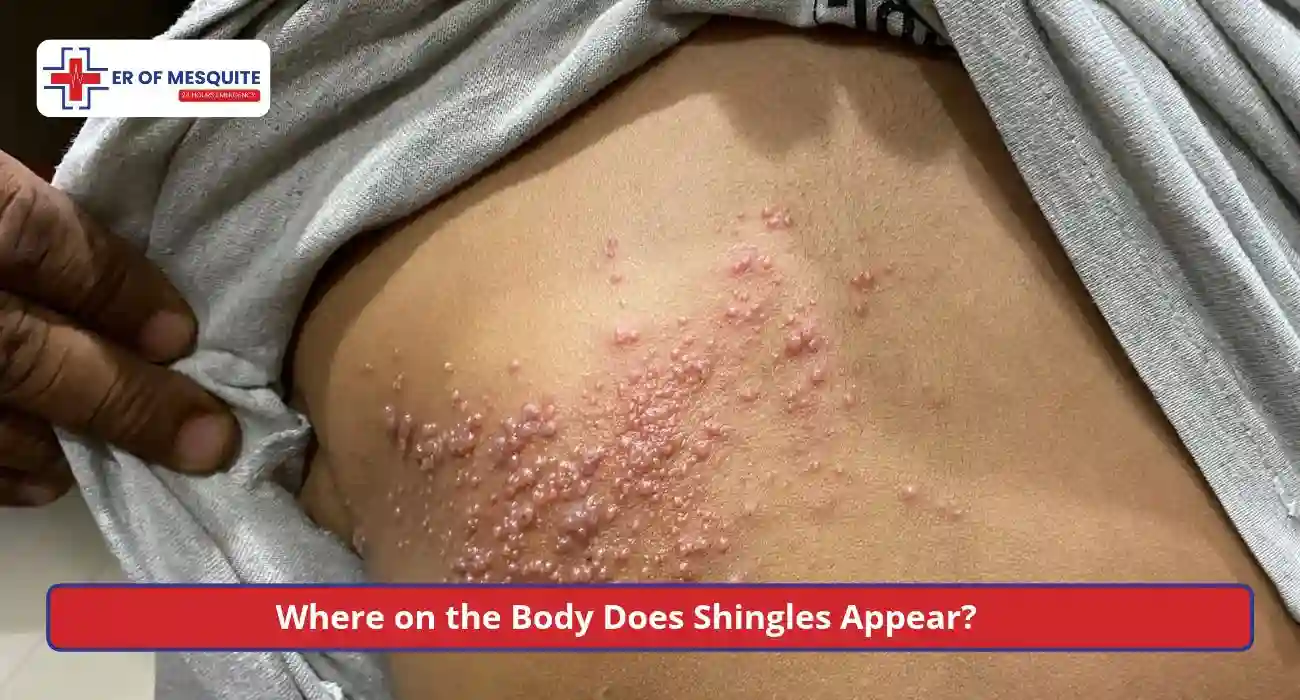
Shingles appears most often on the torso (chest, back, waist) but can show up anywhere on the body. Face, scalp, and eye-area shingles are the most urgent because they can threaten vision and hearing. One-sided location is almost always the strongest clue.
| Location | Severity Level | Why It Matters |
|---|---|---|
| Chest, back, waistline | Standard | Most common, usually uncomplicated |
| Shoulder, arm, leg | Standard | Follows limb nerve path |
| Face (forehead, cheek) | Higher risk | May involve eye, needs same-day evaluation |
| Around the eye | Emergency | Can cause vision loss (herpes zoster ophthalmicus) |
| Ear or face with facial weakness | Emergency | Ramsay Hunt syndrome, hearing or facial nerve risk |
| Neck or groin | Standard to higher | Pain can be severe, same-day visit helpful |
For shingles anywhere on the face or near the eye, walk in immediately. Our emergency services in Mesquite are open 24/7 for rapid evaluation.
Early Signs of Shingles Before the Rash
Early signs of shingles appear 1 to 5 days before any visible rash. These prodromal symptoms include burning, tingling, numbness, itching, or stabbing pain in a one-sided band, often with mild fever, headache, fatigue, or upset stomach.
The earliest warning clues:
- Burning or tingling in a line or band on one side
- Sensitivity of the skin before any rash
- Mild fever or chills
- Headache and body aches
- Fatigue
- Upset stomach
- Unexplained itching on one side
Early signs of shingles often get mistaken for muscle strain, pinched nerve, or heart attack. If the sensation is one-sided and not easily explained, same-day evaluation is worth it.
Our emergency high fever treatment workflow runs rapid viral testing when fever accompanies new nerve pain or early rash.
When to Go to ER for Shingles
When to go to ER for shingles is within 72 hours of rash onset for maximum antiviral effectiveness, or immediately if the rash is on the face, near the eye, or if severe pain or systemic symptoms develop. Immunocompromised patients should seek care even sooner.
Walk in immediately for:
- Rash on the forehead, nose, or around the eye
- Vision changes, eye pain, or redness
- Ear pain with facial weakness or hearing changes
- Signs of skin infection (pus, red streaks, fever)
- Severe pain not controlled at home
- Immunocompromised status (chemotherapy, HIV, transplant)
- Widespread rash on both sides (disseminated shingles)
- Shingles in a child under 12
Same-day evaluation for:
- New rash with pain less than 72 hours old
- Shingles in pregnancy
- Diabetes, kidney disease, or active cancer treatment
- Age 60 or older with any new shingles rash
Home care often appropriate for:
- Classic torso shingles already past 72 hours in a healthy adult
- Mild pain, no fever, no infection signs
For families new to walk-in ER care, the benefits of a freestanding emergency room include short wait times and same-day antiviral start.
Complications to Watch For
Shingles complications can be more disabling than the original rash. The most common is postherpetic neuralgia (PHN), nerve pain that lasts months or years after the rash heals. Eye involvement, bacterial skin infection, and hearing loss are the most urgent complications.
Complications to monitor:
- Postherpetic neuralgia (lasting burning pain after rash heals)
- Eye involvement (vision loss risk from herpes zoster ophthalmicus)
- Bacterial skin infection (red streaks, pus, worsening pain)
- Ramsay Hunt syndrome (ear shingles with facial paralysis)
- Encephalitis (brain inflammation, rare but severe)
- Disseminated shingles (widespread rash, immunocompromised patients)
Per the American Academy of Dermatology, early antiviral treatment combined with pain management reduces both the duration of the rash and the risk of postherpetic neuralgia (AAD Shingles Signs and Symptoms).²
What ER of Mesquite Does for Shingles
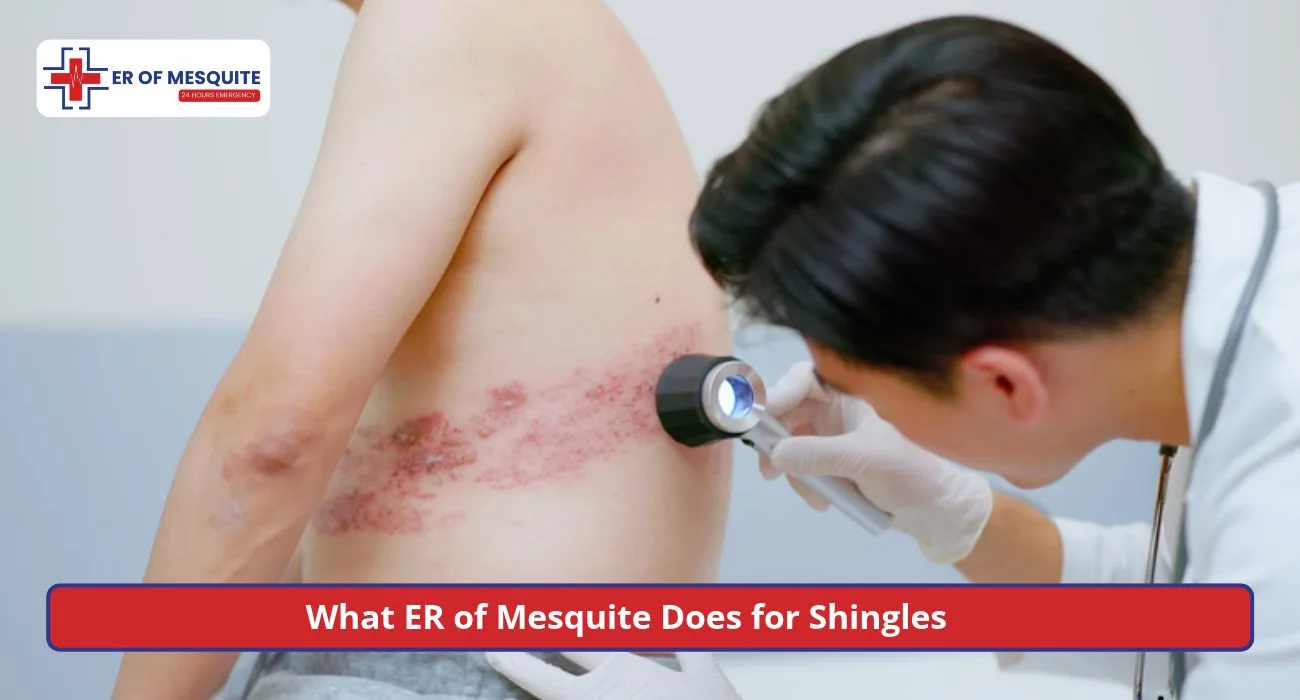
Our ER evaluation for shingles starts with a focused exam of the rash distribution, pain pattern, and risk factors. We confirm the diagnosis clinically and initiate antiviral therapy when within the effective window.
The workup includes:
- Full exam including rash pattern, eye, and ear involvement check
- Pain assessment and vital signs
- Rapid antiviral initiation when the rash is 72 hours old or less
- Pain control planning
- Infection screening when blisters show signs of bacterial superinfection
- Eye exam and ophthalmology coordination for face or eye involvement
- Guidance on wound care, hygiene, and contagion precautions
ER of Mesquite does not perform specialized eye examinations under the microscope. For eye involvement, we coordinate rapid ophthalmology referral. Our pediatric emergency room care team handles the rare pediatric case the same day.
For patients with severe dehydration from fever or widespread shingles, our IV rehydration support keeps you medically stable through the acute phase.
Call 911 Immediately for These Signs
- Sudden vision loss or severe eye pain
- Facial weakness or drooping with ear or facial rash
- Severe headache with confusion
- Difficulty breathing or chest pain with rash
- Severe spreading infection with high fever and confusion
- Loss of consciousness
These may indicate ophthalmic involvement, Ramsay Hunt syndrome, encephalitis, or severe systemic complications.
Location, Hours & Insurance
ER of Mesquite, Cartwright
1080 E Cartwright Rd, Suite 100, Mesquite, TX 75149
Phone: (469) 649-1007
Hours: Open 24/7/365, walk-ins welcome
We serve Mesquite, Balch Springs, Sunnyvale, Forney, Garland, Seagoville, and surrounding communities. We accept most major private (PPO) health insurance plans.
FAQs
What are the earliest warning signs?
The earliest clues are burning, tingling, or stabbing pain on one side of the body, often with mild fever or headache 1-5 days before any rash appears.
What does shingles rash look like in the first 48 hours?
What does shingles rash look like at first: small red bumps on one side of the body that cluster together on a band of skin, usually with burning or tingling pain.
When to go to ER for shingles if it is on my face?
When to go to ER for shingles on the face is immediately. Face or eye-area shingles can cause vision loss and needs same-day antiviral and eye evaluation.
How long does shingles last?
Shingles typically lasts 2 to 4 weeks from first tingling to healed crusts. Nerve pain (postherpetic neuralgia) can continue for months after the rash is gone.
Can I spread shingles to someone else?
Shingles blisters can spread chickenpox to someone who never had it or the vaccine. Keep the rash covered and avoid pregnant women and immunocompromised people until crusted.
Within 72 Hours, Time Matters Most
Shingles is treatable, but the earlier antivirals begin, the shorter the illness and the lower the risk of lasting nerve pain. If you have one-sided burning, tingling, or a new rash, walk in to ER of Mesquite.
Same-day evaluation, rapid treatment, and 24/7 care keep the virus from winning the early days. Learn more at ER of Mesquite.