One moment you feel fine. Next, the room is spinning, your stomach is turning, and you cannot tell if you are about to faint. Sometimes dizziness and nausea pass quickly. Other times, they are your body signaling something serious. This guide explains the most common causes, the warning signs that mean emergency care, and how ER of Mesquite evaluates these symptoms 24/7 with no wait.
Types of Dizziness: Why the Difference Matters
“Dizziness” is an umbrella word covering several distinct sensations, and each points toward different causes. Identifying which one you are experiencing is the first step of any evaluation.
- Lightheadedness: The “about to faint” feeling, often with tunnel vision. Frequently linked to blood pressure or circulation.
- Vertigo: A spinning or tilting sensation, as if you or the room is moving when it is not. Usually points to an inner ear or neurological cause.
- Disequilibrium: Feeling unsteady or off-balance while walking. Common in older adults, but can also signal a neurological problem.
- General dizziness: A vague, dazed, “off” feeling without clear spinning.
When you walk in, one of the first things our team does is help you describe exactly what you are feeling, because that description directly shapes the workup.
Common Causes of Dizziness and Nausea

Inner Ear Conditions
The inner ear controls balance, and when it is disrupted, dizziness and nausea are often the first signs. Common conditions include brief positional vertigo triggered by head movements, inner ear inflammation following a viral illness, and chronic conditions involving vertigo with hearing changes or ringing in one ear.
Cardiovascular Causes
Reduced blood flow to the brain produces dizziness. Causes include low blood pressure, especially when standing up quickly, irregular heart rhythms, dehydration reducing blood volume, and in some cases, a heart attack, which can present with dizziness rather than chest pain, particularly in women and older adults.
Neurological Causes
The brain can produce dizziness and nausea as a warning. Possible causes include migraine, particularly vestibular migraine, where dizziness is the primary symptom, concussion after a head injury, and stroke or transient ischemic attack, where sudden dizziness combined with other neurological signs is a medical emergency.
Metabolic Causes
Low blood sugar, particularly in people with diabetes, electrolyte imbalances from vomiting, diarrhea, or heat exposure, severe dehydration, and thyroid conditions can all produce the combination.
Infections
Severe flu, gastroenteritis with dehydration, ear infections in children, and, in serious cases, sepsis, a life-threatening whole-body response to infection, can all present with dizziness and nausea.
Pregnancy
Hormone changes in early pregnancy commonly cause dizziness and nausea. Severe, persistent pregnancy-related vomiting is a condition requiring emergency care, and dizziness with severe headache or vision changes later in pregnancy needs immediate evaluation.
Anxiety
Panic attacks produce very real physical dizziness and nausea. Because these symptoms overlap heavily with serious causes, evaluation matters, especially the first time it happens.
When Dizziness and Nausea Are an Emergency
Walk into the ER of Mesquite immediately for any of the following:
- Sudden, severe onset with no clear cause
- Chest pain, pressure, or palpitations alongside dizziness
- Shortness of breath
- Severe headache, especially the worst of your life
- Slurred speech, facial droop, or arm weakness
- Confusion or trouble understanding others
- Double vision, blurred vision, or sudden vision loss
- New hearing loss or ringing in one ear
- Fainting or nearly passing out
- Severe or persistent vomiting with inability to keep fluids down
- Dizziness after any fall or head injury
- Weakness or numbness on one side of the body
- Fever with dizziness and nausea
- New neck stiffness
- Symptoms worsening rather than improving
Many of the most dangerous causes of dizziness look mild at first. When in doubt, come in. Faster evaluation means faster answers.
When to Call 911 Instead of Driving
Some situations are too difficult for a car ride. Call 911 immediately if dizziness and nausea come with:
- Stroke signs, remembered as F.A.S.T.: Face drooping, Arm weakness, Speech difficulty, Time to call 911
- Chest pain, pressure, or a crushing sensation
- Fainting or loss of consciousness
- Sudden severe headache
- Difficulty breathing
- Seizure
- Signs of shock: cold, clammy skin, rapid heartbeat, weak pulse, confusion
Time-sensitive conditions like stroke require immediate care, and driving yourself risks both your safety and everyone else on the road.
Higher-Risk Groups That Need Faster Evaluation
Older Adults
Adults over 65 carry a significantly higher risk of stroke, cardiac causes, and fall injuries from dizziness. What might be minor in a younger person can be a serious event in a senior. New dizziness at this age, especially with any other symptom, warrants a visit.
Pregnant Women
Come in for severe or ongoing vomiting, dizziness with severe headache or vision changes, any fainting, or concerning symptoms in the second or third trimester.
Children
Kids cannot always describe dizziness clearly. Watch for unsteady walking, refusing to stand or walk, vomiting, complaining that the room is moving, or any symptom after a head bump or fall.
People With Diabetes
Blood sugar swings in both directions cause severe dizziness and nausea. If you cannot correct your blood sugar quickly, walk in.
People With Heart Conditions
A history of rhythm problems, heart failure, or coronary artery disease makes new dizziness a signal for immediate evaluation. Cardiac causes are treatable, and every minute matters. Our heart attack emergency care team evaluates cardiac presentations of dizziness around the clock.
Anyone After a Head Injury
Dizziness after any head injury needs evaluation, even when the injury seemed minor. Complications can develop over hours rather than appearing immediately.
How ER of Mesquite Evaluates Dizziness and Nausea

Immediate Triage
You are triaged the moment you arrive. Nurses assess vital signs and mental status within minutes, and the team prepares based on what they see.
Neurological Exam
A board-certified emergency physician performs a complete neurological evaluation, checking for stroke, concussion, and other brain-related causes, covering cranial nerves, balance, coordination, reflexes, and mental status.
Cardiac Evaluation
Because dizziness frequently points to the heart, an EKG checks your heart rhythm as a routine part of the workup, identifying rhythm problems on the spot.
On-Site Imaging
If symptoms suggest a stroke, brain bleed, or head injury, CT imaging happens on-site with results in minutes. Ultrasound is available for cardiovascular or abdominal concerns tied to your symptoms. No transfers and no overnight waits.
Full Lab Panel
Blood counts, blood sugar, electrolytes, kidney and thyroid function, cardiac markers, pregnancy testing, and infection markers all run in our on-site lab with rapid results.
Positional Testing
When symptoms suggest an inner ear cause, specific positional tests help identify vertigo patterns and separate benign inner ear causes from neurological ones.
IV Support and Observation
Many dizziness patients are dehydrated, and IV access is established early when needed. Our dehydration treatment restores fluid balance while the evaluation continues. Patients with evolving symptoms can be observed for several hours before discharge, and if hospital admission is required, we stabilize you first and coordinate ambulance transfer.
What Happens After Your Visit
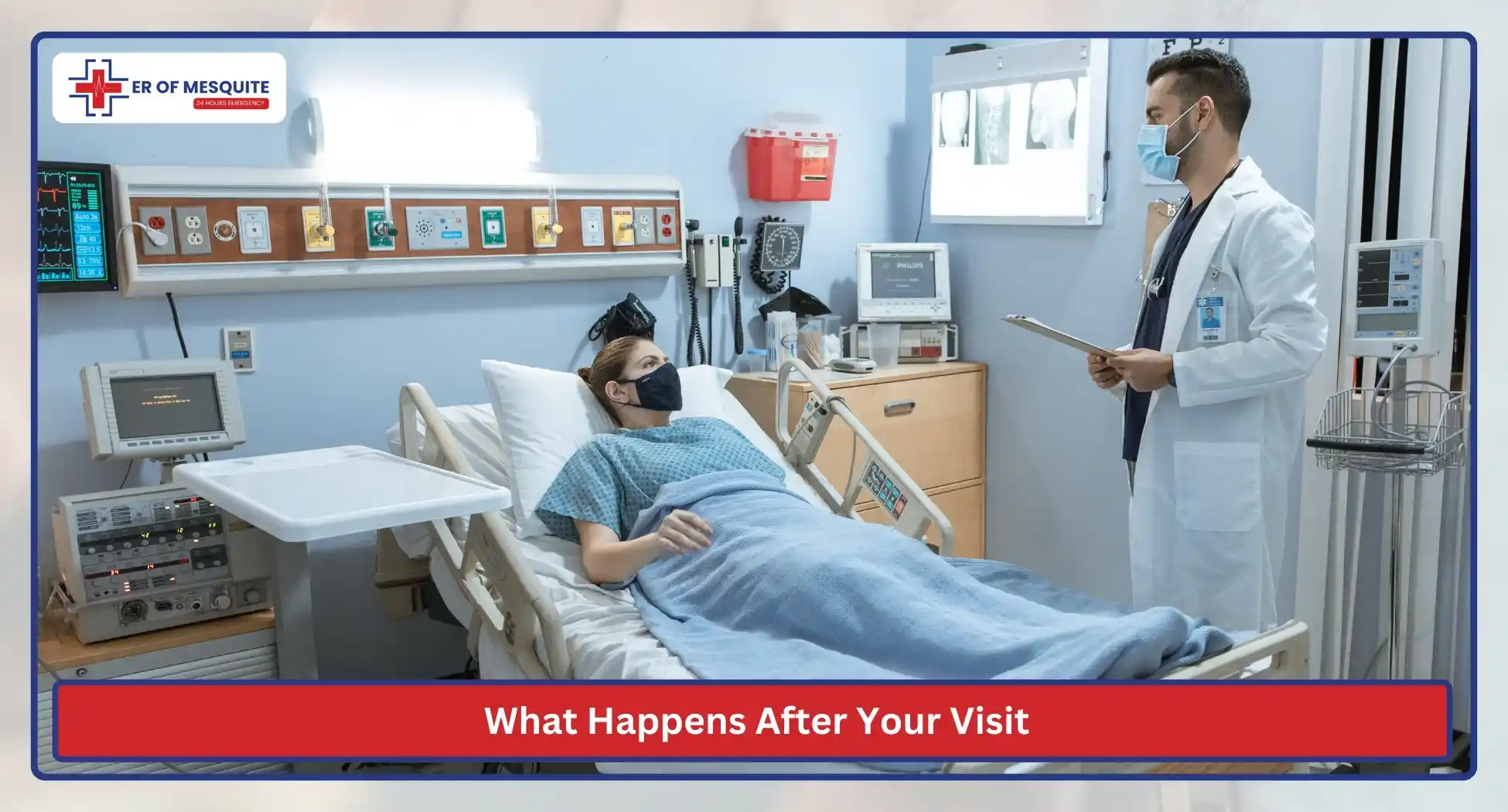
Our goal is to send you home with answers, safety, and a plan.
- A clear understanding of the cause whenever possible, and honest guidance on what outpatient follow-up to pursue when further evaluation is needed
- Written safety instructions covering activity restrictions, fall prevention, driving safety, and exactly which symptoms mean return immediately
- Referral to the right specialist based on the likely cause: neurologist for brain-related causes, cardiologist for cardiac causes, ENT for inner ear causes, or your OB for pregnancy-related causes
Frequently Asked Questions
Should I go to the ER for dizziness?
Yes, if it is sudden and severe, or accompanied by chest pain, speech difficulty, weakness, vision changes, severe headache, or fainting. Also come in if you are over 65, pregnant, diabetic, have a heart condition, or the dizziness follows a head injury.
What does it mean when I feel dizzy and nauseous at the same time?
The combination can point to inner ear conditions, low blood pressure, dehydration, migraine, blood sugar swings, or serious causes like stroke and cardiac problems. Because the range runs from mild to life-threatening, evaluation matters when symptoms are severe, sudden, or persistent.
Can dehydration cause severe dizziness and nausea?
Yes. It is one of the most common causes. Low fluid volume drops blood pressure and slows circulation, reducing oxygen to the brain, which triggers both symptoms. Severe dehydration needs emergency evaluation and IV fluids.
Is dizziness a sign of a stroke?
It can be. Sudden dizziness with facial drooping, arm weakness, slurred speech, vision changes, or confusion is a stroke red flag. Call 911 immediately. Do not drive.
Why do I feel dizzy when I stand up?
That is a drop in blood pressure when moving from sitting or lying to standing, often due to dehydration or blood pressure fluctuations. If it happens frequently or causes fainting, it needs evaluation.
Can I drive myself to the ER if I am dizzy?
No. Dizziness impairs balance, vision, and reaction time. Have someone drive you or use a rideshare. If you are too dizzy to move safely, call 911.